Miyamoto Musashi – Fate/Grand Order
BiographyBiography
The story, the personality, and everything in between.Read biographyClose biography
Biography
The story, the personality, and everything in between.Read biographyClose biographyMiyamoto Musashi宮本武蔵
Wandering swordswoman from a pruned parallel world; Saber-class ally of Chaldea
Miyamoto Musashi is a wandering swordswoman and Saber-class Servant in Fate/Grand Order. Unlike the male swordmaster remembered by Proper Human History, she comes from a parallel history where Musashi was a woman. Cut adrift when her world was pruned, she travels unpredictably between worlds, pursuing the swordsmanship of Niten Ichiryu and her elusive ideal of “zero.”
She greets people with easy humor, takes udon almost as seriously as a good duel, and becomes a crucial companion to Chaldea’s Master during the swordmaster crisis in Shimousa.
Biography
A Musashi from another history
The Miyamoto Musashi who appears in Fate/Grand Order is not the celebrated male swordsman of Proper Human History. She was born into a different history where Musashi was a woman, and that world was eventually pruned. Unable to return home, she becomes a traveler between worlds, sometimes arriving somewhere completely unexpected. To her, the fame attached to the name Miyamoto Musashi in Chaldea’s history is as surprising as the revelation that its Musashi was a man.
Her father, Shinmen Munisai, abused her because she was a woman and possessed the Heavenly Eye. She left to hone her swordsmanship and surpass him, crossing Japan to challenge formidable opponents. Despite her victories, she was excluded from the celebrated ranks of her own history’s swordmasters because of her sex. The Heavenly Eye also opens her awareness to possibilities beyond a single world, but her resulting journeys do not give her control over where she will land.
The swordswoman and Chaldea
Chaldea’s Master first encounters Musashi in a small Singularity and later meets her again in the pseudo-parallel world of Shimousa. There, seven murderous Heroic Spirit Swordmasters threaten the local people. Musashi’s pursuit of stronger opponents becomes inseparable from a more immediate responsibility: helping the people caught in their path.
Accompanying Chaldea’s Master and allies such as Fuuma Kotarou and the blacksmith Senji Muramasa, she crosses Shimousa and faces a succession of dangerous swordsmen. Each confrontation tests the limits of her two-sword style and her search for the elusive “zero” beyond ordinary technique. The outcome of that search is covered in the spoiler section.
A traveler who refuses to be pinned down
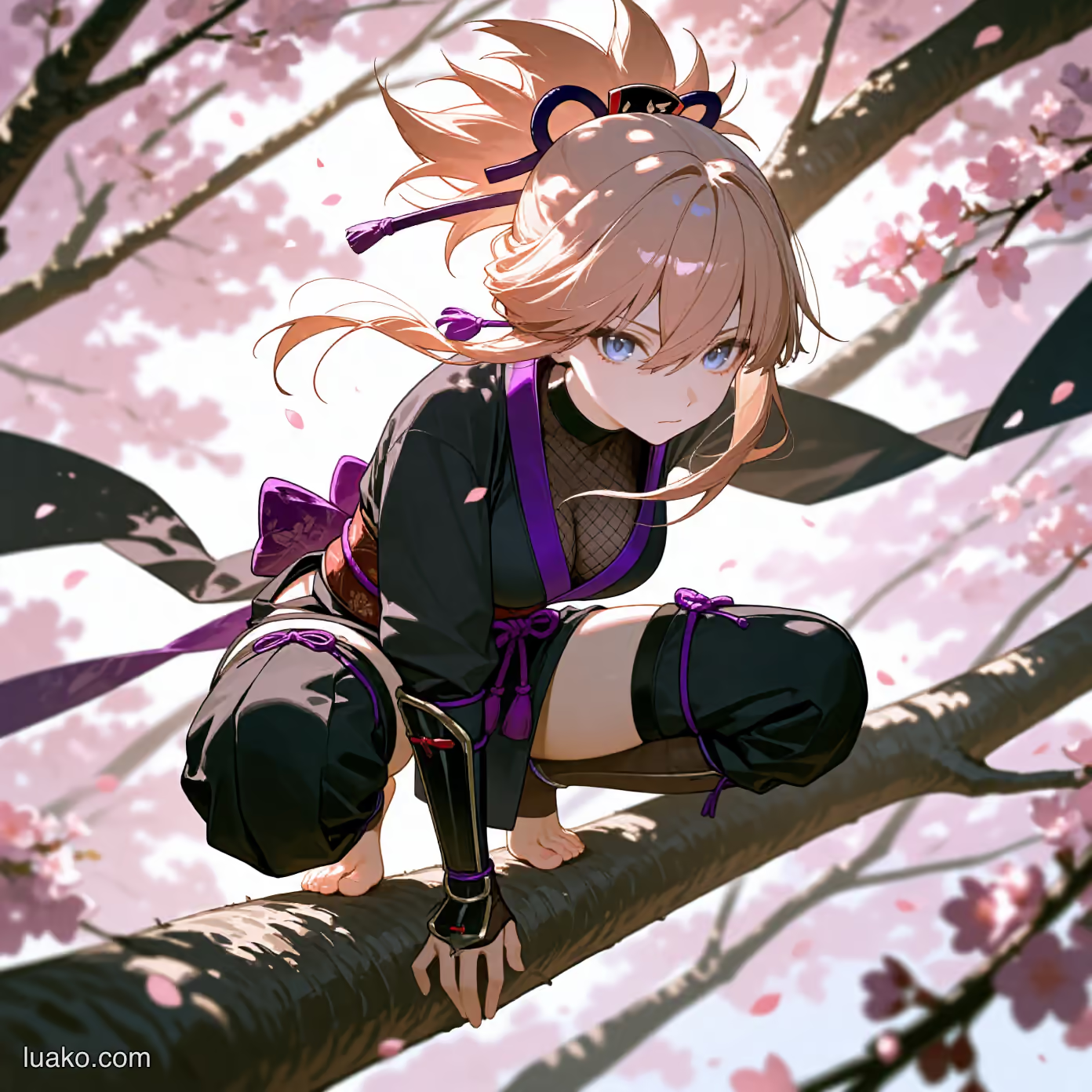
Musashi’s wandering does not follow an itinerary: she can unexpectedly slip into another world and cannot count on returning to the last one. She meets that uncertainty with appetite and curiosity, sometimes debating sword technique and sometimes hunting for the next bowl of udon. Her relaxed manner has a firm boundary, however. She will not casually excuse the slaughter of defenseless people or deliberate cruelty toward someone’s convictions.

Personality and Motivations
Musashi is sociable, impulsively enthusiastic, and easily delighted by food, praise, an attractive face, or an intriguing swordsman. She enjoys the road more than ceremony and is rarely impressed by titles, including the prestige of her own name in Proper Human History. Her confidence can look smug, but the character material describes it as pleasure in living rather than disdain for others.
For all her joking, she is a careful observer in combat. She can recognize when retreat is wiser than persisting in an impossible fight, yet a duel in which an opponent has committed everything can draw out a much sterner and more resolute swordswoman. That contrast between enjoyment and discipline is central to how she follows her path.
She is particularly angered by violence against defenseless people, mockery meant to crush someone’s beliefs, and—on a much smaller scale—having her food stolen when she is hungry. Rather than making grand speeches about justice, Musashi tends to help when she sees someone in need. Her conversations with Mash also show that she can take another person’s anxiety seriously without becoming solemn herself.
Appearance
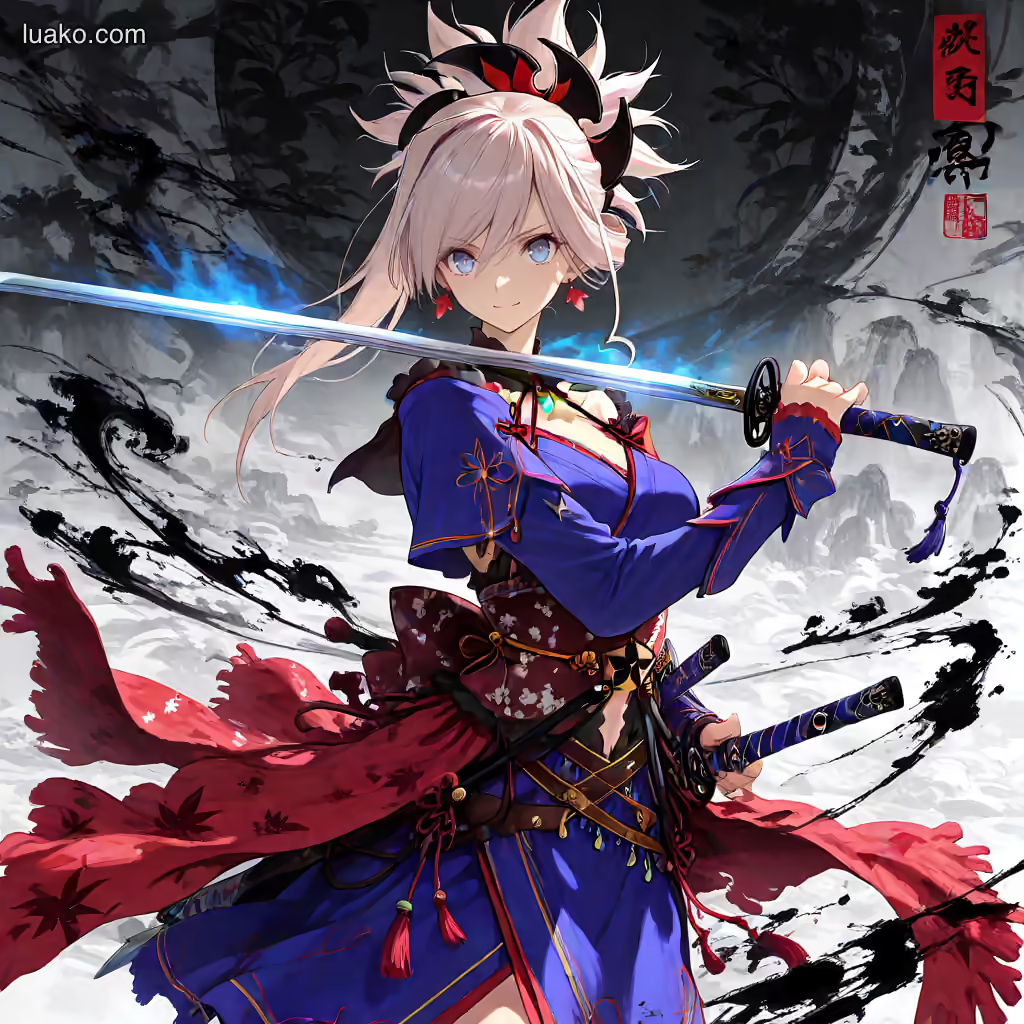
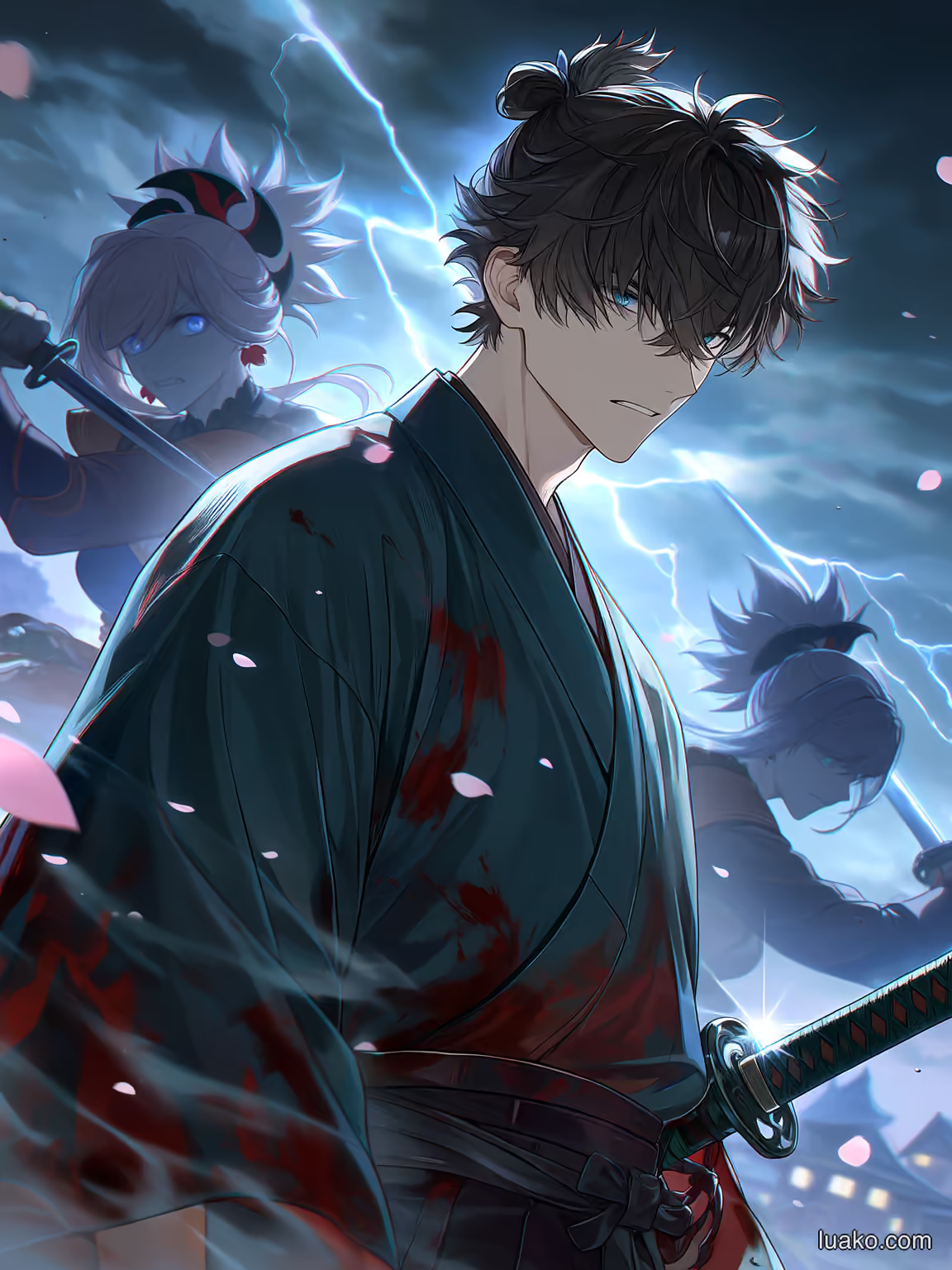
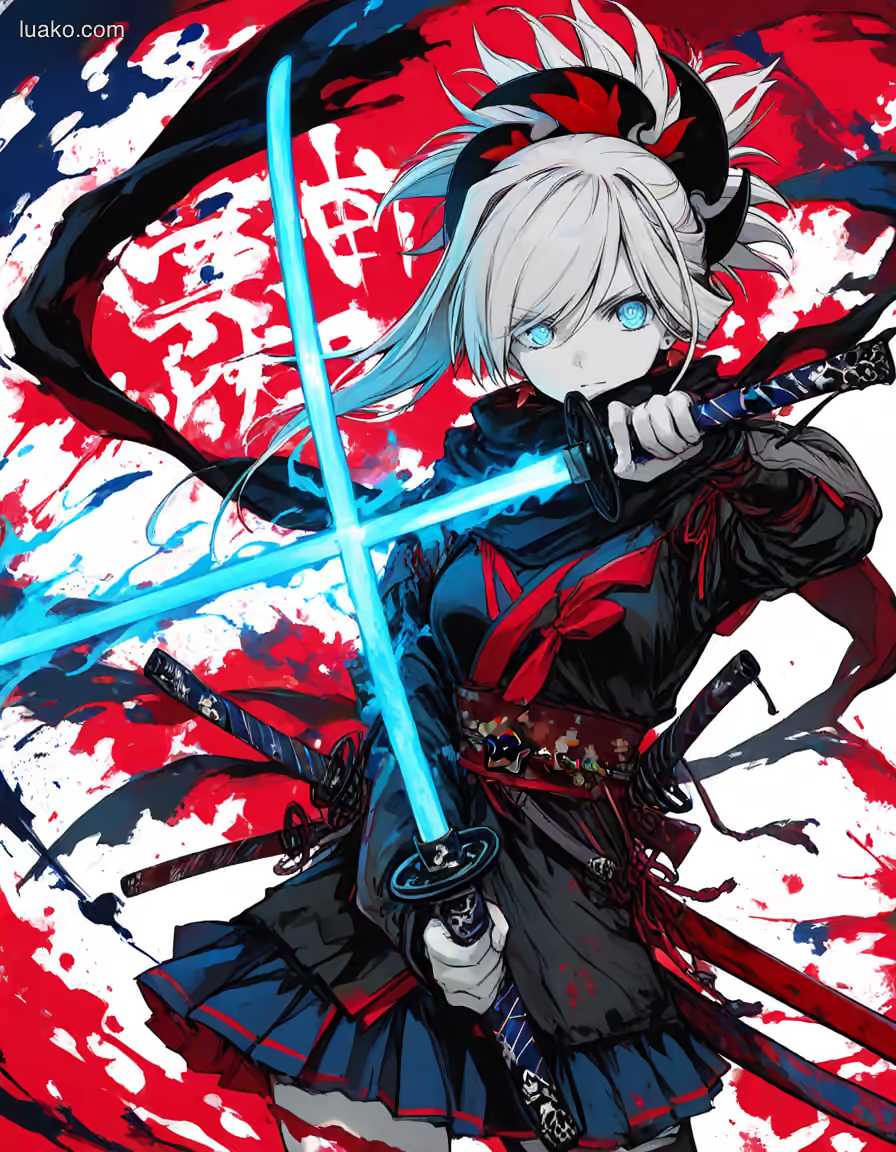
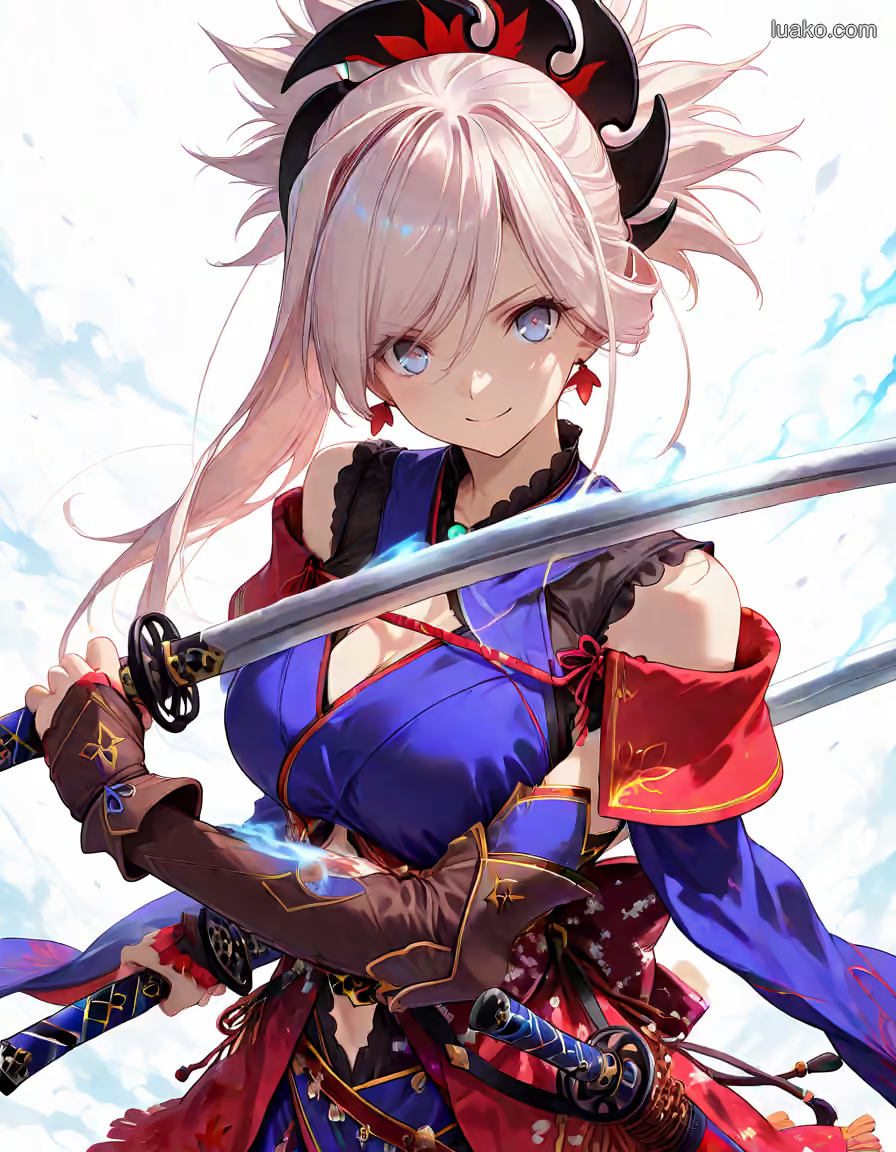
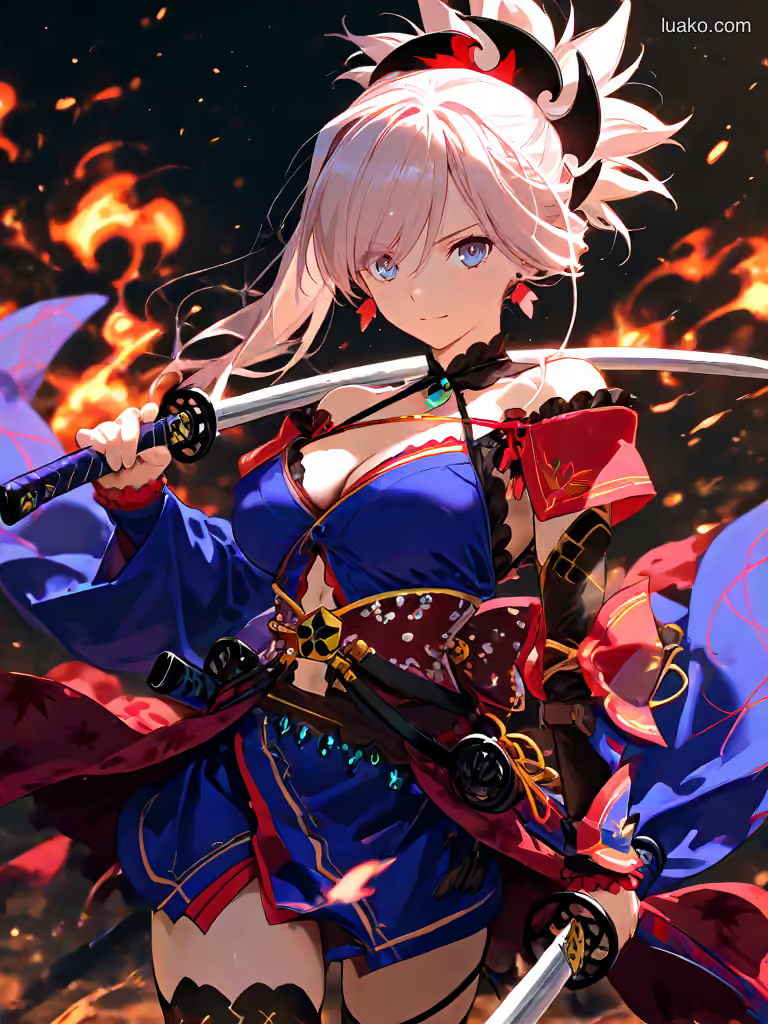
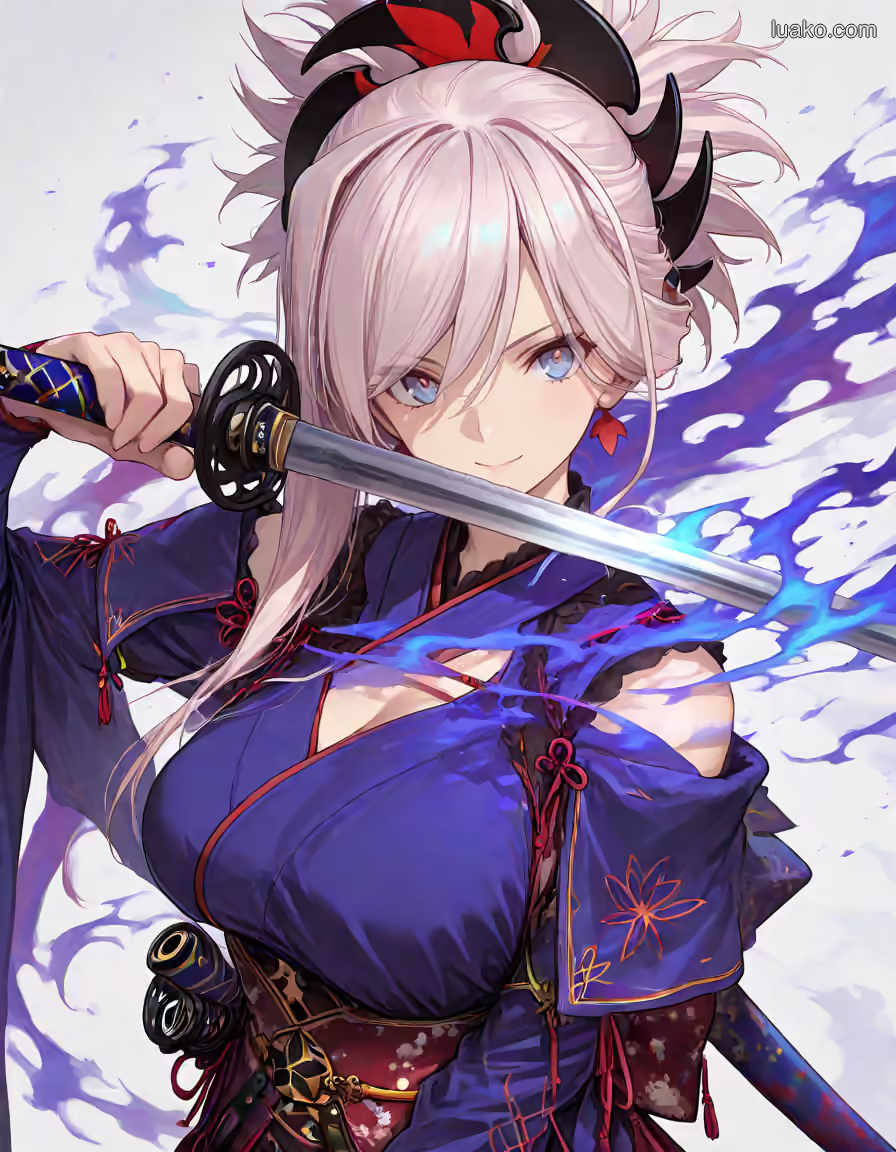
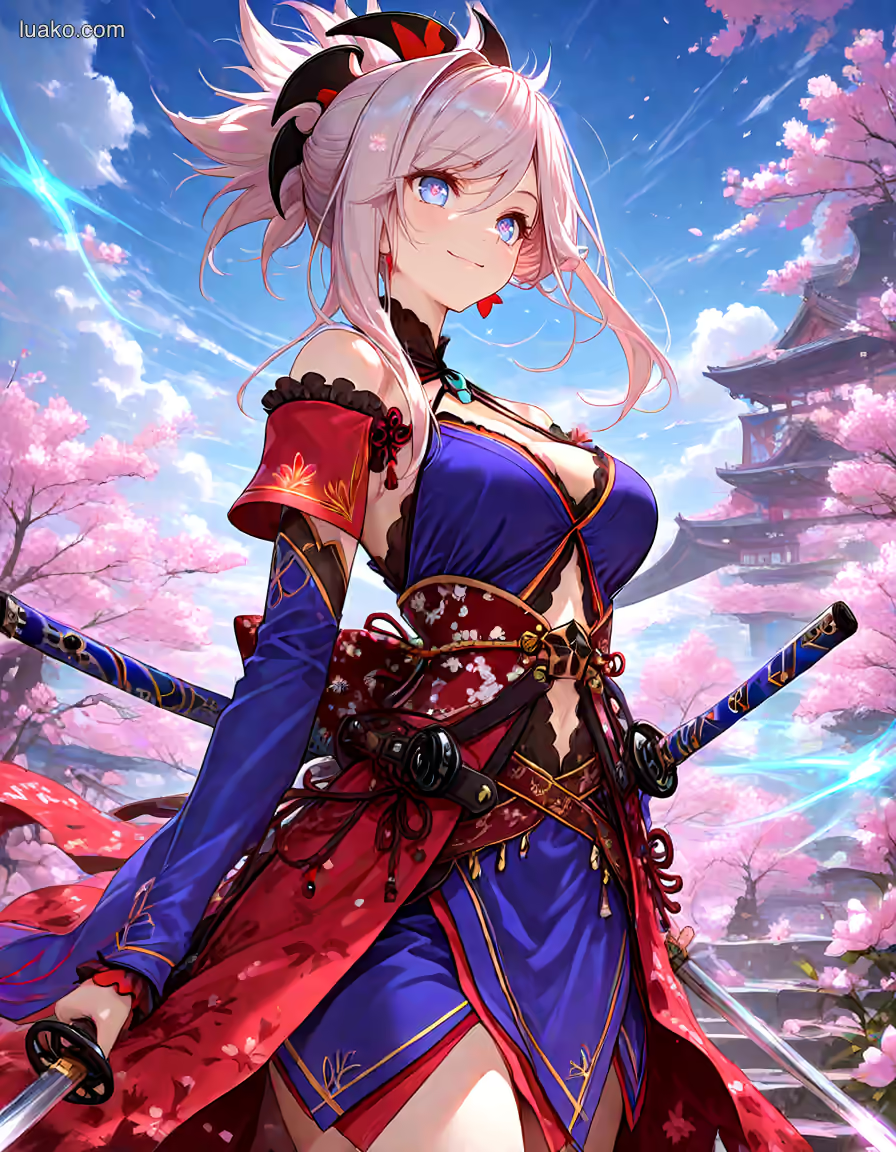
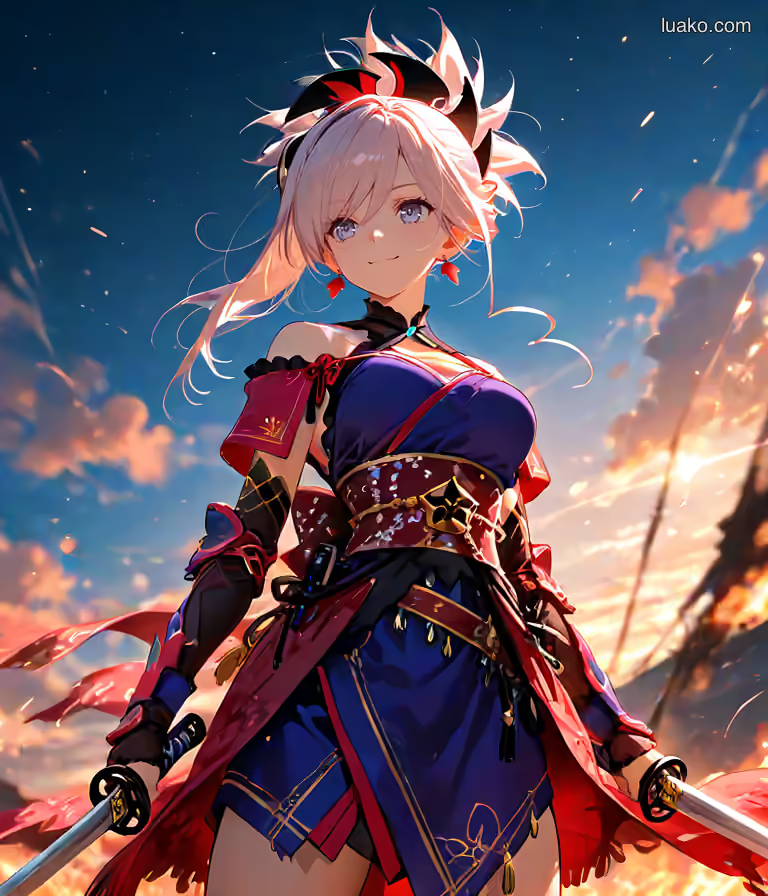
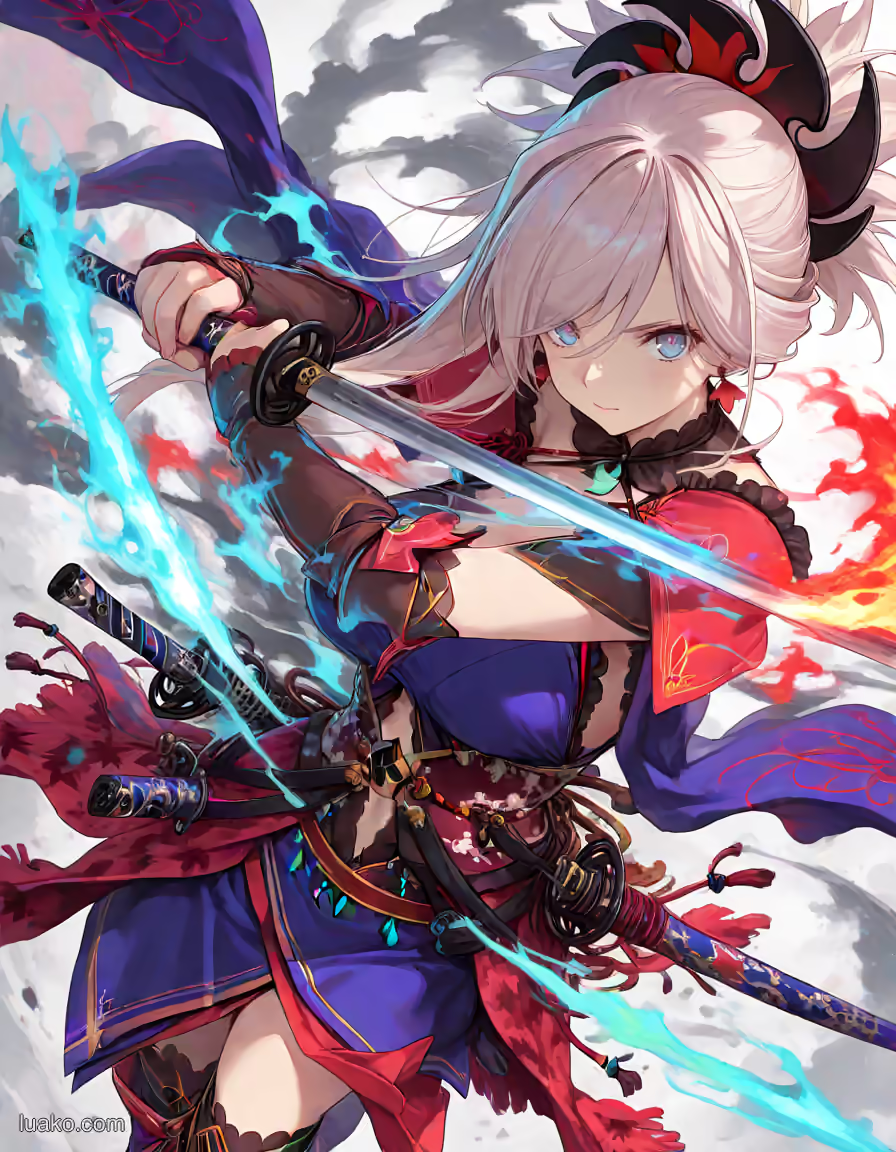
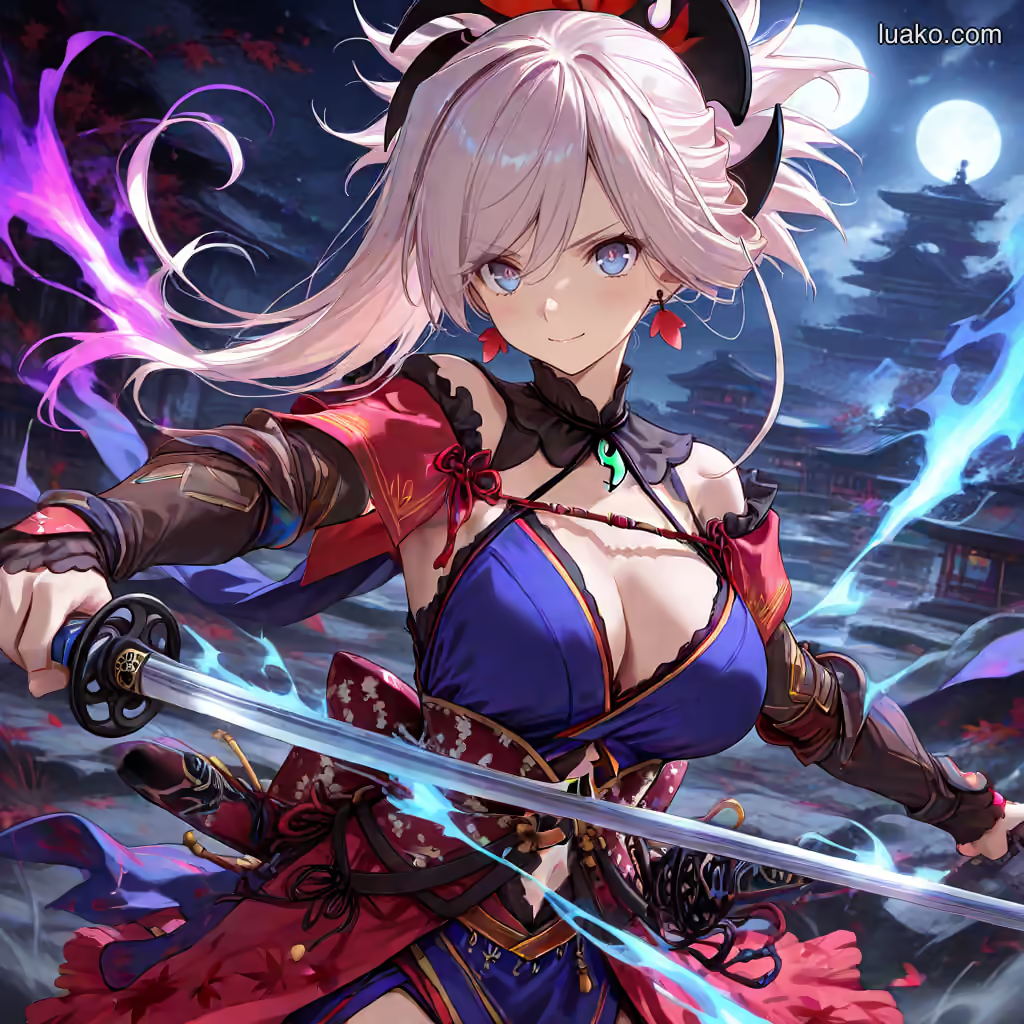
Musashi’s familiar Saber design features long, pale pink hair gathered into a high ponytail with a black-and-red ornament, bright blue eyes, and red earrings. Her blue-and-red Japanese-inspired clothing is fastened with elaborate cords and accented with dark armor pieces and gold details. She carries multiple swords at her waist; her colors, accessories, and outfit details vary between Servant ascensions.
Quick facts
- Servant class
- Saber (main version)
- Origin
- A pruned parallel history distinct from Proper Human History
- Fighting style
- Niten Ichiryu; long and short swords
- Alignment
- Chaotic Good
- Height
- 167 cm
- Voice actor
- Ayane Sakura
- Character illustrator
- Koyama Hirokazu
- Favorite food
- Udon
- Other playable version
- Summer Berserker
Abilities
Niten Ichiryu
Musashi practices the Niten Ichiryu tradition, combining long and short swords with an emphasis on judgment and mental discipline, not merely wielding two blades at once.
Limitations: Musashi herself acknowledges opponents she cannot defeat and may retreat rather than waste more blades or lives.
Heavenly Eye
Her Heavenly Eye perceives possibilities and helps her narrow an encounter toward a decisive outcome; it is also associated with her awareness of other worlds.
Limitations: It neither gives her reliable control over her interworld destinations nor makes every possible outcome achievable.
Fifth Force
Fifth Force is a Saber gameplay skill that temporarily doubles the hit count of her normal Command Cards, increasing opportunities to generate NP gauge and critical stars.
Limitations: The hit-count effect lasts only one turn; it is not a permanent increase in attack frequency.
Emptiness
Emptiness is a defensive Saber gameplay skill that briefly grants Invincibility, removes her debuffs, and increases critical-star generation.
Limitations: In gameplay, Invincibility lasts one turn, while the star-generation benefit lasts three turns.
Six Paths, Five Rings: Kurikara Divine Blade
Six Paths, Five Rings: Kurikara Divine Blade is her Anti-Unit Saber Noble Phantasm. In gameplay it deals strong single-target damage and removes the target’s buffs; strengthening can add bonus damage against particular classes.
Limitations: This is a single-target Noble Phantasm, not an unconditional victory against any opponent; additional effects depend on game upgrades.
Relationships
Ritsuka Fujimaru
Chaldea Master and recurring companion
Chaldea’s Master repeatedly crosses paths with Musashi, witnesses her duels, and fights beside her when other people are in danger. Their bond is that of trusted companions; the main narrative does not establish them as a romantic couple.
Fuuma Kotarou
Ally in Shimousa
Kotarou accompanies the group facing the swordmasters and helps protect Chaldea’s Master and Shimousa’s people.
Senji Muramasa
Fellow traveler and ally in Shimousa
The swordsmith’s brusque pragmatism balances Musashi’s flamboyance as they move toward the castle at the heart of the crisis.
Yagyu Tajima-no-Kami Munenori
Accomplished swordsman encountered in Shimousa
Musashi encounters the formidable Yagyu Munenori in Shimousa. Their shared devotion to swordsmanship gives their meetings an undercurrent of professional scrutiny, even when their outward manners differ.
Mash Kyrielight
Chaldea ally
Musashi takes an encouraging interest in Mash, recognizing the pressure of carrying responsibility while insisting that thoughtful concern is not weakness.
Interesting facts
After learning that Proper Human History remembers a famous male Miyamoto Musashi, she sometimes calls herself “Girl Musashi.”
She uses the distinction herself to acknowledge that she is not the same person as the celebrated swordsman of the world she now visits.
Musashi makes an almost secret personal project of sampling udon varieties as she travels from place to place.
Her favorite food becomes a way of paying attention to the individual worlds and regions she passes through.
Despite her absence from the famous swordmasters recorded in her own world, opponents later spoke privately to their pupils about the extraordinary wandering woman who defeated them.
Her reputation survives as personal testimony rather than the public legend attached to the historical male Musashi.
The supplementary character material says Musashi wears at most four ordinary katanas at her belt; the fifth sword in its count is the Sword of Void associated with her Noble Phantasm.
Her five-sword count refers to a particular part of her arsenal, not five interchangeable everyday swords.
Her character material names several celebrated weapons of the historical Musashi, then explicitly states that this alternate-world Musashi did not possess those particular swords.
The named blades belong to the male Musashi’s historical tradition, not automatically to the alternate-world swordswoman’s personal inventory.
Frequently asked questions
Who is Miyamoto Musashi in Fate/Grand Order?
She is a wandering female swordswoman from a pruned parallel history, introduced as a Saber-class character who becomes a recurring ally of Chaldea.
Why is Musashi a woman in FGO?
FGO’s Musashi comes from an alternate world where the swordmaster was a woman; she is deliberately distinguished from the male Musashi of Proper Human History.
What class is Musashi?
Her principal playable incarnation is a five-star Saber. A separate summer incarnation is a five-star Berserker.
What kind of swordsmanship does Musashi use?
She practices Niten Ichiryu, a long-and-short-sword style associated with the historical Musashi, while pursuing her own ideal of the decisive sword.
What does Musashi like?
She enjoys udon, traveling, the excitement of a challenging match, and receiving praise. She is also protective of people treated cruelly.
Who are Musashi’s allies in Shimousa?
She fights alongside Chaldea’s Master and allies such as Fuuma Kotarou and Senji Muramasa in the battles against the swordmasters.
Is FGO Musashi the historical Miyamoto Musashi?
She shares the name and sword tradition, but the story explicitly presents her as coming from a parallel, pruned history—not as an unchanged depiction of the historical man.
Major story spoilers below.
Seven duels and the sword of zero
In Shimousa, Musashi and Chaldea’s Master confront Heroic Spirit Swordmasters responsible for attacks on civilians. With Kotarou and Muramasa among their allies, they reach Onriedo Castle. There Musashi defeats Yagyu Munenori, whose role as Saber of Empireo is revealed, before the conflict moves toward its final confrontation. Throughout these battles she is pursuing not simply victory but the seemingly impossible sword of “zero.”
After the crisis involving Amakusa Shirou, Musashi faces Sasaki Kojirou in the burning castle. The story sets her sword of zero against Kojirou’s sword of infinity, expressed through his Swallow Reversal. Their contest seems unable to reach a conclusion until Chaldea’s Master bears witness and chooses to stand with Musashi. The duel then resolves in her favor, marking the culmination of her pursuit of zero.
Exhausted and believing she has reached the end of her road, Musashi propels the Master out of the burning keep to safety, apparently accepting her own fate. This is a departure, not the established conclusion of every version or appearance of her story.
The journey after Shimousa
Musashi turns up again in the Russian Lostbelt, making clear that a traveler from a pruned history has no lasting home to return to. She helps Chaldea confront Ivan the Terrible and takes an interest in Mash’s doubts about the burdens of protecting others. The end of her swordsmanship quest in Shimousa has not ended the unpredictable journey itself.
Olympus: a last strike beyond the void
In Olympus, Musashi joins Chaldea’s resistance to the Olympian machine gods. She fights with allies facing Demeter and Zeus, choosing to risk herself for people whose future she wants to see protected. Her world may have been erased, but she refuses to treat the survival of others as meaningless.
After Zeus falls, Chaos—the primordial source of the Olympian machine gods—appears beyond a fissure in space-time and threatens to strip Earth of resources. The Storm Border carries Musashi toward the opening, with Romulus=Quirinus spending his remaining power to clear a path that otherwise seems impossible. Musashi aims her sword not at an ordinary body but at the void itself, cutting through the fissure and shutting Chaos away.
Before the strike, Musashi reflects that she may never be summoned again once she disappears, because the history that produced her was pruned. Her attack expends her Spirit Origin, and Nemo reports her disappearance along with Chaos. Following the Olympus chapter, the in-game Spirit Origin List shows DATA LOST for both the Saber and summer Berserker Musashi entries; players can still use owned Servants in battles. Later Japanese story chapters exist, but this account does not assume that their complete implications for her fate have been verified.
Additional story facts
While preparing her final strike, Musashi privately thanks whoever allowed her to keep traveling after Shimousa, then bitterly doubts it could have been humanity, whose history discarded her world.
The contradiction gives her farewell a personal complexity beyond a simple celebration of heroic sacrifice.
During the approach to Chaos, Nemo considers a desperate series of Zero Sails; Romulus=Quirinus instead expends his power to carve a path for the Storm Border.
Musashi’s decisive cut is possible only because other allies create the opening that lets her reach her target.
Spoiler questions
Does Musashi defeat Sasaki Kojirou in Shimousa?
Yes. Their final clash is decided in Musashi’s favor, and it completes her pursuit of the sword of zero in that chapter.
What happens to Musashi at the burning castle?
After the duel, she sends the Master out of the flames and seems resigned to being left behind. She nevertheless appears again later in the story.
What happens to Miyamoto Musashi in Olympus?
She strikes the cosmic entity Chaos through a fissure in space-time, closing the opening and expending her Spirit Origin in the process. Nemo states that she has disappeared.
Why does FGO mark Musashi as DATA LOST?
After Olympus, her Saber and summer Berserker entries in the in-game Spirit Origin List change to DATA LOST. It reflects the story loss of her Spirit Origin; it does not delete an already owned playable Musashi from battles.
Tags
Miyamoto Musashi Artwork and Images
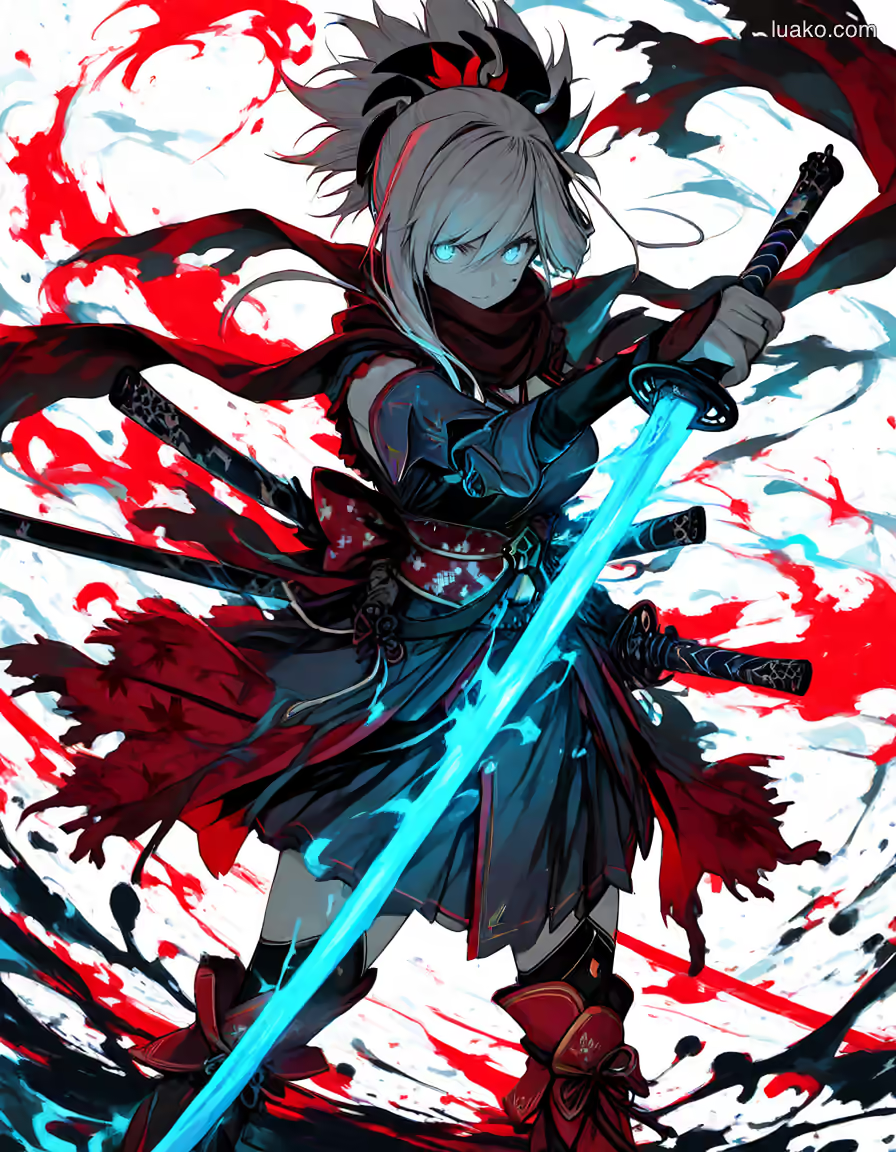
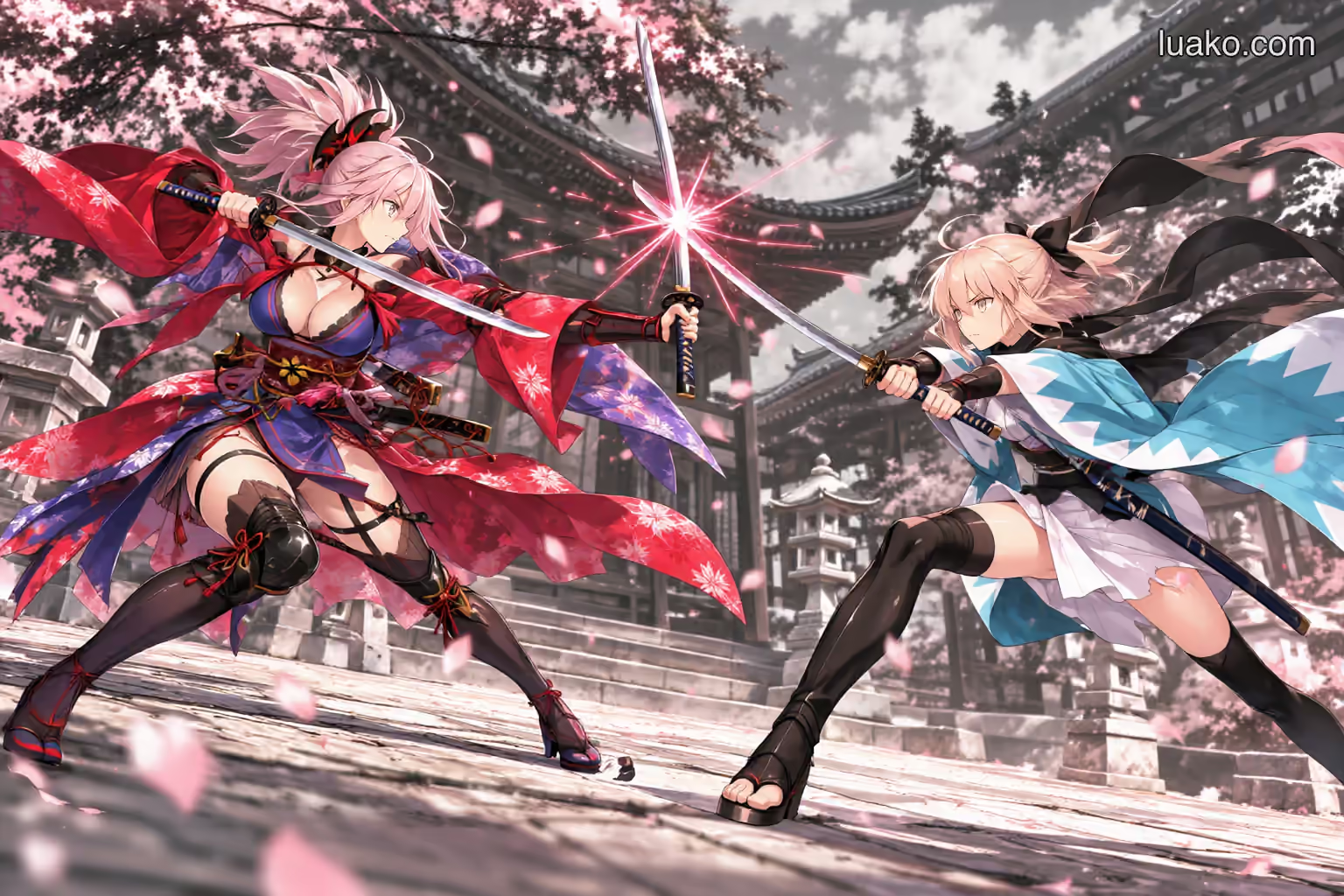
Discover artwork featuring the wandering Saber-class swordswoman from Fate/Grand Order, known for her dual swords and striking red-and-blue design.
Videos · 22