Reimu Hakurei — Touhou Project Character Profile
Interesting factsBiographyThe story, the personality, and everything in between.Read biographyClose biography
Reimu Hakurei博麗霊夢
Human shrine maiden of the Hakurei Shrine; recurring protagonist and resolver of incidents in Gensokyo
Reimu Hakurei is a principal protagonist of Touhou Project, the fantasy game series created by ZUN. She is the human shrine maiden of the Hakurei Shrine, which stands on the boundary of Gensokyo, and one of the people most often called upon when the land’s uneasy coexistence of humans, youkai, gods, and spirits is disturbed. Her duties connect her to the Great Hakurei Barrier, while her natural aptitude for flight, spiritual charms, and danmaku combat makes her a formidable incident resolver.
Between crises, she is just as likely to be drinking tea, neglecting chores, or wondering how to attract more worshippers. That contrast between instinctive competence and easygoing shrine life runs through her appearances in the games and official manga.
Biography
From PC-98 to the Modern Games
Reimu was there at Touhou Project’s beginning. ZUN first presented Highly Responsive to Prayers on the PC-98 in 1996. Instead of the scrolling danmaku associated with later games, it centered on guiding a bouncing yin-yang orb through a block-breaking-style field. The Embodiment of Scarlet Devil brought the series to Windows in 2002 and established the era in which Reimu’s red-and-white design and incident-solving role became familiar to a wider audience. The early games remain part of her publication history, while the later games and official books give a fuller picture of her everyday life in Gensokyo.
A Shrine at the Edge of Gensokyo
Reimu serves as the shrine maiden of the Hakurei Shrine, a remote site bound up with Gensokyo’s boundary and its unusual residents. The shrine has a persistent practical problem: human worshippers are scarce. Even so, Reimu’s daily routine often consists of resting, drinking tea, and dealing with whoever happens to visit. Visitors need not be human; her comparatively unguarded way of treating people and youkai alike makes the shrine a meeting place as much as a religious site.
Reimu meets an incident with an unusual combination of confidence and improvisation. Her spiritual talent comes naturally, and her decisions often start with an instinctive sense that something is wrong. She is less diligent about routine shrine work: keeping the grounds tidy and persuading human worshippers to visit do not command the same urgency as chasing down a disturbance. Her work nevertheless matters well beyond the shrine grounds, since the Hakurei shrine maidens are charged with watching over Gensokyo’s Great Boundary.
The Scarlet Mist and the Endless Winter
In The Embodiment of Scarlet Devil, an unnatural scarlet mist deprives Gensokyo of sunlight, and Reimu sets out from her shrine to investigate it. The adventure introduces the enduring rhythm of her role: a world-scale inconvenience, an apparently ordinary shrine maiden, and a series of supernatural confrontations. In Perfect Cherry Blossom, winter refuses to end when spring should have arrived. The disruption leads the protagonists toward a mystery connected with the Netherworld and its cherry blossoms.
An Incident Is Not Always a Simple Hunt
Imperishable Night begins with a false full moon replacing the real one. Humans and youkai act together to address the problem before morning, demonstrating that incident-solving does not fit a simple permanent war between their groups. In Immaterial and Missing Power, Gensokyo’s repeated gatherings become a mystery of their own. Reimu’s world is full of disputes whose participants may later share tea at her shrine.
The Cost of Keeping a Shrine
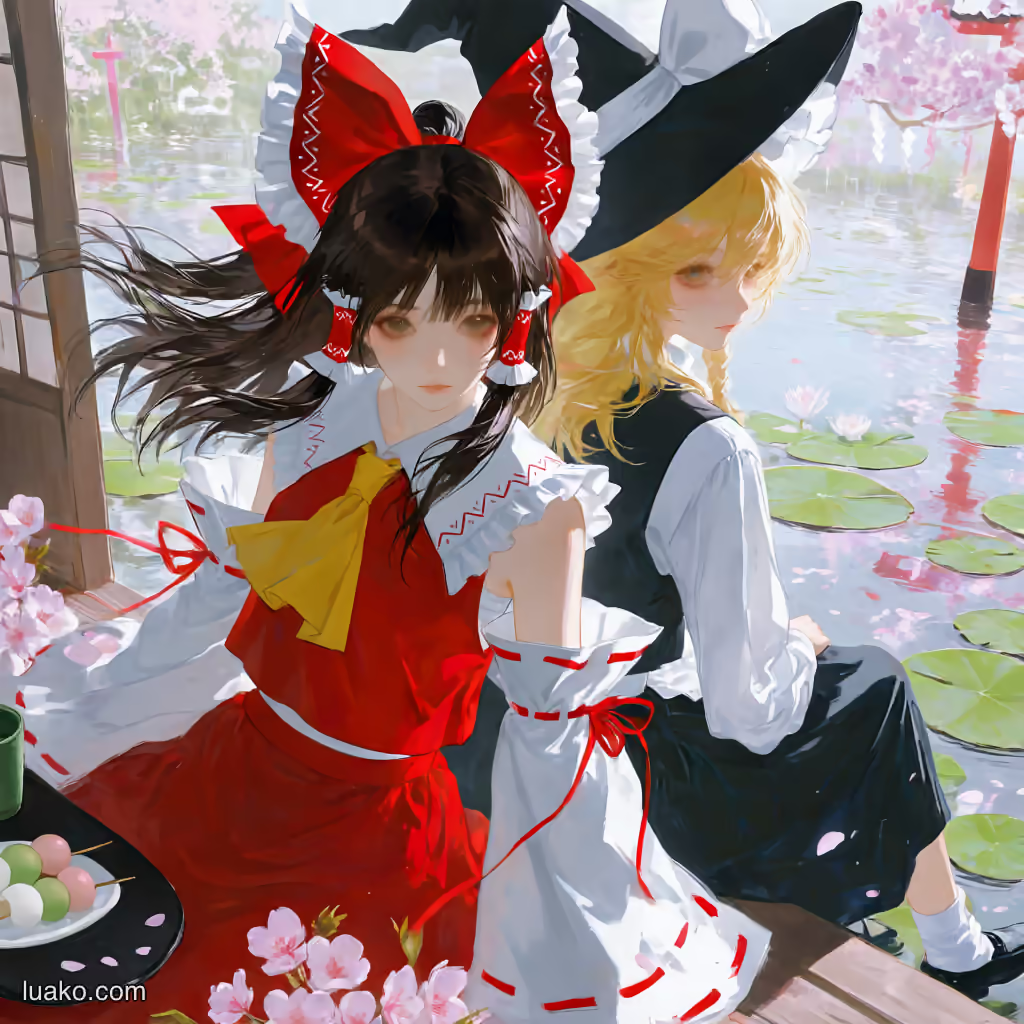
Mountain of Faith gives Reimu a very personal reason to act. The Hakurei Shrine already suffers from a shortage of human visitors and faith when the newly arrived Moriya Shrine demands that she surrender it. This incident threatens the place where she lives and works, rather than only the peace of Gensokyo. Her response also introduces a continuing religious and personal rivalry with the Moriya Shrine’s maiden, Sanae Kochiya.
The Shrine Between Incidents
In the official manga Wild and Horned Hermit, Reimu’s ordinary life comes into sharper focus. Kasen Ibaraki becomes a regular visitor and repeatedly takes issue with the shrine maiden’s lackadaisical habits and approach to attracting worshippers. Marisa and Sanae are also frequent presences. This side of Reimu is no less important than her battles: she must keep living in the Gensokyo that she spends so much time defending.

Personality and Motivations
Reimu is direct, independent, and often guided by instinct. She can be blunt or impatient when someone interferes with her quiet life, yet her habitual ease around both humans and youkai prevents her from fitting the role of a uniformly hostile monster hunter. She has a strong sense of when something is wrong and usually acts rather than agonizing over every possibility.
Natural talent lets Reimu succeed without the relentless practice that a less gifted fighter might need. The contrast is especially clear beside Marisa Kirisame, who pursues magic through her own sustained study. Reimu is hardly passive, however: once an incident catches her attention, her languid manner quickly gives way to action.
She also has unmistakably worldly concerns. A shrine without visitors struggles to attract offerings, and Reimu can be intensely interested in an opportunity to improve its fortunes. Her behavior in these scenes is often funny precisely because the person who confronts powerful spirits may find ordinary shrine management harder than a duel.
Appearance
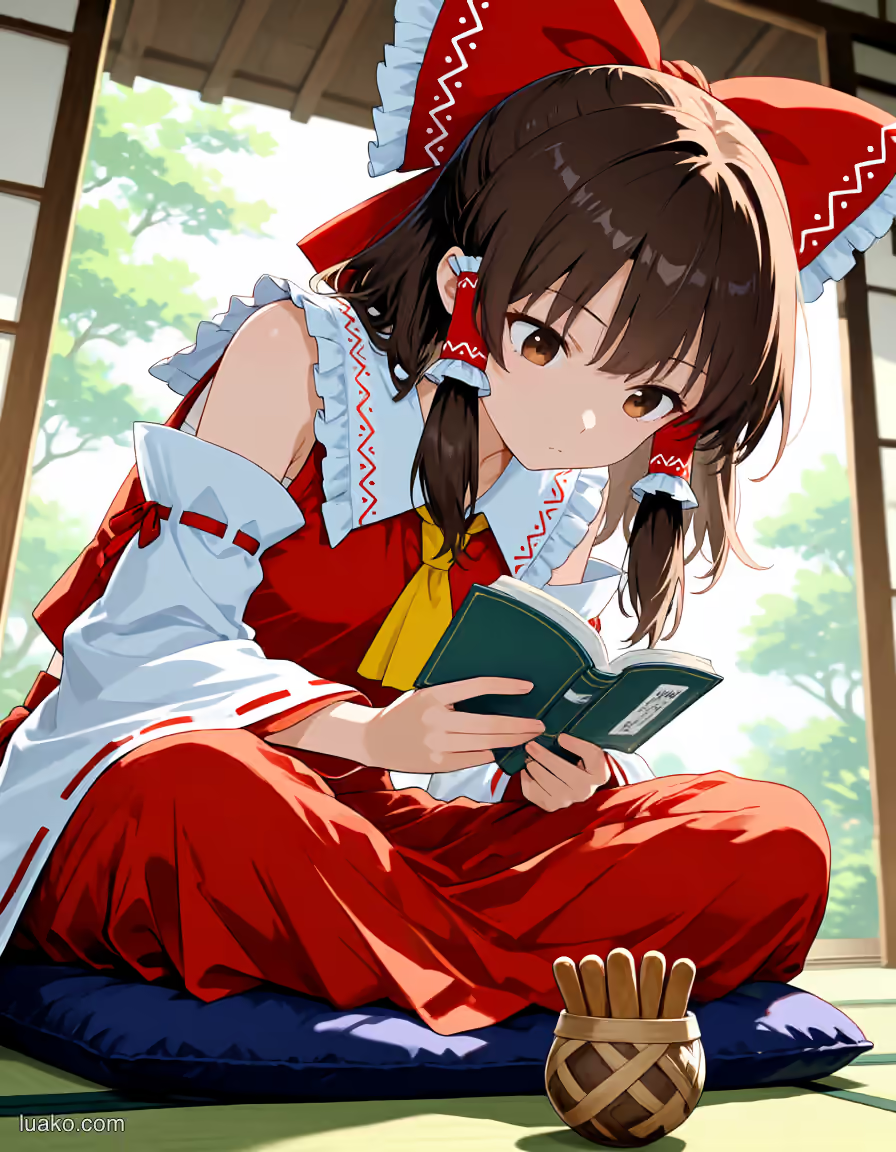
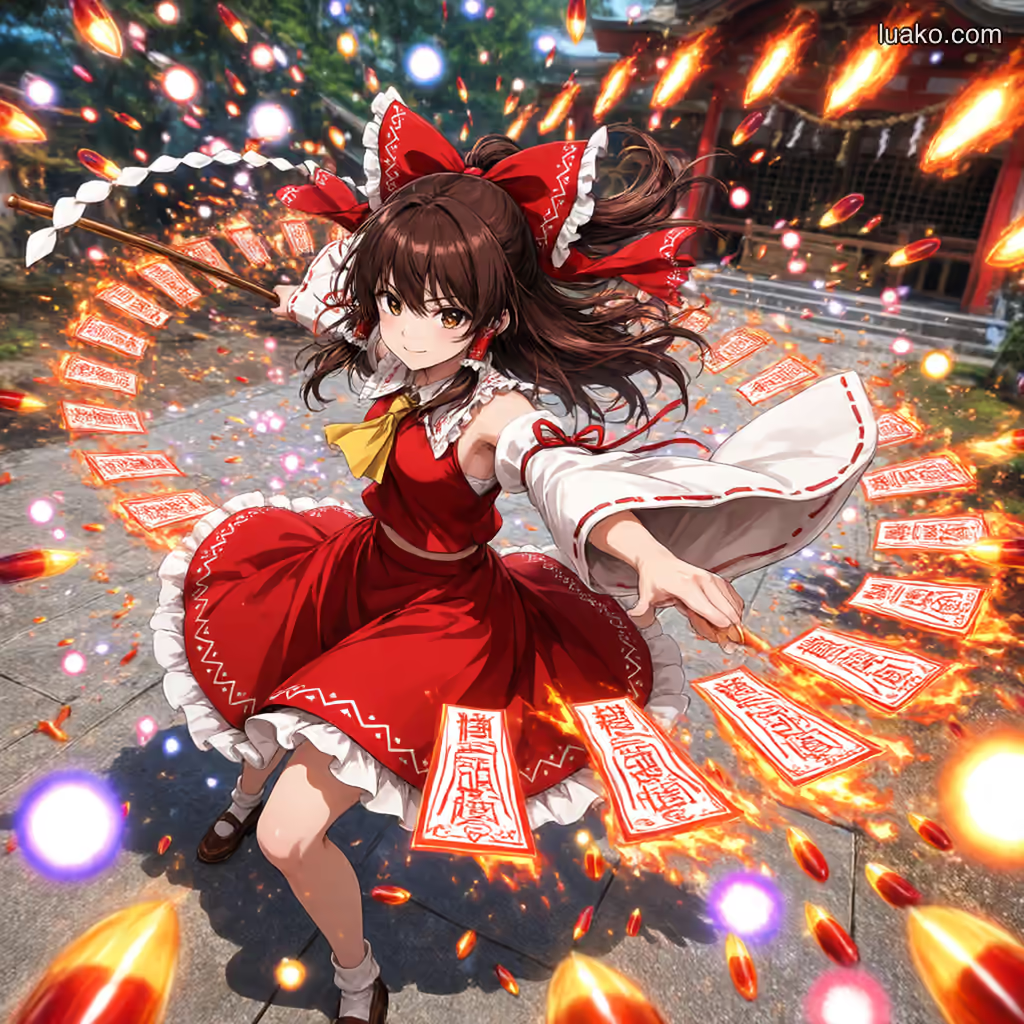
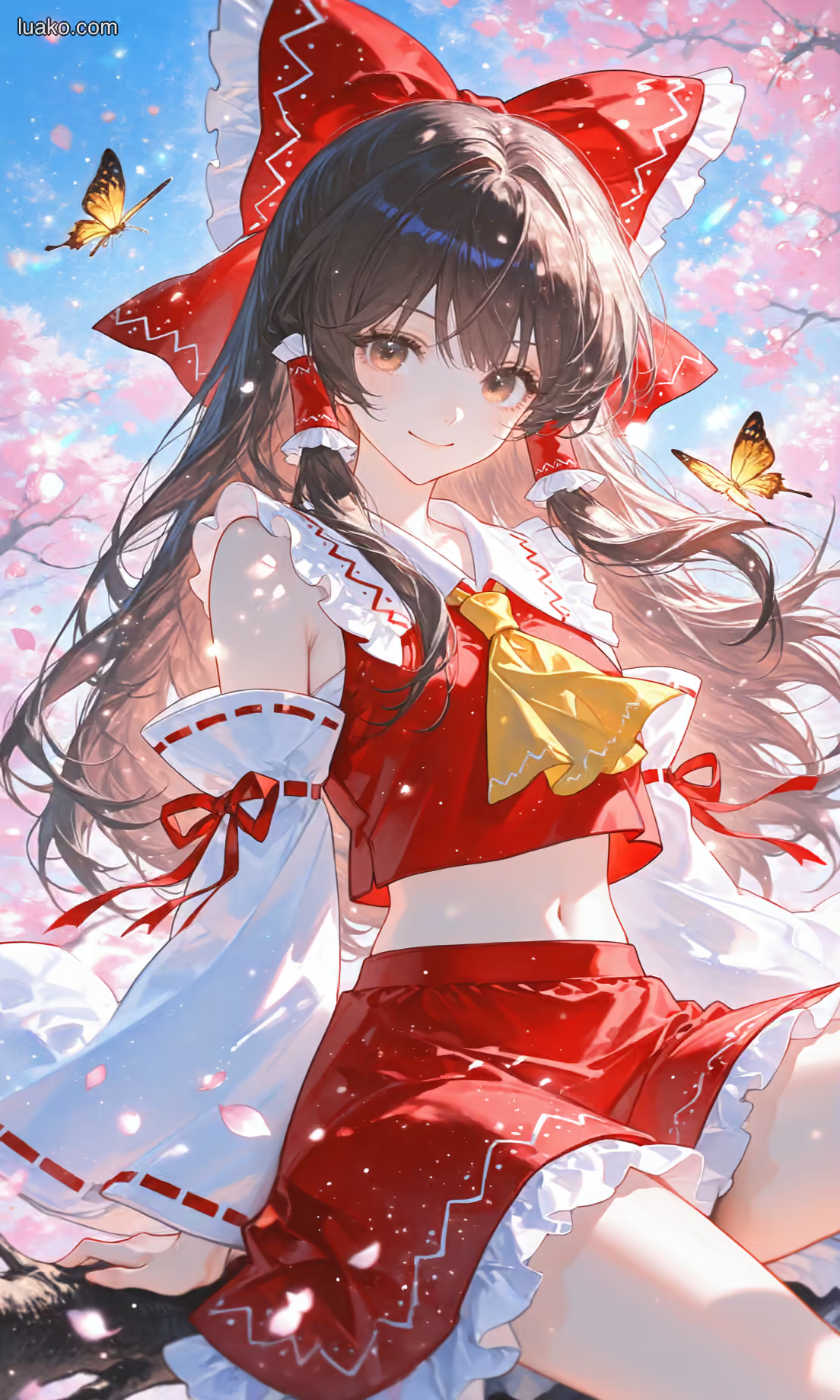
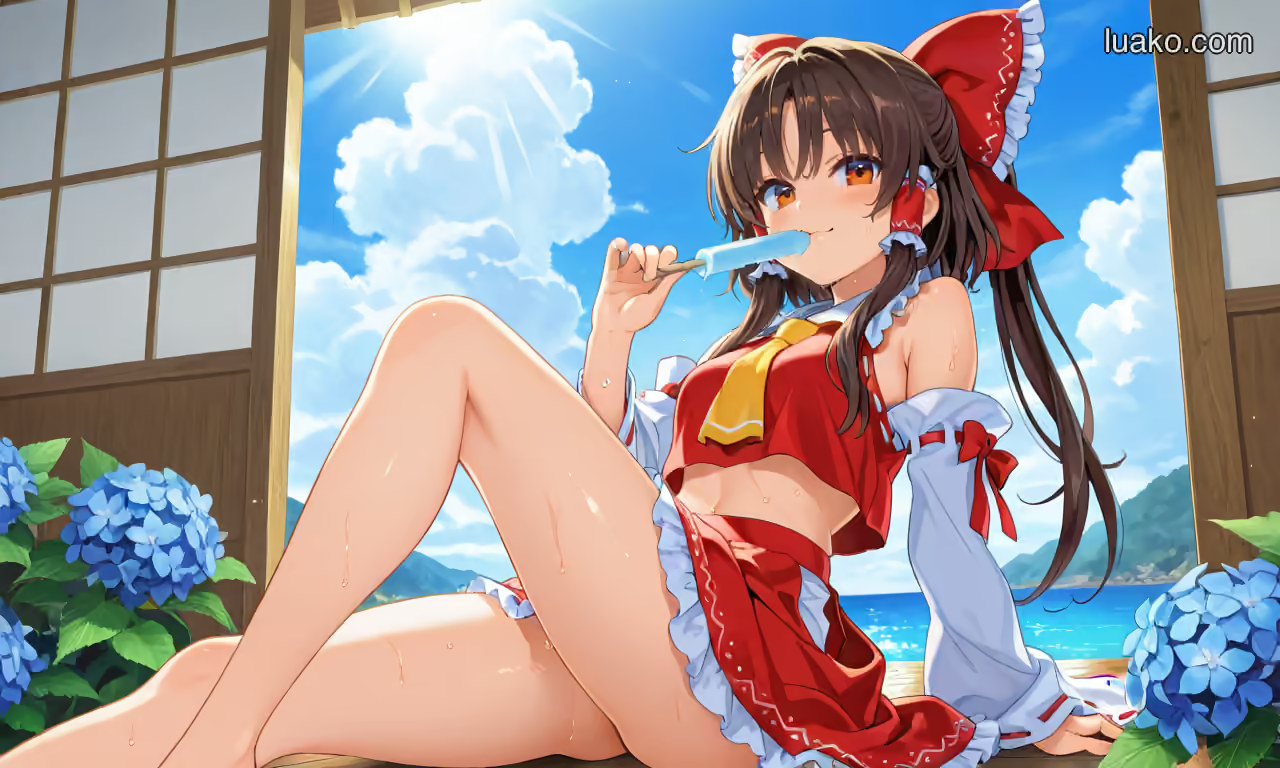
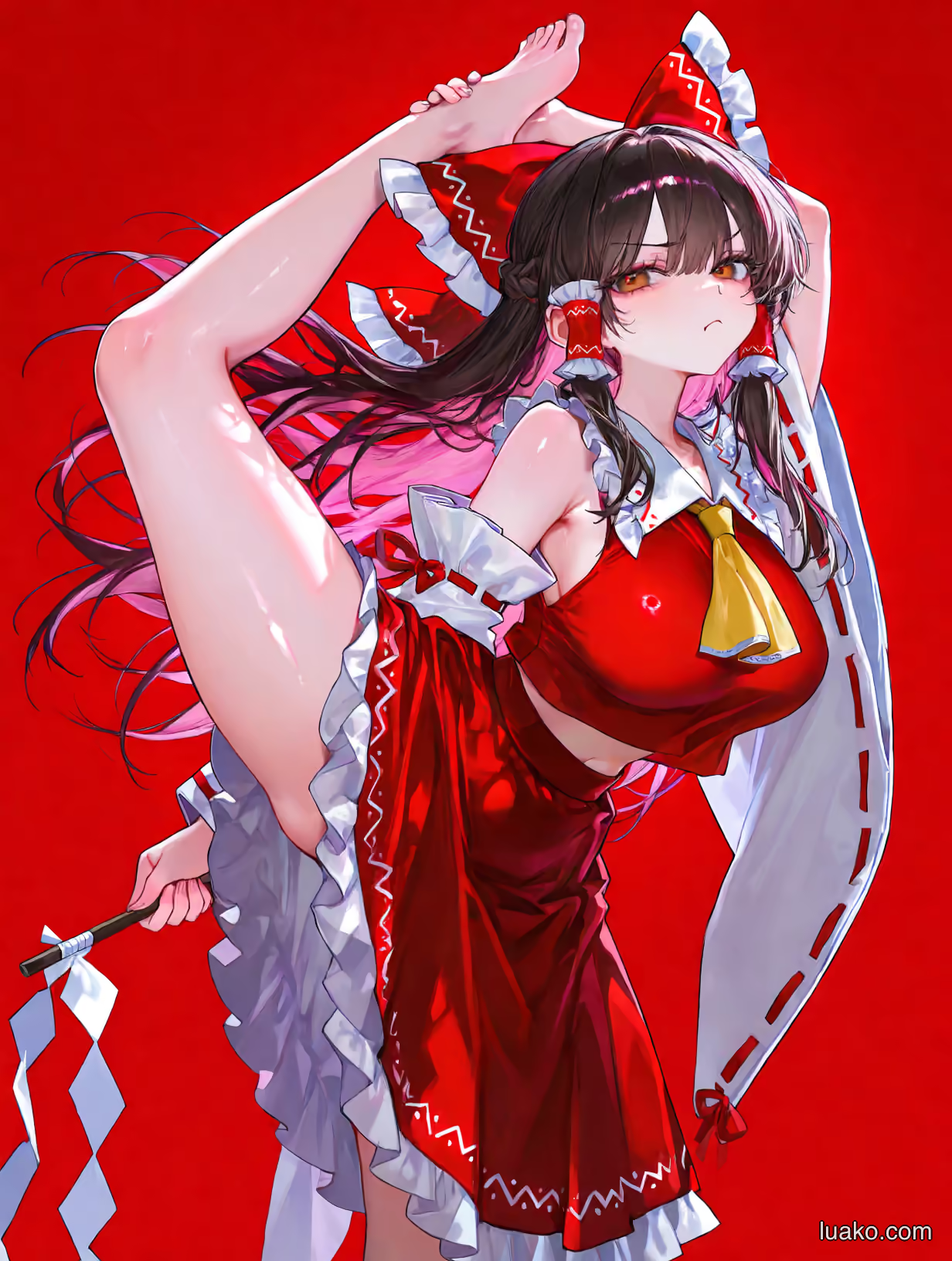
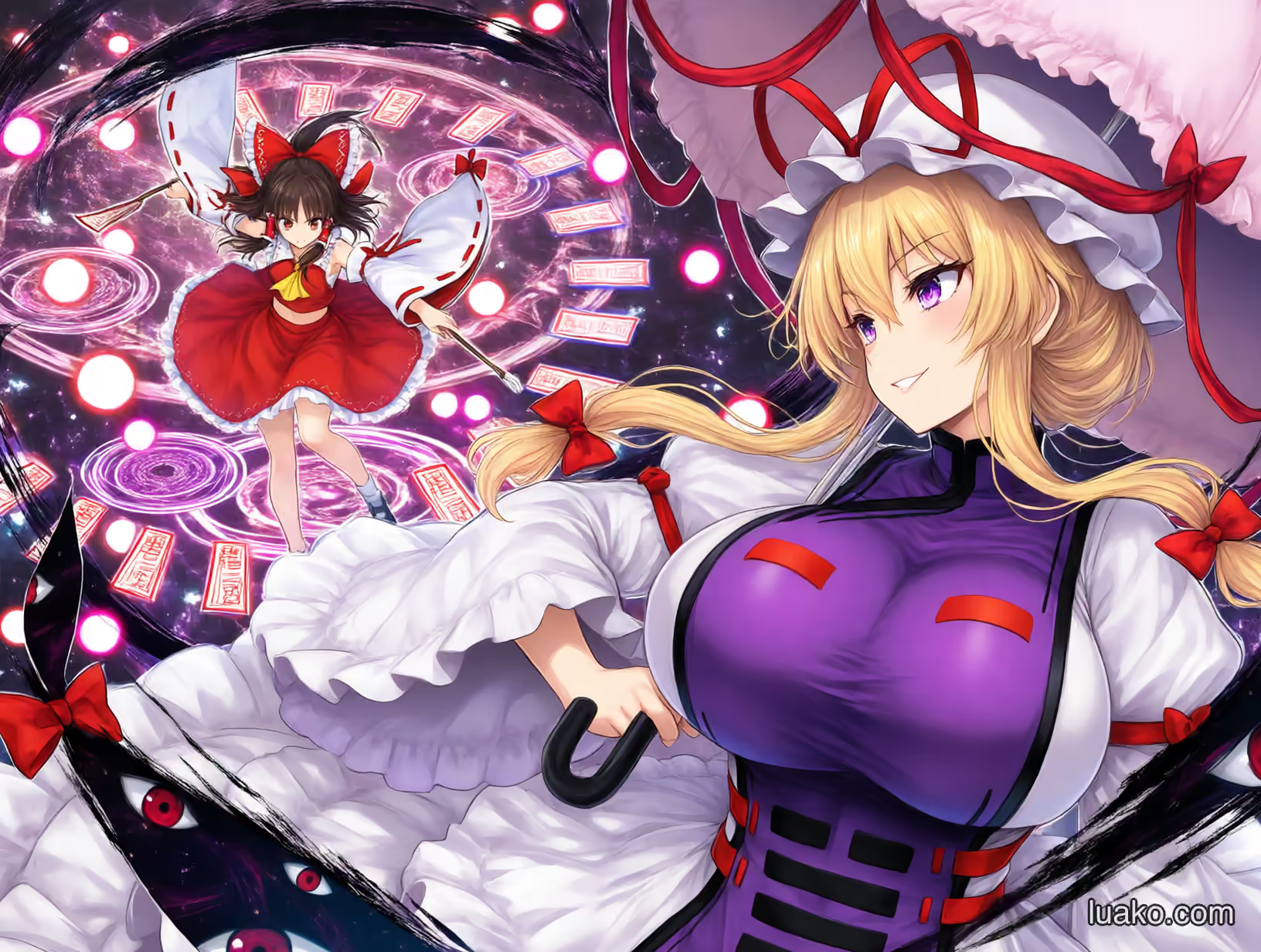
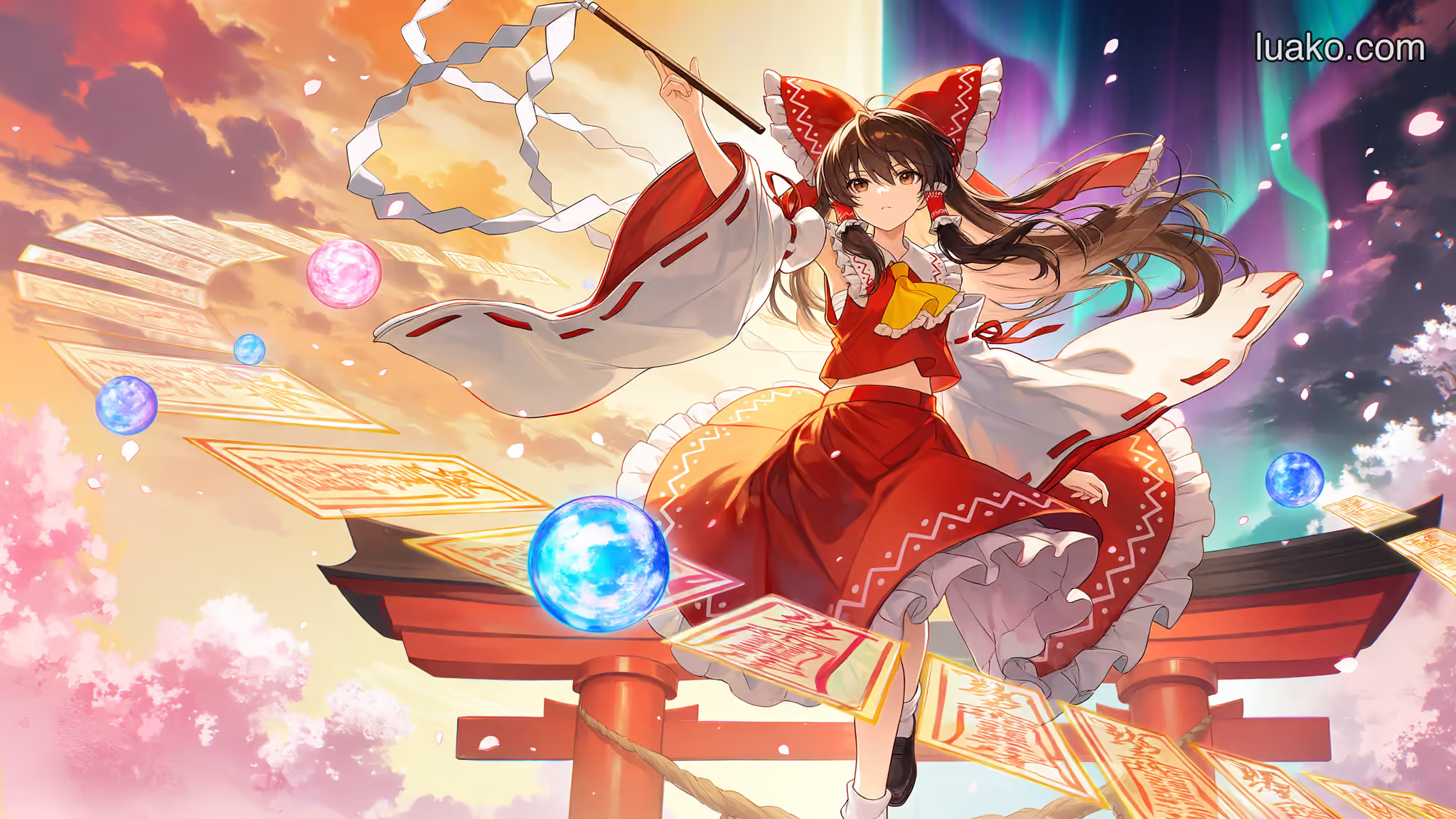
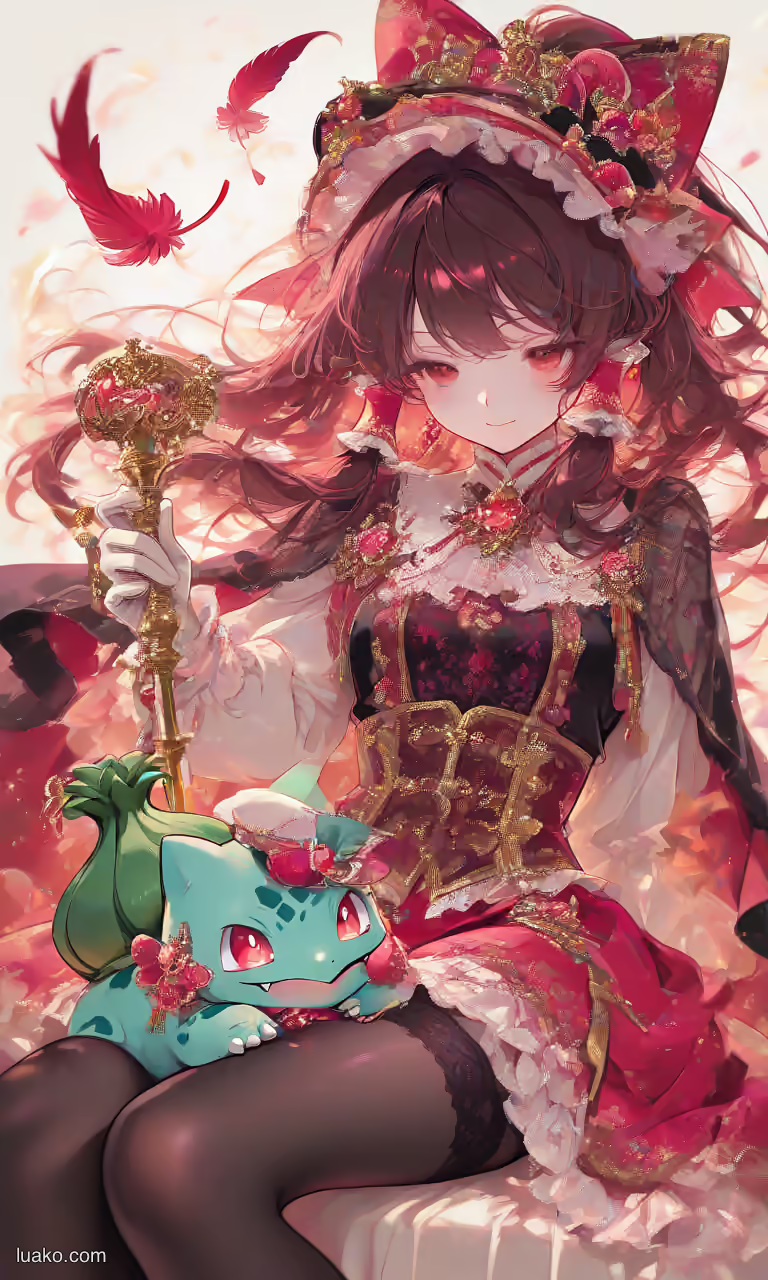
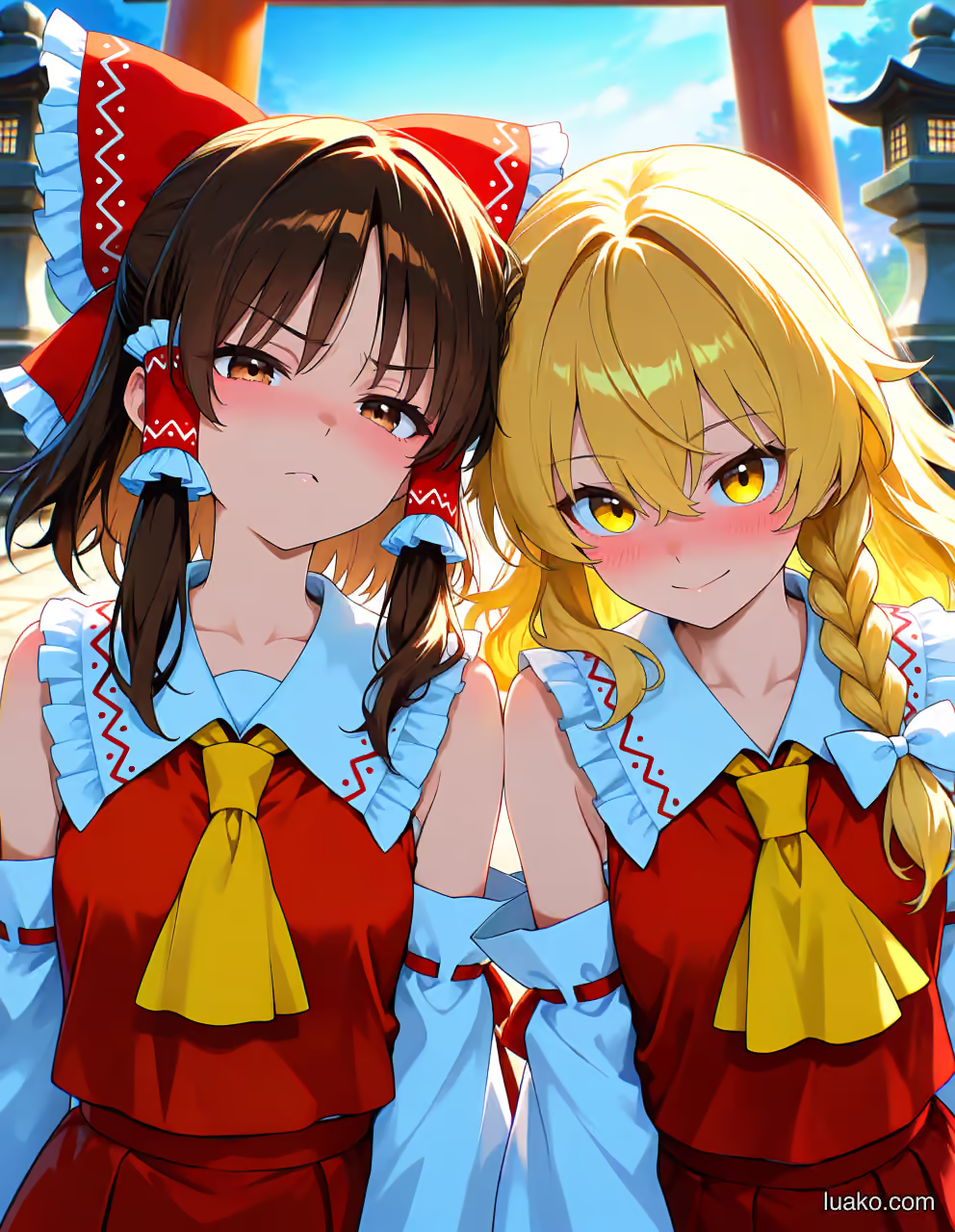
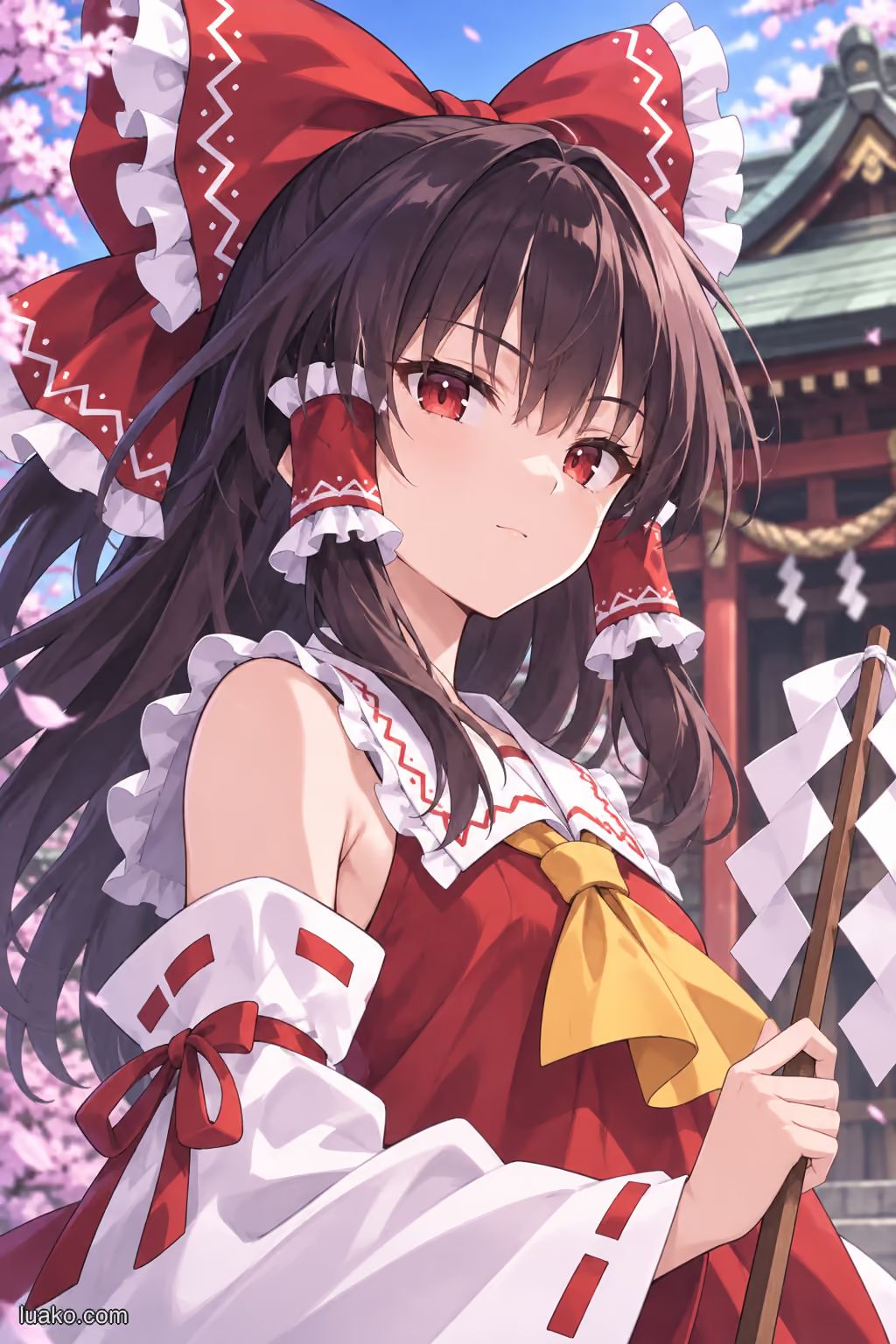
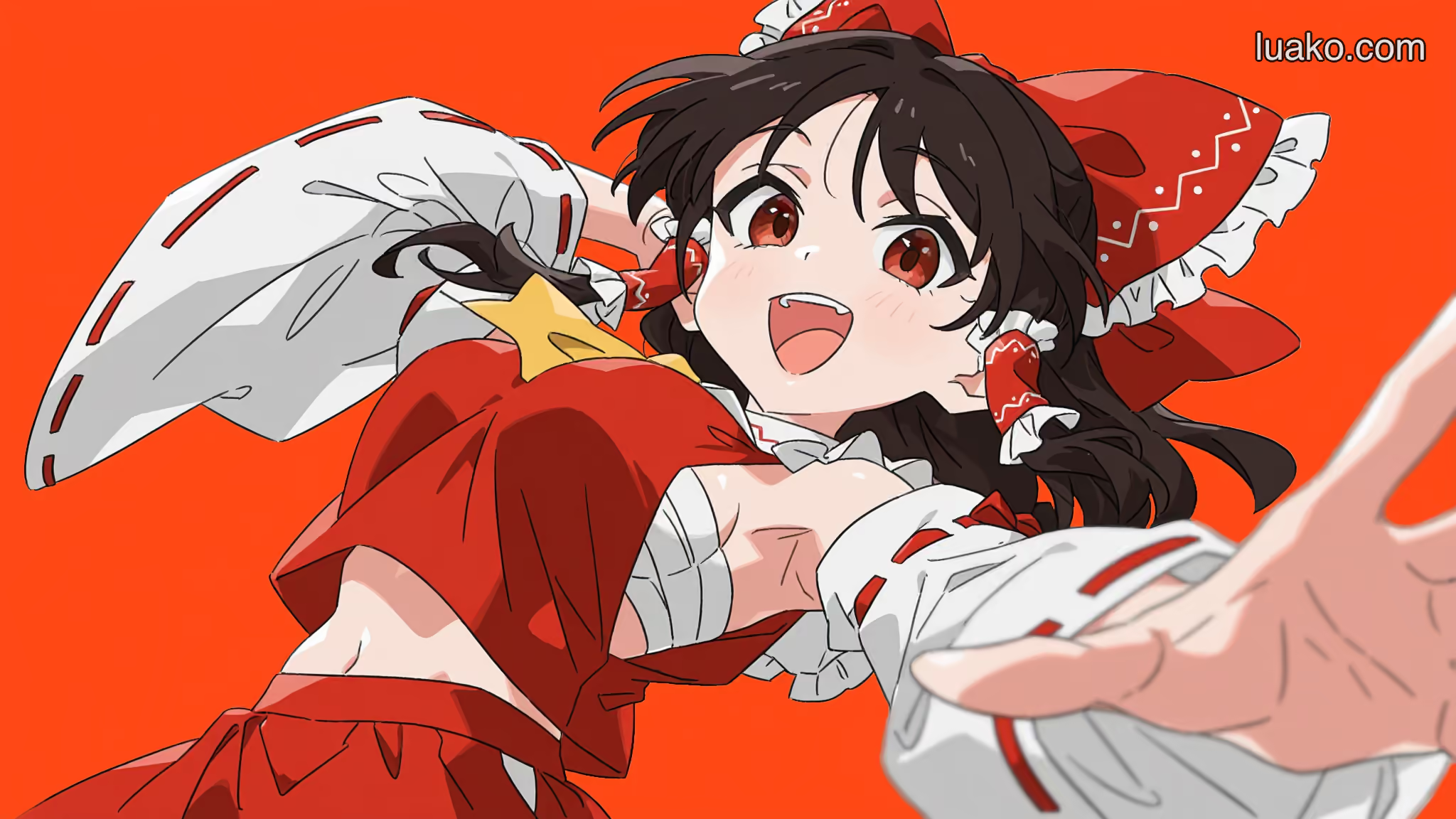
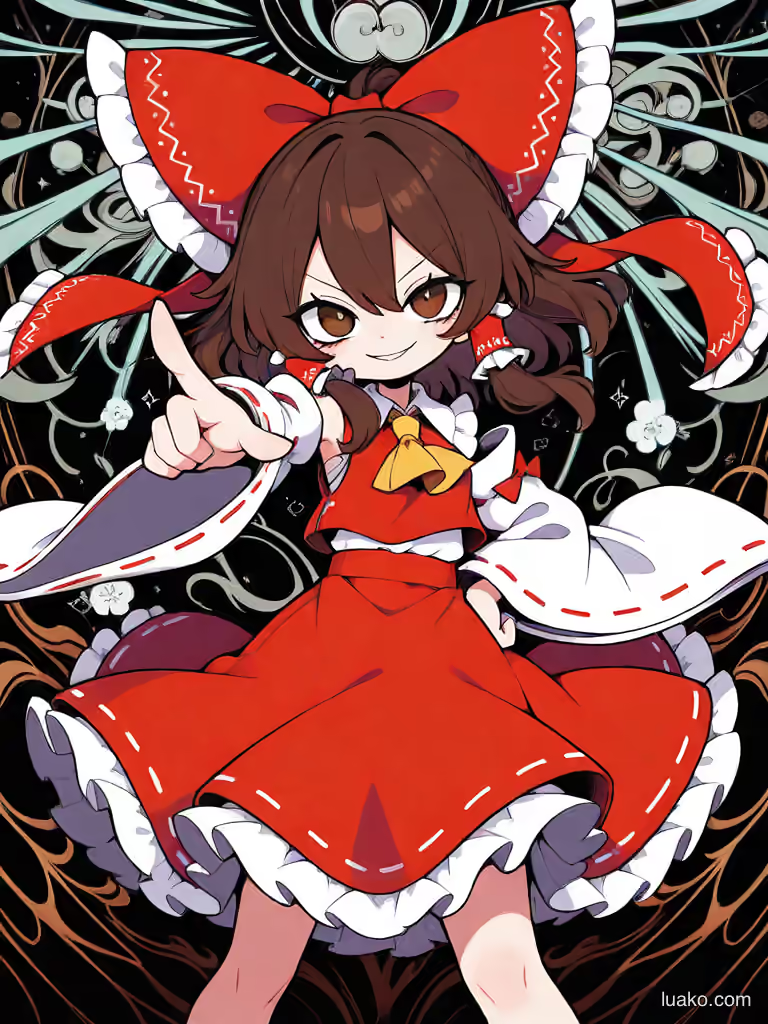
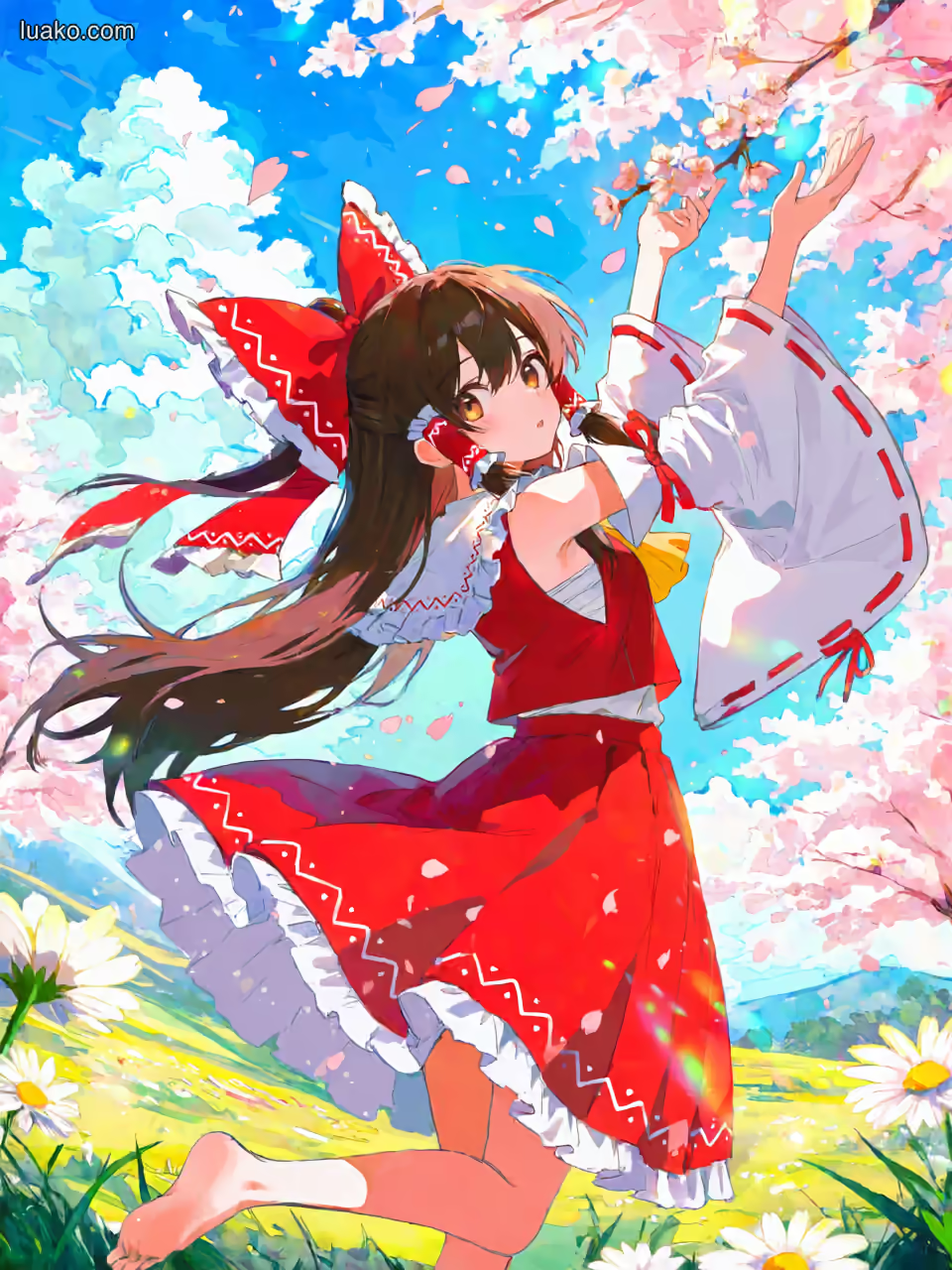
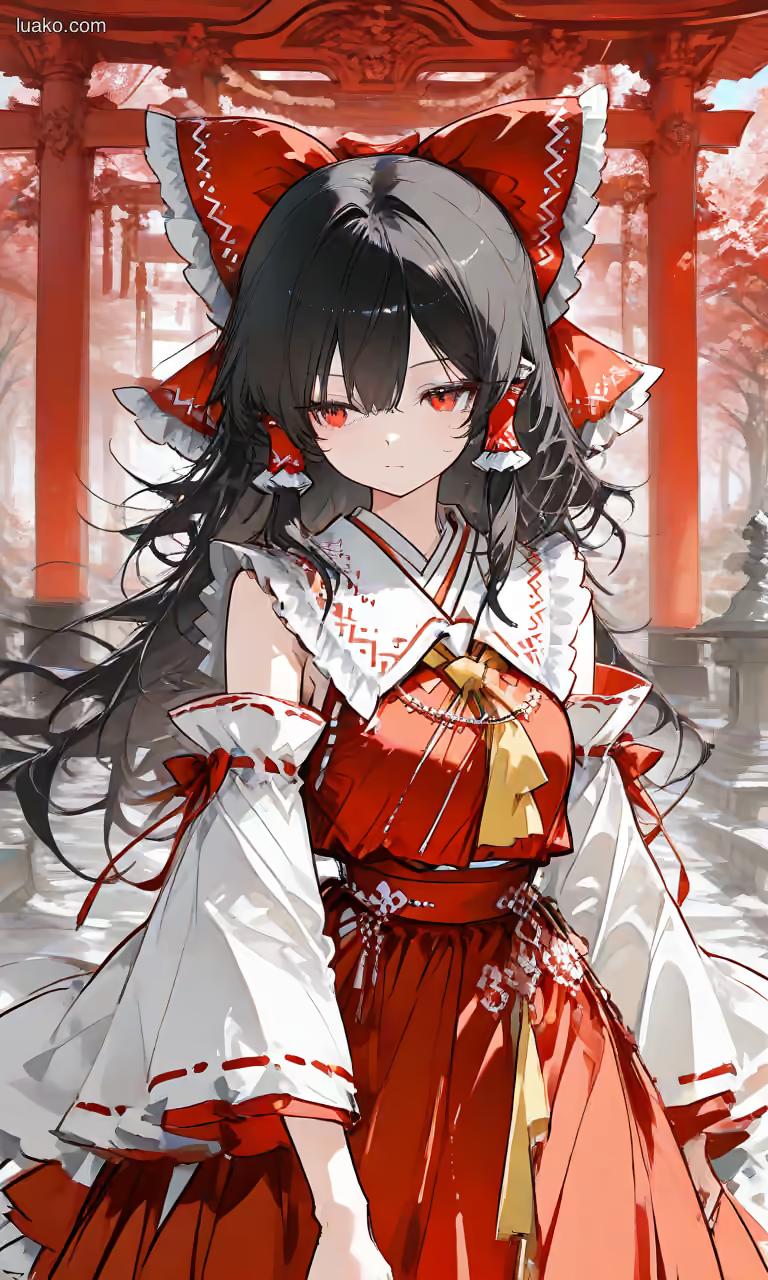
Reimu’s best-known design pairs dark brown to nearly black hair with a large red hair bow and a red-and-white shrine maiden-inspired outfit. The design commonly features a red skirt, white sleeves with red trim, and a contrasting yellow neck ornament. Those strong shapes and colors remain recognizable even though details vary by game, artist, and official illustration.
In game artwork she is frequently shown with paper charms (ofuda), a purification wand (gohei), and yin-yang imagery associated with her shrine techniques. Exact costume details and accessory placement are not universal across every official depiction, and no precise height or numerical age is established here.
Quick facts
- Japanese name
- 博麗霊夢 (Hakurei Reimu)
- Species
- Human
- Residence
- Hakurei Shrine, Gensokyo
- Occupation
- Shrine maiden; incident resolver
- Signature power
- Mainly the ability to fly
- Usual equipment
- Spiritual ofuda and shrine-related implements
- Story medium
- Original Touhou Project video games; supplementary ZUN-scripted manga
- First Touhou appearance
- Highly Responsive to Prayers (first shown in 1996)
Abilities
Flight
Flight is her defining stated ability. She can rise into the air and move freely while exploring Gensokyo and confronting opponents in danmaku battles.
Spiritual charms and sealing arts
Reimu channels spiritual power through paper talismans and purification techniques. She fires ofuda at opponents and uses them in several named spell-card attacks.
Barrier techniques
Reimu can create barriers for defense and attack. In the named spell Omnidirectional Dragon-Slaying Circle, a broad barrier forms around her and strikes approaching opponents.
Fantasy Seal
Fantasy Seal is one of Reimu’s signature spell cards, sending rapid homing spiritual projectiles after an opponent.
Yin-yang orbs
Yin-yang orbs are recurring equipment and magical imagery in Reimu’s combat techniques, sometimes used as direct attacks.
Exceptional intuition and combat aptitude
Official profiles emphasize her natural ability to sense disturbances and fight effectively even when she neglects conventional training.
Fantasy Nature
Fantasy Nature is a distinctive Last Word connected to Reimu’s talent for floating free of ordinary interference. It appears as a named technique within the game’s spell-card system.
Relationships
Marisa Kirisame
Frequent fellow incident resolver and friend
Marisa is an ordinary human magician from the Forest of Magic who often visits the Hakurei Shrine. Her independent study and competitive energy contrast with Reimu’s improvisational spiritual talent; they investigate many incidents in parallel, not as an inseparable team in every route.
Sanae Kochiya
Fellow shrine maiden and rival shrine representative
Sanae belongs to the Moriya Shrine, whose arrival creates a direct challenge to the Hakurei Shrine in Mountain of Faith. She becomes another familiar face in the setting and occasionally appears at Reimu’s shrine.
Kasen Ibaraki
Regular shrine visitor and admonishing adviser
Kasen is a hermit who repeatedly tries to correct Reimu’s habits, offer advice, and encourage more responsible shrine management. Their connection is a major focus of Wild and Horned Hermit; its later revelations are covered separately.
Yukari Yakumo
Powerful youkai acquaintance associated with Gensokyo’s boundaries
Yukari supports Reimu during one playable route of Subterranean Animism, helping her investigate unrest beneath Gensokyo. Their conversations combine practical cooperation with Yukari’s teasing and Reimu’s impatience; they are not constant partners in every game.
Kosuzu Motoori
Human acquaintance connected with Suzunaan
Kosuzu’s interest in rare and potentially dangerous books draws Reimu and Marisa into mysteries around the Human Village in Forbidden Scrollery.
Aunn Komano
Shrine-associated visitor and protector
Aunn is a komainu who quietly watches over the Hakurei Shrine and other places of worship. Reimu initially mistakes her for an intruder in Hidden Star in Four Seasons, then acknowledges her good intentions.
Interesting facts
In the PC-98 games, Reimu’s name was written 博麗靈夢; the modern game spelling is 博麗霊夢.
The older form uses 靈 instead of 霊, an actual original-script distinction that separates her earliest game credits from the familiar Windows-era spelling.
The in-universe chronicle Perfect Memento in Strict Sense credits Reimu with the introduction of spell-card rules.
Those rules establish declared, limited contests in which opponents can accept defeat without making every supernatural quarrel a fight to the death.
The Hakurei Shrine can be approached from both Gensokyo and the Outside World, but its location does not make ordinary travel between the two possible.
Akyuu’s account distinguishes the shrine’s unusual position on the boundary from unrestricted passage across that boundary.
ZUN recalled that his first university-festival prototype of Highly Responsive to Prayers contained the game system but no characters.
Reimu entered the project as its creator developed that prototype into the first publicly presented Touhou game.
The scarlet-mist story has both the original 2002 The Embodiment of Scarlet Devil and a separately released 2026 New Classic version.
The later remake is a distinct game presentation; it should not be mistaken for an entirely separate canon incident in Reimu’s biography.
Frequently asked questions
Who is Reimu Hakurei?
She is the human shrine maiden of the Hakurei Shrine and a central protagonist of Touhou Project, where she investigates disturbances throughout Gensokyo.
Is Reimu a human or a youkai?
Reimu is human, despite her remarkable spiritual and flying abilities.
Where does Reimu live?
At the Hakurei Shrine, a remote shrine in Gensokyo associated with the boundary to the outside world.
What is Reimu’s main ability?
Original-game character descriptions state that her principal ability is flight. She also uses spiritual charms, barriers, and spell cards.
Why does Reimu fight youkai?
Her shrine-maiden role includes dealing with dangerous youkai and incidents that threaten Gensokyo. That does not stop her from interacting casually with friendly or familiar youkai.
Are Reimu and Marisa friends?
They are longstanding acquaintances and friendly rivals who repeatedly investigate incidents and spend time around the shrine. Their differing talents and approaches are part of their dynamic.
Why does the Hakurei Shrine have so few visitors?
It is remote and poorly supplied with human worshippers, while its youkai visitors do not necessarily solve its shortage of faith and offerings.
Is Touhou Project originally an anime?
No. Reimu comes from Touhou Project’s original video games; official manga and other licensed adaptations expand the franchise.
Does Reimu have a confirmed exact age?
Touhou’s main modern-game stories do not give Reimu one fixed numerical age or birthday. Her recognizable role is that of the current Hakurei Shrine maiden rather than a character defined by a stated age.
Major story spoilers below.
From a Stolen Spring to a False Moon
Perfect Cherry Blossom begins with an unnaturally persistent winter. Its Netherworld story reveals that the missing spring is connected to the attempt to bring an enormous cherry tree into bloom. Reimu’s involvement shows how local seasonal trouble can originate in the affairs of beings far beyond ordinary human life. Imperishable Night subsequently replaces the true moon with a false one. The need to restore the night forces cooperation between human and youkai characters, and Reimu can occupy different positions in the game’s paired routes; those alternatives must not be stitched into one fixed account.
Faith, the Underground, and the Unreliable Profit Motive
In Mountain of Faith, the newly arrived Moriya Shrine challenges the struggling Hakurei Shrine’s position and faith. Reimu’s investigation brings her into direct contact with a competing shrine and its gods, rather than a single villain who must be permanently removed from the setting. Subterranean Animism begins with a geyser near her home. Reimu initially sees the possibility of a welcome hot spring, but resentful spirits emerging from underground turn the apparent windfall into a much more dangerous matter.
The Lunar Threat and the Hidden Seasons
Legacy of Lunatic Kingdom confronts the protagonists with a threat connected to the Moon and an apparent assault on Gensokyo. The published premise also introduces the controversial medicine prepared by Eirin Yagokoro to help face the danger; different playable routes and modes should not be merged into a single personal history for Reimu. Later, Hidden Star in Four Seasons begins with simultaneous, unnatural seasonal conditions: spring blossoms near the shrine, autumn colors in the mountains, summer flowers elsewhere, and winter snow in the forest. Reimu follows a disturbance that reaches beyond ordinary weather.
Animal Spirits and the Card Economy
Wily Beast and Weakest Creature sends Reimu and other investigators toward Hell with help from animal spirits whose true interests are not straightforward. The story reveals a harsh, organized world in the Animal Realm, where human and animal spirits have competing interests. Unconnected Marketeers presents a different kind of crisis: ability cards with extraordinary effects are being traded throughout Gensokyo. Reimu searches for the sellers and the origins of the system, illustrating how commerce itself can become the mechanism of an incident.
Land Disputes and Zanmu’s Strategy
The fallout from those markets forms the background of Unfinished Dream of All Living Ghost. As previously held land loses its ownership, rival beast forces move to claim territory. In Reimu’s route, she pursues the disturbance into Hell and confronts Zanmu Nippaku, convinced the oni has a hand in the crisis. Their exchange and the route’s ending complicate the usual accusation: Zanmu discourages Reimu from openly choosing sides, arguing that intervention would prolong the contest, while Reimu remains unsettled by an opponent who does not fit a simple enemy-or-ally category. This account describes Reimu’s route, not every character’s mutually different scenario.
Fossilized Wonders: The Sanctuary and Stasis
In Touhou Kinjoukyou: Fossilized Wonders, Reimu notices that Gensokyo is unnaturally stagnant and follows the power of incident stones toward an abnormal sanctuary at the foot of the mountain. The game’s individual stone routes vary, so the red-stone scenario is only one way to trace her investigation. That route takes her into a pyramid-like facility related to the Lunar Capital and leads to Ariya Iwanaga, a goddess whose power opposes change itself.
In Reimu’s successful endings, she defeats Ariya and Gensokyo begins moving again. The aftermath depends on the chosen incident stone: Reimu follows a different clue or speaks with different people in each ending. In the bad ending, she finds herself bored at the shrine with only a nagging sense that she has forgotten an important disturbance. These are alternative outcomes rather than one uninterrupted sequence of visits.
Kasen and the Limits of an Easy Friendship
Wild and Horned Hermit gives Reimu a longer story beyond the usual incident-of-the-week investigations. Kasen’s advice and regular shrine visits become familiar parts of her daily life, but the manga eventually connects the hermit’s hidden nature and separated arm to a dangerous confrontation. In the final volume, Reimu wanders through Avici Hell and faces a decisive encounter, bringing a far more ominous turn to the relationship built over quieter chapters.
A Continuing Role, Not a Final Destiny
Reimu continues to serve at the Hakurei Shrine across the ongoing Touhou games. From the scarlet mist to the stasis surrounding the sanctuary in Fossilized Wonders, her circumstances repeatedly change without producing a single permanent ending to her life as the shrine maiden. Later possibilities and alternate game outcomes remain distinct from a definitive conclusion to her story.
Additional story facts
In the Fossilized Wonders bad ending, Reimu has trouble remembering the incident and wonders why Gensokyo has become so uneventful.
The failure is portrayed as an unsettling absence of change rather than simply another lost battle.
In Zanmu Nippaku’s separate Unfinished Dream of All Living Ghost ending, Zanmu abandons a plan to manage Gensokyo as a tightly controlled extension of Hell after judging Reimu capable of preserving its balance.
That alternative ending makes Reimu’s impartial treatment of humans and youkai consequential to a rival strategist’s decision, without making it a sequel to Reimu’s own ending.
Spoiler questions
What happens to Reimu in Fossilized Wonders?
In her successful endings she confronts and defeats Ariya Iwanaga, ending the stasis that had overtaken Gensokyo. Different incident-stone endings then pursue different unresolved clues; a separate bad ending is also possible.
Who is Zanmu Nippaku to Reimu?
In Reimu’s Unfinished Dream of All Living Ghost route, Zanmu is an oni she encounters while investigating land disputes and beast spirits. Their confrontation leaves Reimu wary of a strategist who cannot be categorized simply as ally or enemy.
Does Wild and Horned Hermit reveal something about Kasen?
Yes. The manga’s final story links Kasen’s hidden nature and separated arm to a confrontation involving Reimu. The concluding volume takes Reimu through Avici Hell, giving their long-running shrine-side relationship a much more dangerous climax.
Does Reimu have a canonical death or final ending?
No definitive final death or completed life story is established in the ongoing main game continuity covered here. Individual game endings, especially alternate or bad endings, must be treated according to their own narrative branches.
Tags
Reimu Hakurei Pictures and Artwork
Explore artwork featuring Reimu Hakurei, Touhou Project’s shrine maiden known for her red-and-white look and spiritual techniques.