Naoto Shirogane — Persona 4
BiographyBiography
The story, the personality, and everything in between.Read biographyClose biography
Biography
The story, the personality, and everything in between.Read biographyClose biographyNaoto Shirogane白鐘 直斗
First-year high school detective assisting the police investigation in Inaba
Naoto Shirogane is a teenage detective in Atlus’s role-playing game Persona 4. Known to the press as the Detective Prince, Naoto visits the rural town of Inaba to help police investigate a series of murders. A first-year high school student and the fifth generation of a renowned detective family, Naoto brings a precise, skeptical mind to a case full of tempting explanations and unresolved contradictions.
The reserved young investigator repeatedly crosses paths with students conducting an inquiry of their own, and proves much less willing than the authorities to mistake an apparent solution for the truth.
Biography
The Shirogane Detective Legacy
Naoto belongs to the fifth generation of the Shirogane family, whose detectives have a history of assisting the police. Although still a first-year high school student, Naoto already takes investigative work seriously and has earned recognition far beyond the usual school environment. The public label “Detective Prince” reflects that precocious reputation, but it also draws attention to Naoto’s youth and carefully maintained professional image.
While assisting the police, Naoto also attends Yasogami High School. The contrast is difficult to ignore: adults value a precocious detective’s deductions but do not always treat the person making them as an equal. Naoto’s formal manner helps establish authority, though it can make ordinary conversations with classmates uncomfortable.
An Unsettled Case in Inaba
Naoto arrives in Inaba because the local police are investigating a string of extraordinary deaths. The young detective crosses paths with the protagonist and his schoolmates around places linked to the case, sometimes observing their behavior and sometimes questioning their conclusions. Those encounters establish a competing investigative perspective rather than an immediate partnership.
Naoto’s early interest in Kanji Tatsumi and the possible connection between the victims and media exposure reflects a willingness to look past isolated incidents. As the police move toward a seemingly convenient resolution, Naoto continues to question whether the explanation accounts for every death and disappearance.


The Mind Behind the Reserve
With the cap pulled low and speech carefully measured, Naoto can seem unapproachable. A concrete problem often reveals a different side: curiosity, quick follow-up questions, and genuine pleasure in a difficult puzzle. The detective finds it easier to discuss conflicting evidence than to navigate an unexpected personal compliment.


Personality and Motivations
Naoto is analytical, self-controlled, and unusually attentive to inconsistencies. Rather than accept the explanation that satisfies the most people, the detective compares accounts against observable facts and is willing to question apparent closure. That skepticism is a practical habit, not a claim of infallibility.
Formal phrasing and careful posture help Naoto maintain a professional distance. The reserve also makes it difficult to admit uncertainty or ask for help. When someone treats a serious question with respect, Naoto can become unexpectedly engaged, even playful; deductive puzzles are one setting in which that enthusiasm becomes visible.
Being judged primarily by age is a recurring frustration. Naoto wants a contribution to be measured by its substance, yet the desire to appear mature sometimes gets in the way of ordinary connection. This tension makes the detective’s quieter moments as revealing as the confident deductions.
Appearance
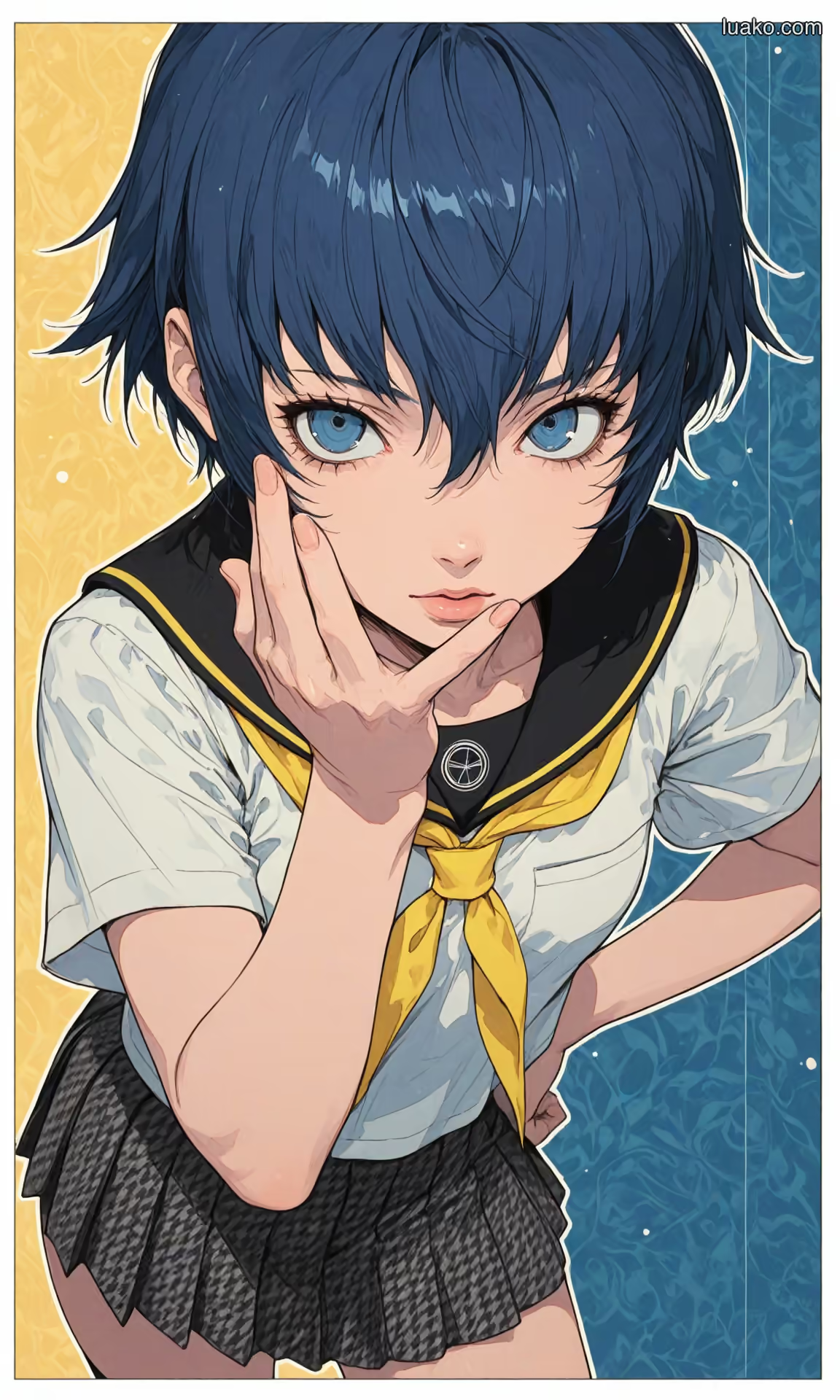
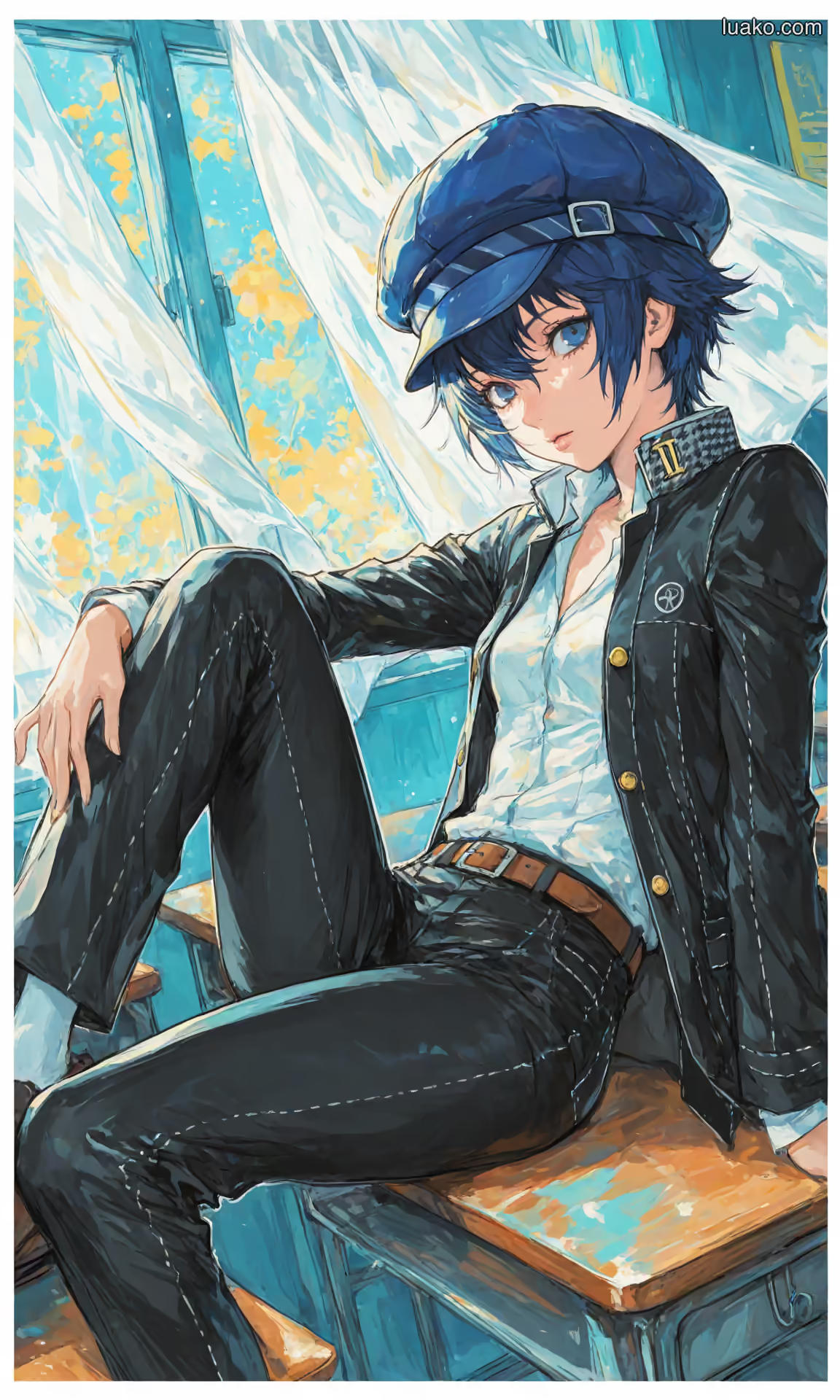
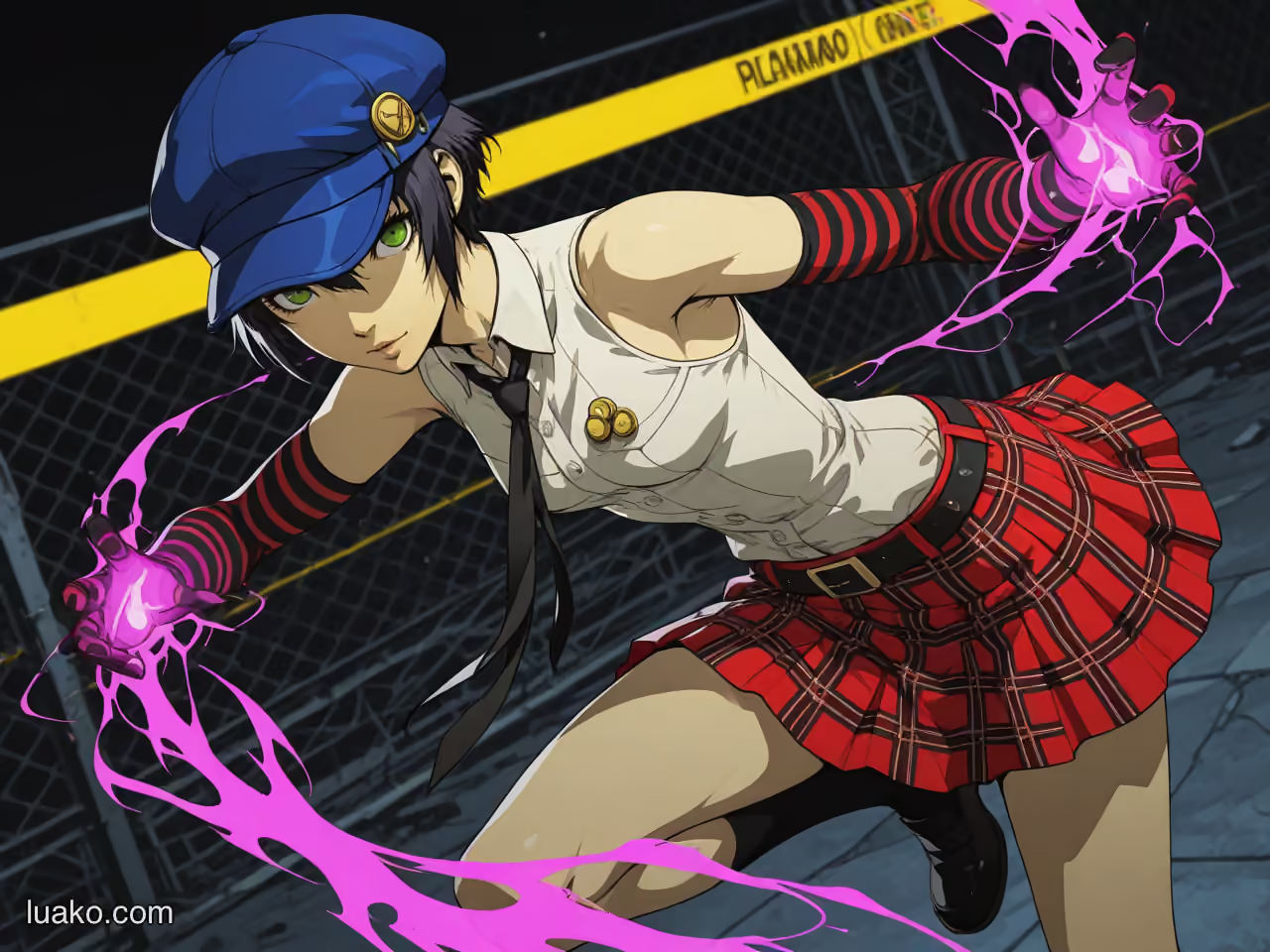
Naoto is short and slender, with cropped dark-blue hair, a serious gaze, and a distinctive blue peaked newsboy-style cap. The cap’s low brim is part of the immediately recognizable detective silhouette.
At Yasogami High School, Naoto commonly wears a dark, tailored, buttoned school uniform with matching trousers rather than the standard girls’ uniform. Out-of-school clothing also favors neat layers, blues, jackets, and ties. The overall presentation is restrained and precise, with the cap remaining a frequent constant.
Quick facts
- School
- Yasogami High School
- School year
- First-year student during the main story
- Profession
- Detective; works with police investigators
- Family tradition
- Fifth generation of the Shirogane detective family
- Main setting
- Inaba, Japan
- Public nickname
- Detective Prince
Abilities
Deductive investigation
Naoto compares witness accounts, timelines, and patterns in the murders, keeping unresolved contradictions in view even when a case appears settled.
Limitations: A theory remains provisional until evidence supports it; Naoto can be misled by incomplete information.
Interviewing and evidence analysis
The detective knows how to frame pointed questions, distinguish a person’s account from proven events, and pursue clues through systematic inquiry.
Limitations: Access to information and cooperation from others can limit what a young investigator can establish.
Pattern recognition and research
Naoto notices meaningful relationships among incidents and performs independent research rather than accepting an appealing explanation at face value.
Limitations: Patterns alone do not establish motive or guilt.
Relationships
Shirogane grandfather
Grandfather and senior family detective
An older member of the detective family whose legacy influences Naoto’s professional ambitions. More personal details about their bond emerge through optional story scenes.
Persona 4 protagonist
Fellow student and independent investigator
The protagonist pursues the same Inaba mystery and repeatedly meets Naoto during the investigation. Their eventual degree of closeness depends in part on player choices.
Kanji Tatsumi
Yasogami High student involved in the investigation’s early leads
Naoto encounters Kanji while investigating events in Inaba. Their exchanges complicate first impressions without establishing any fixed romance.
Ryotaro Dojima
Local police detective working the same murder case
Dojima’s police work intersects with Naoto’s effort to understand the incidents; they approach the mystery from different positions within the investigation.
Interesting facts
Naoto is a fan of the Featherman hero series, including the blue-costumed Feather Swan.
It gives the professionally reserved detective a concrete pop-culture interest that contrasts with the public image of nonstop seriousness.
Naoto is uncomfortable with ghost stories despite a habit of looking for rational explanations.
The detail distinguishes skepticism from fearlessness: possessing a rigorous mind does not mean never being startled.
Designer Shigenori Soejima associated Naoto’s low-brimmed hat with the visual shorthand of a youthful detective.
The cap is not merely an accessory; it was deliberately used to communicate the role before the character speaks.
Frequently asked questions
Who is Naoto Shirogane in Persona 4?
Naoto is a young detective from the Shirogane family who comes to Inaba to help investigate a series of murders while attending Yasogami High School.
Why is Naoto called the Detective Prince?
The press uses the title for Naoto’s unusual accomplishments as a young detective and for the carefully composed public image. Naoto would rather have deductions judged on their merits than be reduced to a headline.
What does Naoto investigate in Inaba?
Naoto investigates the linked deaths troubling the town and considers how apparently separate incidents and people exposed in the media might be connected.
Is Naoto a high school student or a detective?
Both. Naoto is a first-year student at Yasogami High and comes from a family of detectives, assisting the local murder investigation.
What makes Naoto’s appearance recognizable?
Short dark-blue hair, a blue cap with a lowered brim, and neat dark uniform-inspired clothing are signature elements of Naoto’s Persona 4 design.
Does Naoto immediately work with the protagonist’s group?
No. Their paths cross during the murder investigation, but Naoto initially conducts a separate line of inquiry and is not automatically part of the group.
Major story spoilers below.
The Detective’s Past and the Secret Laboratory
Naoto lost both parents, themselves detectives, in an accident while still young and was taken in by the grandfather who continued the family’s investigative work. Detective novels from his study helped shape Naoto’s childhood ambitions, and assisting with some of his cases gave those ambitions an early practical outlet. The wish to solve mysteries and help people gradually became entangled with pressure to prove worthy of the Shirogane name.
Unconvinced that the arrest of Mitsuo Kubo explains the original murders, Naoto makes a calculated but dangerous attempt to draw out the abductor. This leads to Naoto’s disappearance and imprisonment in the TV World’s Secret Laboratory, a distorted setting shaped by fears about youth, gender, and professional recognition.
In the Secret Laboratory, Shadow Naoto exposes the truth concealed by the public image of the Detective Prince: Naoto is a girl who has presented herself as male, fearing that a young woman will not be taken seriously in a profession she associates with adult male detectives. The Shadow’s proposed body-altering experiment gives disturbing form to that wish to escape the limitations others place on her. Naoto initially rejects the Shadow, but after the Investigation Team defeats it, acknowledges these feelings as her own. The Shadow becomes Sukuna-Hikona. Her decision is personal: she comes to recognize that she need not become an adult man to pursue detective work, and that accepting herself matters more than fitting someone else’s image of the profession.
Joining the Investigation Team
After the rescue, Naoto thanks the students and joins the Investigation Team. Her reconstruction of the abduction helps establish that Kubo was a copycat responsible for Kinshiro Morooka’s death rather than the killer behind the earlier murders. She contributes formal investigative methods and questions the assumptions that had allowed the case to be prematurely closed.
Her expertise also has limits: being personally involved does not give Naoto access to every police record, and the TV World forces her to investigate phenomena that do not fit ordinary explanations. The group becomes both a practical source of evidence and a setting in which the detective must learn to rely on other people.
The Namatame Crisis and the Real Culprit
When Taro Namatame is caught after abducting Nanako, the team is overwhelmed by fear and anger. At the hospital, Naoto goes so far as to raise the possibility of pushing him into the TV World, then admits the case still contains unanswered questions after the protagonist stops the group from acting. Even Naoto’s disciplined reasoning falters under grief and pressure. The students subsequently question Namatame more carefully and listen to his claim that he was trying to save the people he abducted.
The inconsistencies separate Namatame’s kidnappings from the original murders of Mayumi Yamano and Saki Konishi. Following the evidence ultimately exposes police officer Tohru Adachi as the murderer. Naoto contributes analysis and investigative pressure, but the decisive breakthroughs arise from the Investigation Team’s collective effort, not an implausible single-handed deduction.
The Search Beyond the Apparent Ending
On the truth-seeking ending path, the team does not stop with Adachi’s defeat. Further scrutiny of how the Midnight Channel and TV powers began leads to Izanami, who manipulated circumstances surrounding the mystery. Naoto helps reconstruct the connection among the phenomenon, the selected outsiders, and the town’s willingness to accept appearances. This confrontation belongs to the true-ending route; Persona 4 also permits shorter and bad endings, so none should be presented as simultaneously occurring.
The Optional Fortune Social Link
Naoto’s optional Fortune Social Link turns the pressure of being the Detective Prince into a more personal mystery. A self-styled Phantom Thief sends coded challenges tied to the detective tools Naoto made as a child. The mysterious thefts and messages are eventually revealed as a scheme arranged by Naoto’s grandfather, with help from his secretary Yakushiji, to rekindle the enthusiasm for solving puzzles that had faded beneath the need to prove professional worth.
As the clues bring back memories of childhood, Naoto recalls becoming a detective out of curiosity and the desire to help people—not merely to earn approval. If the player completes the Fortune Social Link, Sukuna-Hikona evolves into Yamato Takeru; Persona 4 Golden also offers an additional, optional winter event that can awaken Yamato Sumeragi. The link can conclude in friendship or, through specific player choices, a romance with the protagonist. A playthrough that does not pursue those choices can end without the romance or the later Persona forms.
The Golden Epilogue and Later Appearances
Persona 4 Golden adds an optional extended ending with a summer reunion and updated looks for the Investigation Team, including Naoto. This visual epilogue is additional to the original release’s ending and depends on the player reaching the appropriate Golden conclusion.
An officially published later game, Persona 4: Dancing All Night, explicitly places Naoto back in city life after the Inaba case, before a new incident brings her together with familiar companions. That is a later sequel’s premise, not an event to silently insert into the original game’s chronology.
Additional story facts
Naoto once built a secret hideout in the trees, a childhood memory that becomes relevant to a later encoded clue.
The detail connects a personal place from childhood with the structured puzzle in the Fortune Social Link.
One of the recovered childhood objects is Naoto’s handmade detective badge.
The childhood badge recovered during the Phantom Thief puzzle is distinct from the new matching detective badge Naoto can later make for the protagonist at the conclusion of the optional Social Link.
Naoto admits to disliking throwing things away, and the habit becomes the key to understanding one of the final clues.
An ordinary personal quirk, rather than professional expertise, provides information needed to solve a family-designed riddle.
Character designer Shigenori Soejima said that Naoto had initially been conceived as a boy before the character’s gender and background changed during development.
The production history helps explain why the finished design so deliberately conveys the image of a youthful male detective; it is an account of development, not an alternate event in the game.
Spoiler questions
Is Naoto a girl in Persona 4?
Yes. The Secret Laboratory confrontation reveals that Naoto is a girl who has presented herself as male while struggling with the expectations surrounding age, gender, and her chosen profession. The game frames her growth through confronting these pressures and accepting herself.
How does Naoto obtain a Persona?
After the Investigation Team defeats Shadow Naoto in the Secret Laboratory, Naoto acknowledges the rejected Shadow as part of herself. It becomes Sukuna-Hikona.
Who is behind the Phantom Thief case in Naoto’s Social Link?
Naoto’s grandfather arranges the Phantom Thief puzzle with help from his secretary, Yakushiji. By returning childhood detective tools through a series of riddles, they hope to remind Naoto why investigating mysteries was once enjoyable.
What are Naoto’s Personas?
Naoto initially awakens Sukuna-Hikona. Completing the optional Fortune Social Link evolves it into Yamato Takeru; an additional optional event in Persona 4 Golden can produce Yamato Sumeragi.
Can the protagonist romance Naoto?
Yes, in an optional branch of the Fortune Social Link. Friendship is also available, and romance is not mandatory or a universal plot outcome.
Does Naoto discover who committed the Inaba murders?
Naoto helps the Investigation Team distinguish Namatame’s kidnappings and Kubo’s copycat killing from the original murders. Their further investigation exposes Tohru Adachi, while the true-ending route reveals Izanami’s broader role.
Does Naoto join the Investigation Team?
Yes. Naoto joins after being rescued from the Secret Laboratory and contributes police knowledge and detective reasoning to the later investigation.
Is Naoto’s third-tier Persona guaranteed in Persona 4 Golden?
No. Yamato Sumeragi depends on completing the Fortune Social Link and taking the additional winter event; ordinary playthroughs may never unlock it.
Tags
Naoto Shirogane Artwork and Image Gallery
Explore artwork featuring Persona 4’s blue-capped young detective, Naoto Shirogane.
Videos · 2