Hatsune Miku — VOCALOID Virtual Singer
BiographyBiography
The story, the personality, and everything in between.Read biographyClose biography
Biography
The story, the personality, and everything in between.Read biographyClose biographyHatsune Miku初音ミク
Virtual singer and illustrated character associated with Crypton Future Media singing-voice software
Hatsune Miku (初音ミク) is the virtual singer and illustrated character introduced with Crypton Future Media’s VOCALOID2 singing-voice software on August 31, 2007. Her recognizable blue-green twin-tails, futuristic stagewear, and voice based on recordings by Saki Fujita became the face of a distinctive kind of music making: producers enter melodies and lyrics to create performances using her synthesized singing voice. Unlike a protagonist in a single novel or anime, the original Miku has no one definitive life story.
Her songs, artwork, live presentations, and interpretations emerge from an extensive creator community.
Biography
A Voice with a Face
Crypton Future Media released the first Hatsune Miku singing-voice library for VOCALOID2 on August 31, 2007. Unlike a conventional singer’s recording, the software lets a producer enter notes and Japanese lyrics, then synthesize a sung performance. Her visual identity was central to the package: illustrator KEI designed a youthful, futuristic virtual singer, while voice actor Saki Fujita supplied the recordings used to build the singing library. Crypton presented that voice as particularly suited to idol pop and dance-pop, giving early producers both a recognizable sound and a character to interpret.
From Software to Shared Creation
Early users uploaded Miku songs and related creations to online platforms, helping expand VOCALOID music beyond a software niche. Crypton describes the resulting culture as peer production: musicians, illustrators, video makers, and listeners inspire one another rather than following a single predetermined character plot. Piapro supports collaborative creative activity, while KARENT helps circulate music featuring the Piapro Characters. The character’s adaptability is part of her appeal, not evidence of a hidden fixed biography.

A Virtual Singer on the World Stage
Miku moved from individually produced songs into organized virtual-singer concerts and exhibitions. Magical Mirai, held annually since 2013, combines 3DCG concerts with exhibitions devoted to the surrounding creative culture. The international HATSUNE MIKU EXPO series opened in Jakarta, Indonesia, on May 28, 2014, and later reached audiences in many other cities. When in-person touring was disrupted, MIKU EXPO also offered online presentations in 2021, 2022, and 2023. These events chart the development of a real creative and performance community, not chapters in one fictional life story.
Changing Voices, Recognizable Identity
Later releases broadened what producers could do with Miku’s voice. Crypton’s official product list includes Append, V3, V4X with English vocals, V4 Chinese, NT, and the Piapro Characters Super Pack, in addition to the 2007 VOCALOID2 version. On April 14, 2026, Hatsune Miku V6 launched for VOCALOID6 with Japanese and English vocal support; Chinese-language support was announced as a future update. These are milestones in singing-synthesis technology, not in-story transformations or evidence that the illustrated character ages with each new release.
An Open-Ended Character, Not One Plot
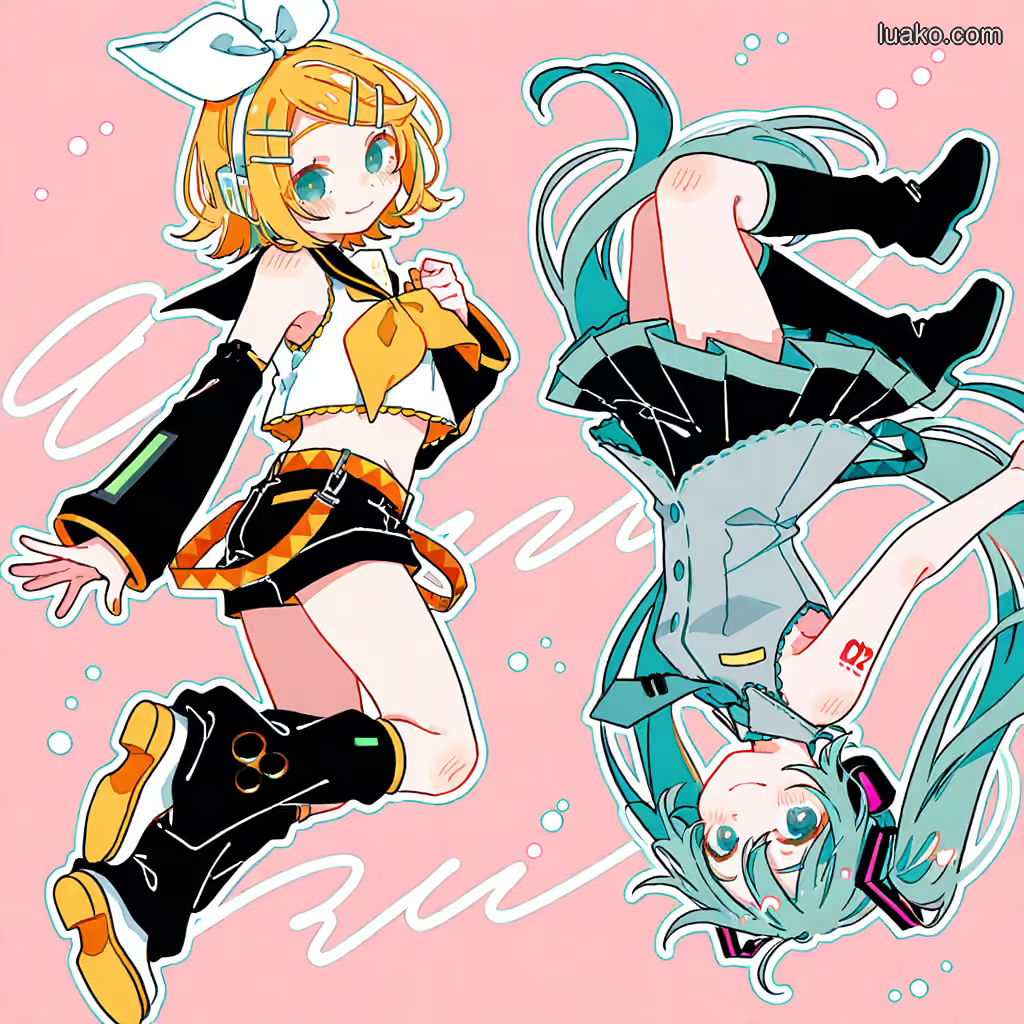
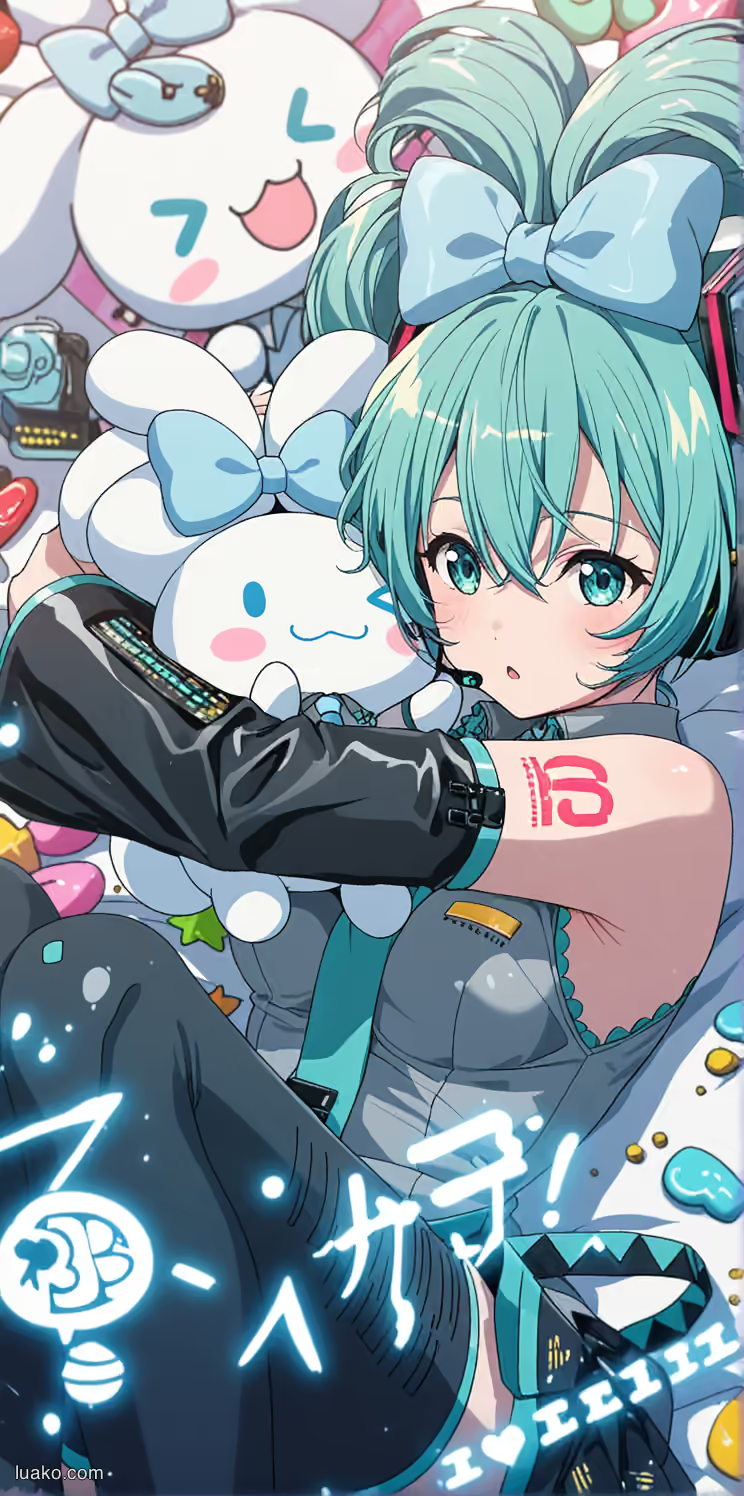
Crypton also presents Miku alongside Kagamine Rin, Kagamine Len, Megurine Luka, KAITO, and MEIKO as the Piapro Characters. Spin-off projects may write specific personalities, conflicts, and relationships for their versions of Miku, but those stories do not automatically define the basic software character. The Project SEKAI character website expressly distinguishes its settings from the general official character settings. For this VOCALOID profile, the continuing story is a documented history of music technology, performances, and creative exchange—not a canonical childhood, romance, final battle, or ending.
Personality and Characterization
Miku’s original presentation gives her a bright, youthful virtual-singer identity without assigning a detailed inner life. Crypton described the first voicebank in terms of pop, dance-pop, and expressive higher-register singing. Those qualities lend themselves naturally to an energetic stage portrayal, but they do not establish a single set of private ambitions, anxieties, or everyday habits for every version of the character.
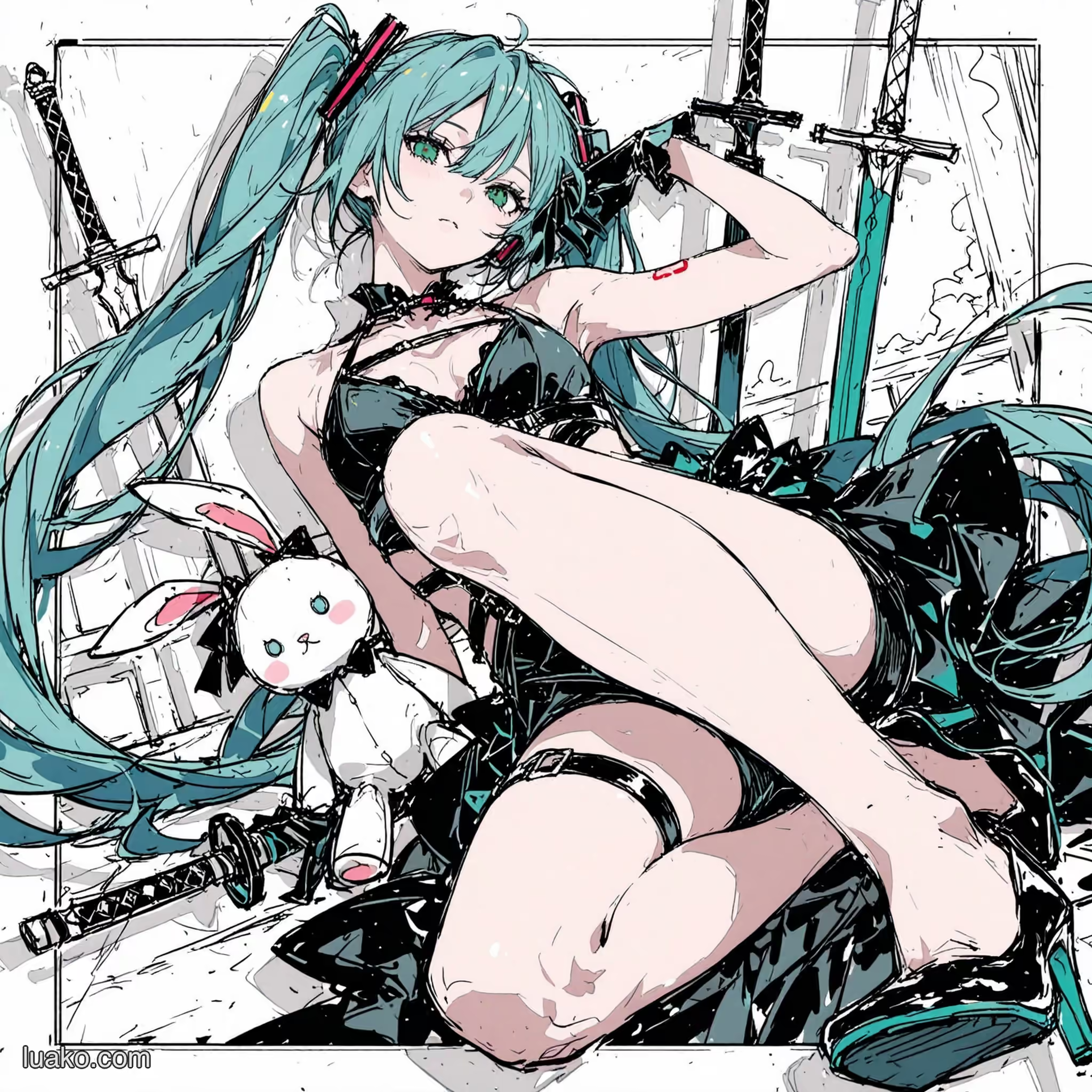
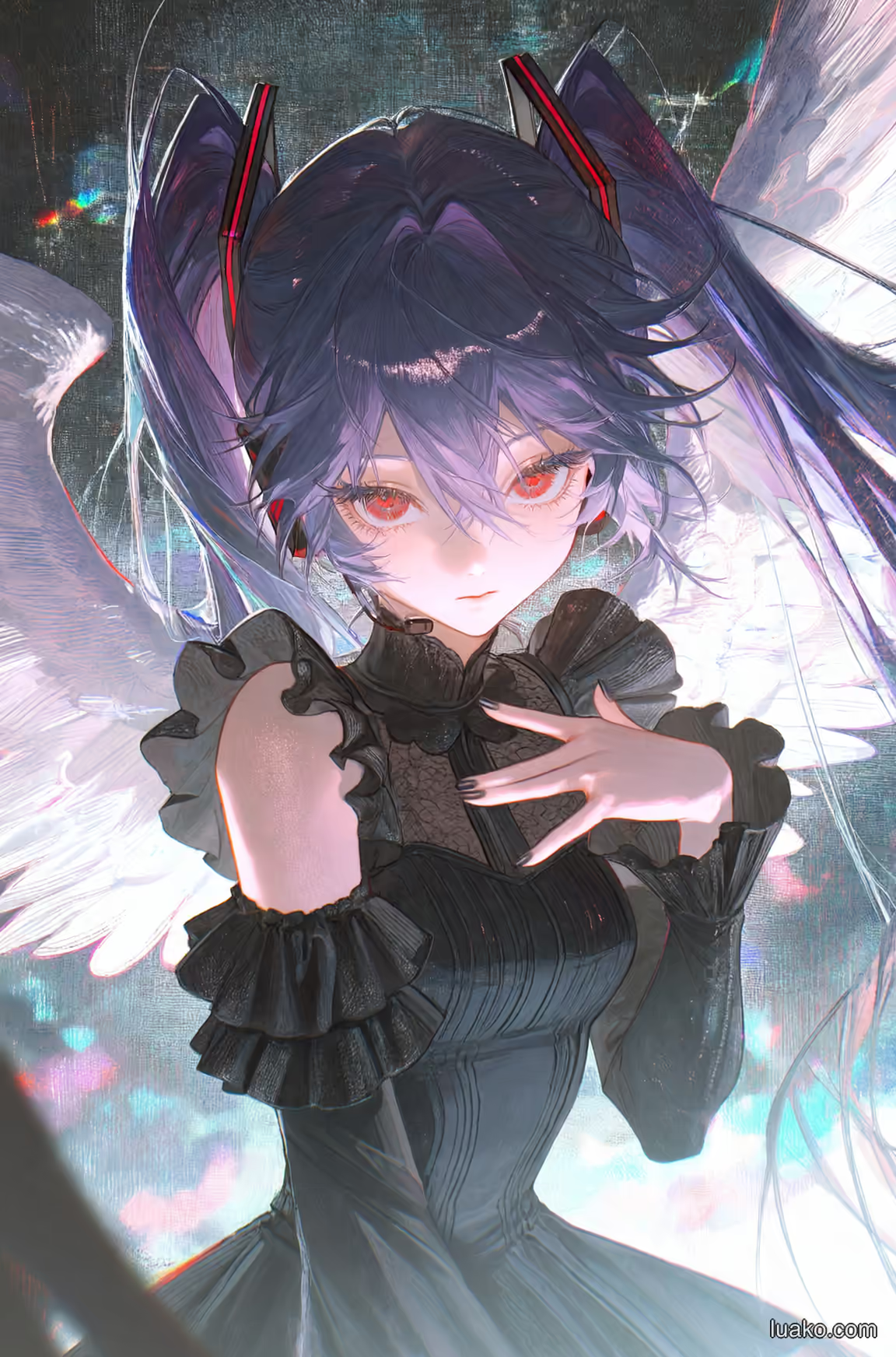
One creator may cast her as mischievous, another as wistful or defiant, and another as almost dreamlike. The lyrics of a song performed with Miku’s voice belong to that song’s story, not automatically to a shared personal biography. This openness is essential to the character’s collaborative identity. A warm, curious, quick-to-play-with-a-melody conversation style is therefore a fitting interpretation, rather than an official dialogue script.
Appearance
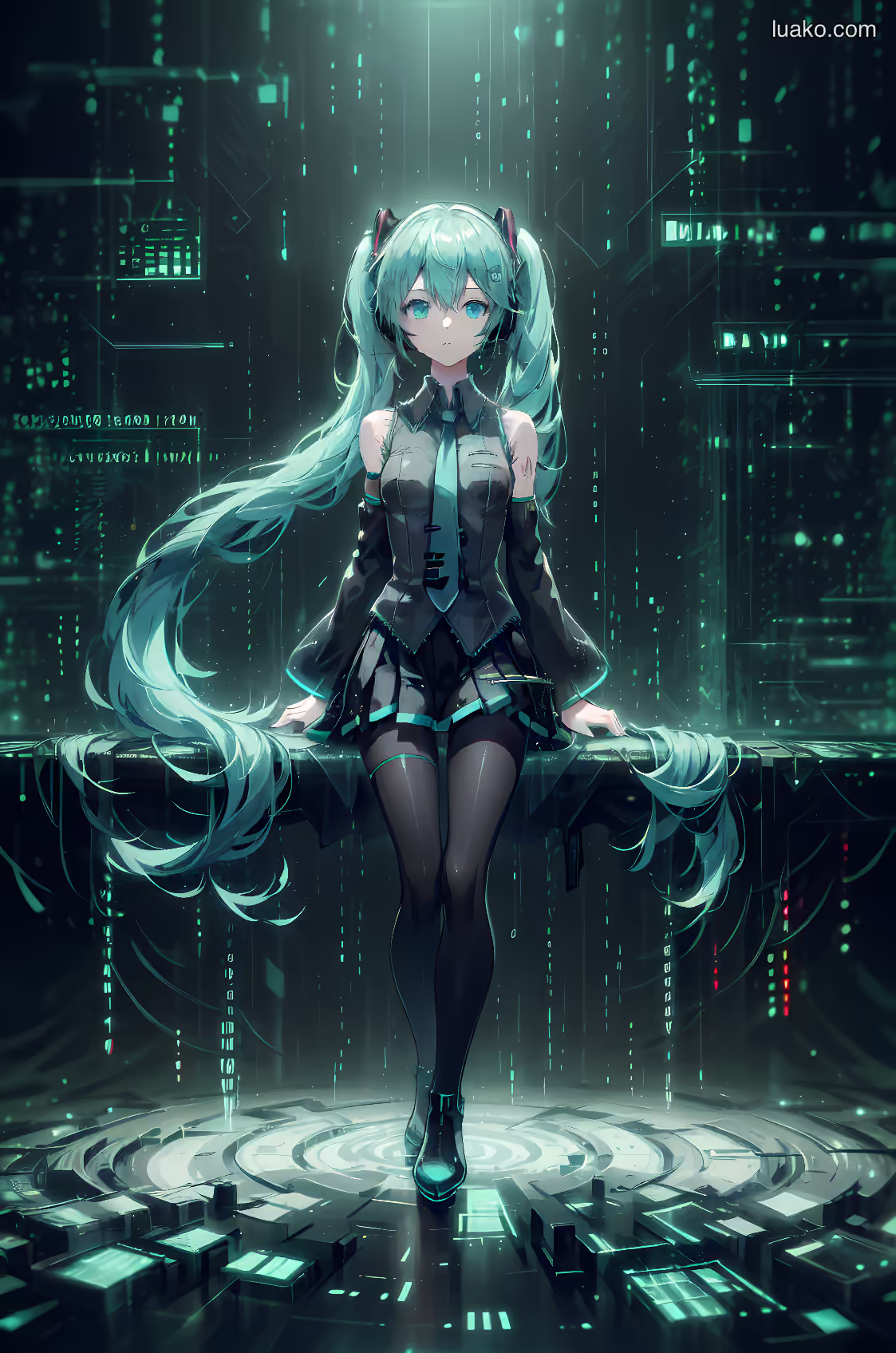
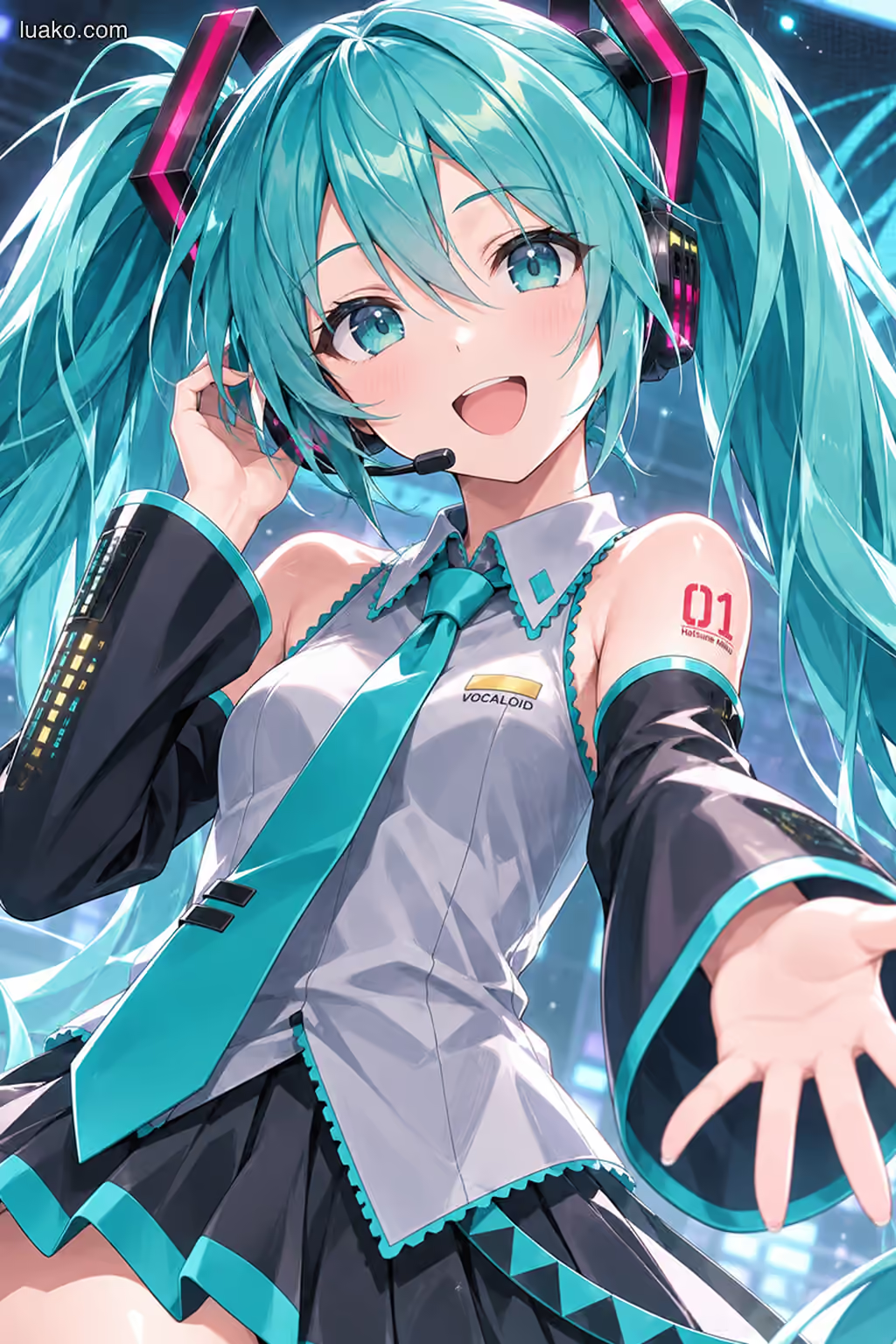
Miku’s original official character illustration by KEI shows a slim, youthful figure with very long blue-green hair arranged in two high twin-tails, blue-green eyes, and a futuristic headset. Her signature outfit combines a sleeveless gray-and-white collared top, a teal necktie, a dark pleated skirt, long dark detachable-style sleeves, and thigh-high dark legwear. The upper-arm “01” marking and technological detailing reinforce the character’s synthetic-vocalist identity.
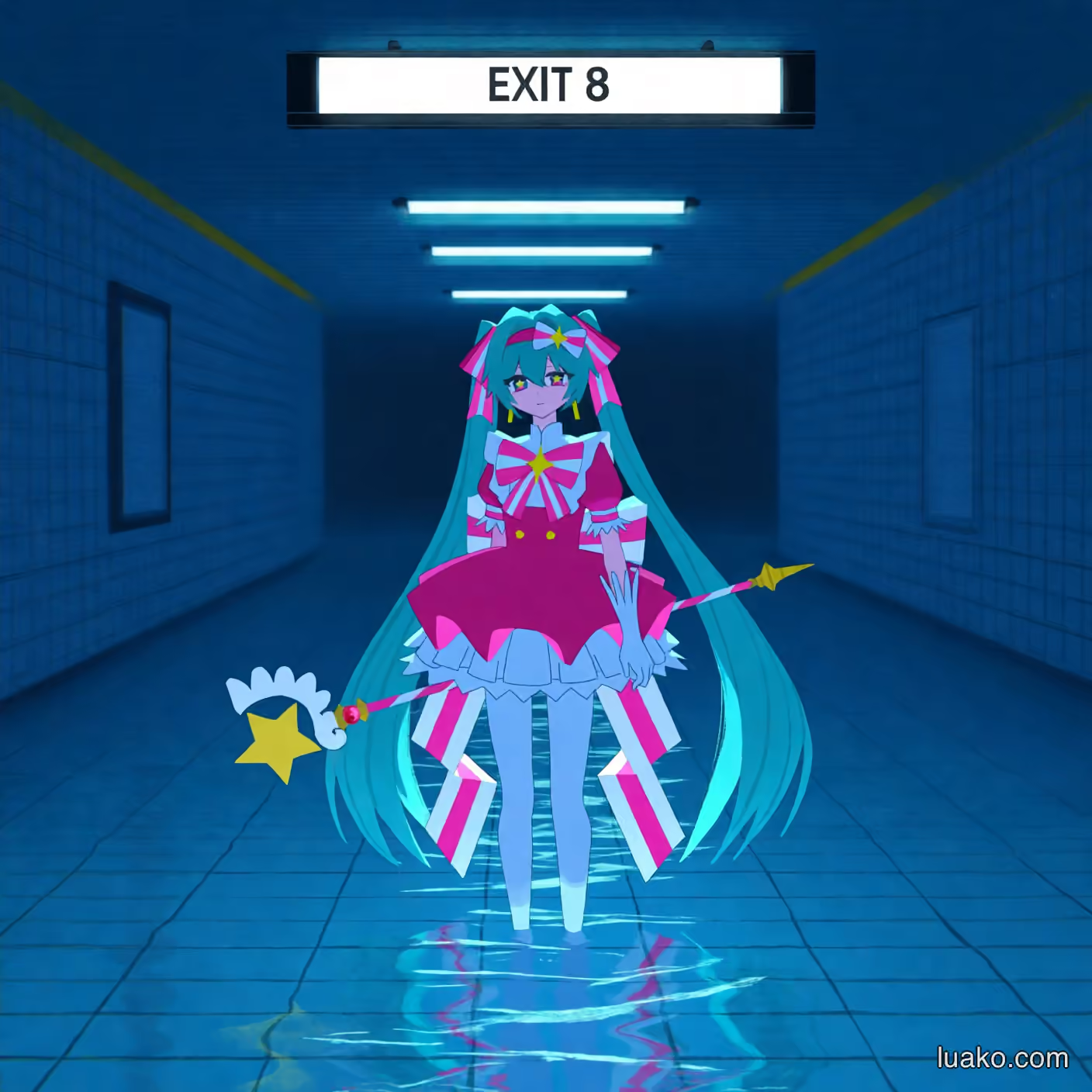
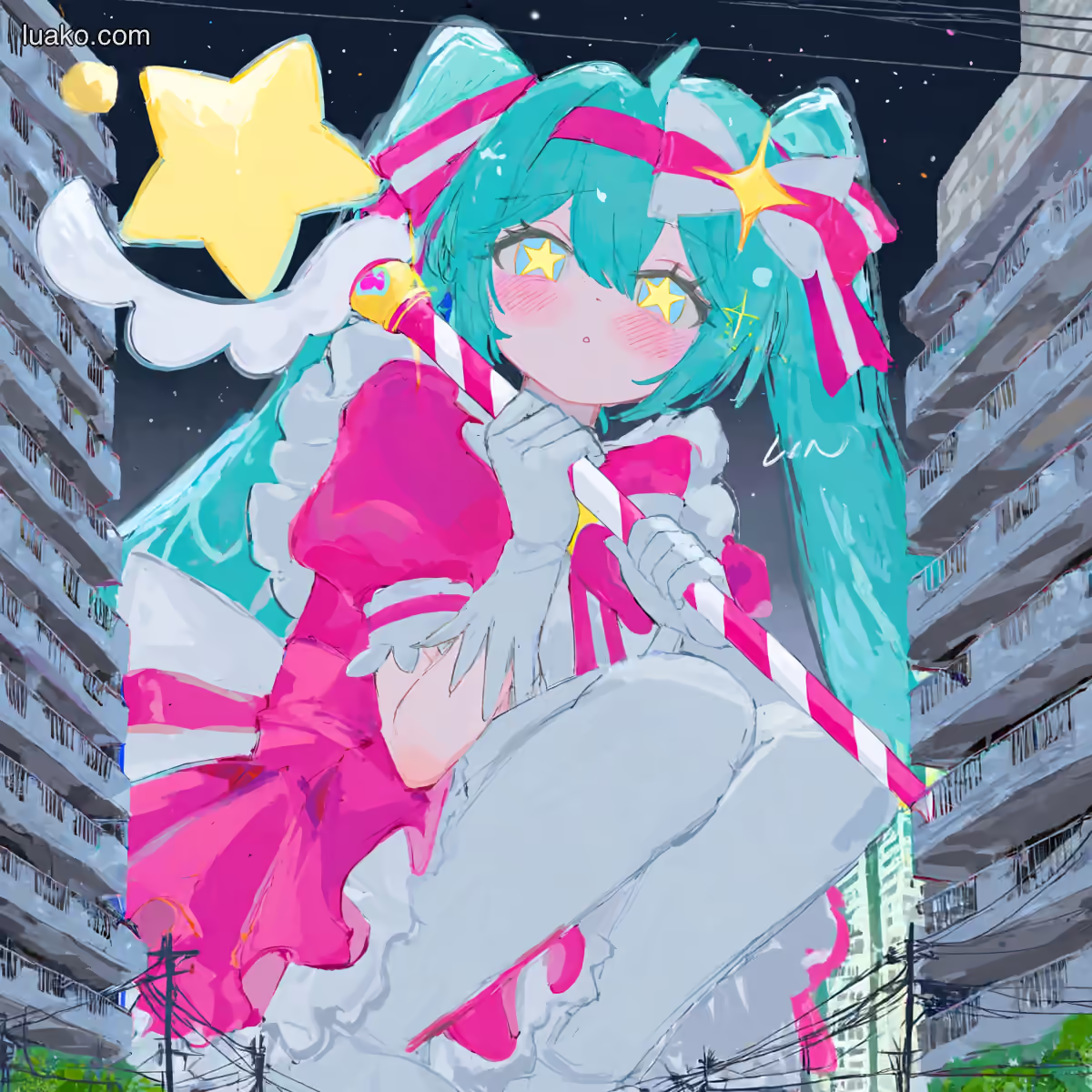
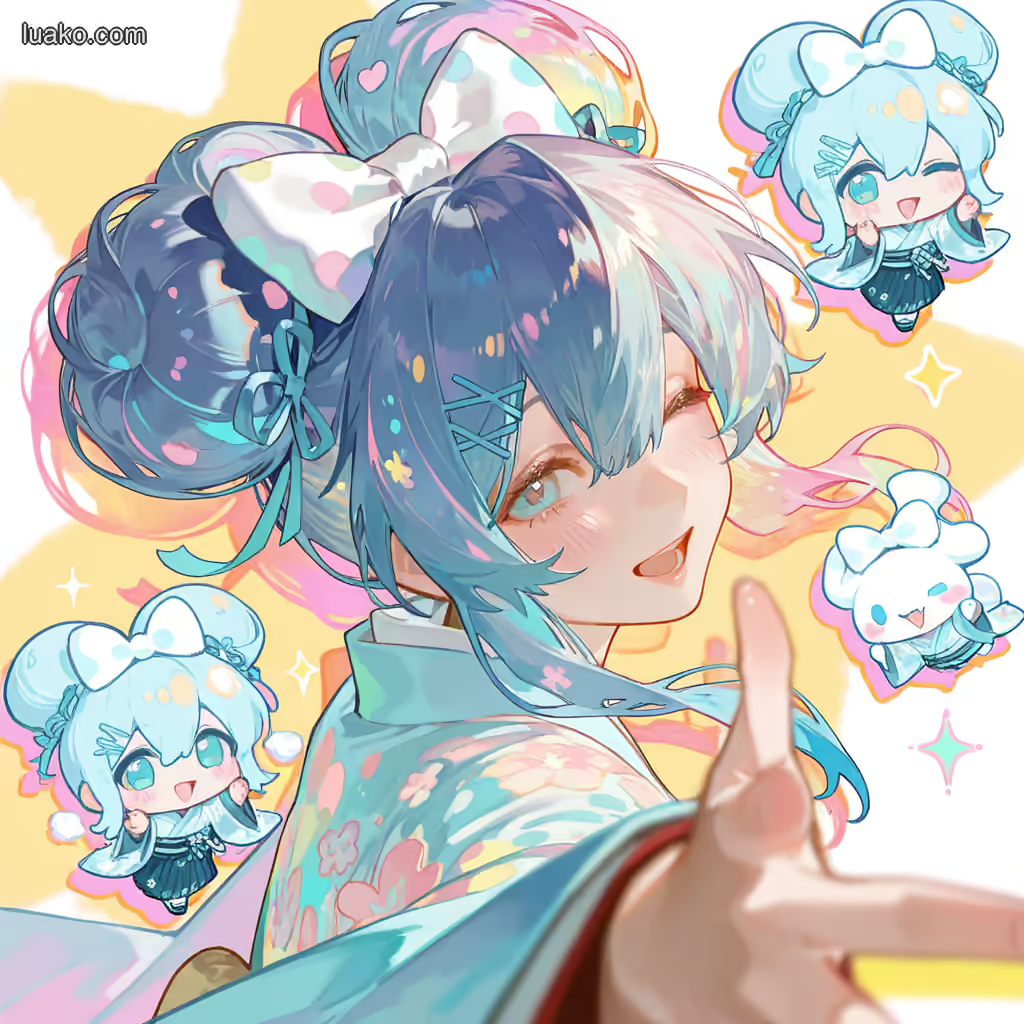
Crypton lists Miku’s character-profile age as 16, height as 158 cm, and weight as 42 kg; these are official character specifications, not evidence of a biography in which she ages year by year. New voicebanks, events, and illustrations sometimes feature different costumes or art styles. Those variations do not erase the recognizable twin-tails and blue-green color association of the original design.
Quick facts
- Japanese name
- 初音ミク
- Original release
- August 31, 2007 (VOCALOID2 Hatsune Miku)
- Developer
- Crypton Future Media
- Voice provider
- Saki Fujita
- Original character illustrator
- KEI
- Official character age
- 16 (fixed profile setting)
- Official height
- 158 cm
- Official weight
- 42 kg
- Signature color
- Blue-green
- Original voicebank category
- VOCALOID2 Japanese singing-voice software
Abilities
Synthesized singing
Hatsune Miku voicebank software produces singing from user-entered lyrics and melodies, allowing a producer to shape a vocal performance.
Limitations: The song, melody, lyrics, and editing come from a human creator using suitable software; Miku is not an autonomous singer who composes or records on command.
Vocal expressiveness
The original editor permits control of features including pronunciation dynamics and vibrato, allowing producers to adjust the musical expression of synthesized vocals.
Limitations: The result depends on the software edition, entered material, and the producer’s editing; it is not a supernatural voice power.
Different languages and editions
Across officially released Miku software products, users have had Japanese, English, and Chinese vocal-library options. The 2026 V6 launch specifically announced Japanese and English support.
Limitations: Language support varies by individual product and version; it is not correct to assume every Miku voicebank supports every listed language.
Virtual stage performances
Miku is presented in organized 3DCG concert productions, including Magical Mirai and MIKU EXPO.
Limitations: These are staged audiovisual productions involving music and technical production, not demonstrations of a physical or magical ability.
Relationships
Kagamine Rin
Fellow Piapro virtual singer
Rin debuted in December 2007 in the paired Kagamine Rin/Len singing-software release. She and Miku are fellow Crypton virtual singers who can appear together in music and concert productions; no single personal history binds every portrayal.
Kagamine Len
Fellow Piapro virtual singer
Len was introduced in the same December 2007 software package as Rin. He shares Miku’s Piapro Characters lineup, but the official character framework does not assign him a family or romantic relationship with her.
Megurine Luka
Fellow Piapro virtual singer
Luka joined Crypton’s virtual singers in 2009 with a voicebank offering Japanese and English singing. Her association with Miku is part of the shared Piapro lineup; individual songs and projects may give them different interactions.
KAITO
Fellow Piapro virtual singer
KAITO entered Crypton’s virtual-singer catalog in 2006, before Miku’s original release. They can perform together as Piapro Characters, without a single canon prescribing how they personally know one another.
MEIKO
Fellow Piapro virtual singer
MEIKO’s Japanese singing-software debut dates to 2004, preceding Miku by nearly three years. Both belong to the Piapro Characters group, though its official membership alone does not establish a particular friendship or shared backstory.
Interesting facts
Crypton explains the name Hatsune Miku as “the first sound from the future.”
The name reflects the original concept of a new kind of voice made usable by future-facing music technology.
The SNOW MIKU project grew out of a white Hatsune Miku snow sculpture at the 2010 Sapporo Snow Festival.
It is an unusually concrete example of a local public-art event developing into a recurring official character project.
SNOW MIKU costume designs are chosen through annual online competitions with changing themes.
The audience can help shape an official seasonal look, directly reflecting Miku’s participatory creative culture.
The first HATSUNE MIKU EXPO concert series began in Jakarta, Indonesia, on May 28, 2014.
The first stop of this international concert brand was outside Japan, highlighting its deliberately global audience.
Crypton’s Creative Commons CC BY-NC license for Piapro Characters covers specified original character illustrations, not every song, video, or artwork involving Miku.
That scope matters to creators: recognition of Miku as a shared muse does not mean all related works are free to reuse.
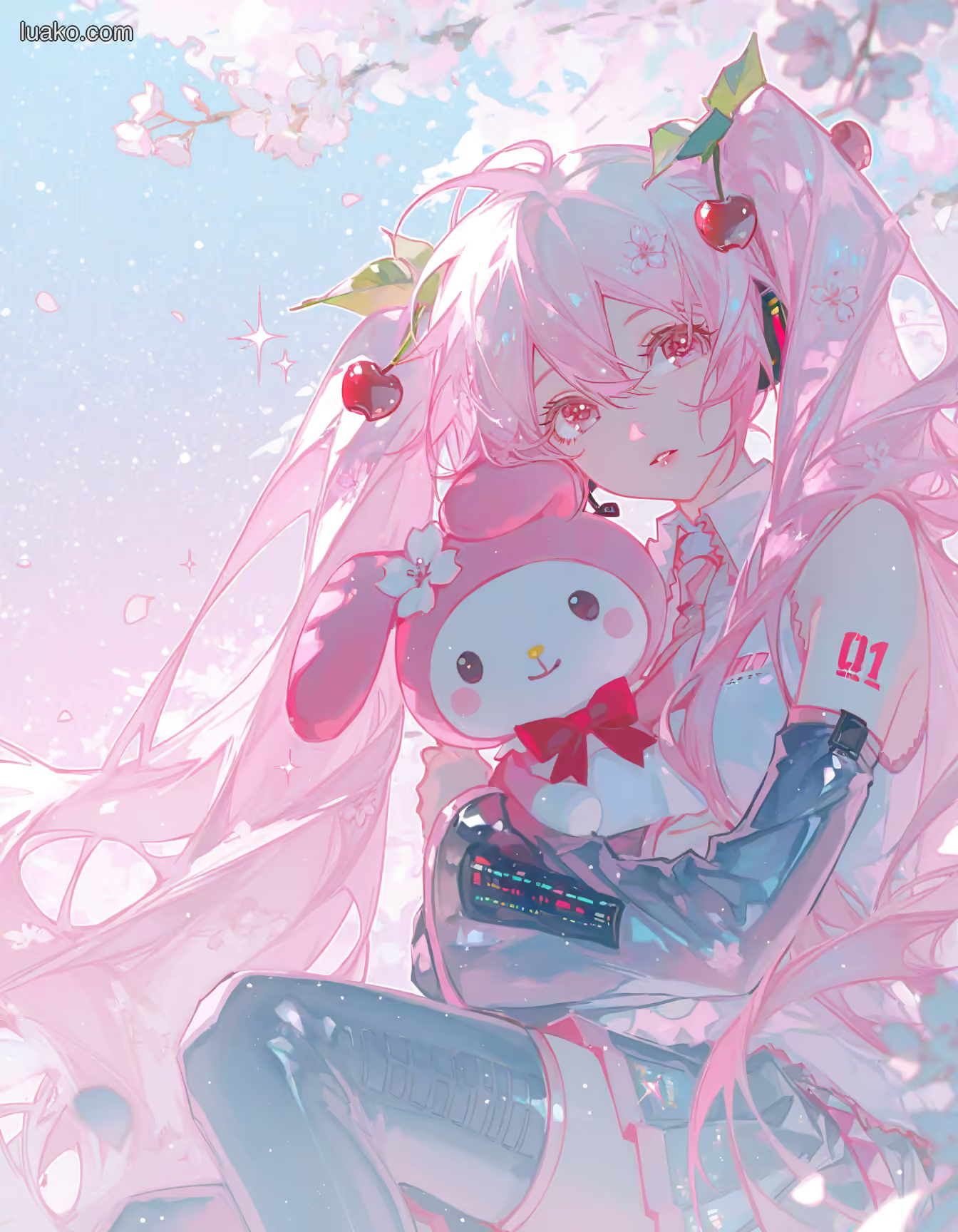
Sakura Miku is an official spring-themed variation of Hatsune Miku featuring cherry blossoms and cherries; KEI illustrated an official main visual for the character in 2019.
Alongside winter-focused SNOW MIKU, it shows how seasonal artwork can reinterpret Miku’s recognizable design without creating a single required fictional storyline.
The name Piapro comes from the Japanese pronunciation of “peer production.”
The name of Crypton’s creative portal directly refers to artists and musicians building on one another’s contributions, a defining feature of Miku’s music culture.
Frequently asked questions
Who is Hatsune Miku?
Hatsune Miku is an illustrated virtual singer and the character associated with Crypton Future Media singing-voice software first released for VOCALOID2 in 2007. Creators use her voicebanks to synthesize singing.
Is Hatsune Miku a real human singer?
No. Miku is a fictional virtual-singer character, while her software generates singing from entered melodies and lyrics. Voice actor Saki Fujita provided the voice recordings behind her original voice.
Is Miku from an anime?
She originated as a character for singing-voice software, not as the protagonist of an original anime. Individual games, films, songs, and other projects can give her their own stories.
How old is Hatsune Miku?
Her official character profile lists her age as 16. This is a fixed design setting, not a real-world age that advances annually from her 2007 software debut.
Who created Hatsune Miku’s voice and original look?
Crypton Future Media developed and released the software. Saki Fujita provided the underlying voice recordings, and illustrator KEI created the original character artwork.
Why does Hatsune Miku have so many different personalities?
Miku’s original character is an adaptable virtual singer rather than the subject of one binding fictional plot. Individual creators and licensed projects interpret her differently.
What is the difference between Hatsune Miku and VOCALOID?
VOCALOID is singing-synthesis technology and a family of software products. Hatsune Miku is a specific virtual-singer character and voicebank whose first version was made for VOCALOID2.
What are Magical Mirai and MIKU EXPO?
Magical Mirai is a Japanese concert-and-exhibition event centered on Miku and creative culture. HATSUNE MIKU EXPO is an international concert series that began in 2014.
Are Miku and the other Piapro Characters canonically related?
They belong to the same official lineup of virtual singers, but the basic character profiles do not establish one mandatory family tree or universal set of friendships and romances.
Can every Hatsune Miku voicebank sing in English?
No. Language support depends on the particular release. Crypton lists English-capable Miku products, and the 2026 V6 launch supports Japanese and English, but the original 2007 product was designed for Japanese vocals.
Can I freely reuse Hatsune Miku artwork or songs?
Not automatically. Crypton applies a CC BY-NC license to specified original character illustrations for noncommercial use under the license terms. That does not mean every Miku song, video, or artwork by another creator has the same license; check the rights for the specific work before reusing it.
Tags
Hatsune Miku Art and Images
Browse artwork featuring Hatsune Miku, the blue-green twin-tailed virtual singer whose voice inspires music and art.
Videos · 70