Uta — One Piece Film: Red
Interesting factsUta’s Story in One Piece Film: Red (Spoiler-Free)The story, the personality, and everything in between.Read biographyClose biography
Utaウタ
World-famous singer; central character of One Piece Film: Red
Uta is the world-famous singer at the heart of One Piece Film: Red, whose long-awaited first concert brings her to the island of Elegia. Raised as Red-Haired Shanks’ daughter and once the young musician aboard his pirate ship, she reunites there with childhood friend and rival Monkey D. Luffy after twelve years apart.
With a striking voice, a fiercely competitive streak, and a dream of making people happy through music, Uta has much more at stake than a successful show.
Uta’s Story in One Piece Film: Red (Spoiler-Free)
A Voice Heard Around the World
Before anyone had seen her perform in person, Uta’s voice was already crossing the seas. She broadcast through a Video Transponder Snail, keeping her appearance hidden while listeners far beyond Elegia fell in love with her music. When she finally announced a public concert, fans were coming to meet a singer they knew intimately by sound but scarcely knew by sight.
Uta chooses Elegia, the island of music, for that first live appearance. The audience includes devoted fans, pirates, and the Straw Hat crew, while the Marines keep a close watch. Luffy comes expecting a concert and unexpectedly finds someone he knew long before either of them became famous.
Shanks’ Daughter and Luffy’s Childhood Friend
As a child, Uta sailed with the Red Hair Pirates as their musician and grew up with Shanks as her adoptive father. During the crew’s visits to Foosha Village, she met Luffy. The two competed constantly, and their reunion on Elegia comes twelve years after their last meeting.
Shanks is the person Uta knows as her father, and the pirate whose straw hat became one of Luffy’s greatest treasures. Their shared connection gives Uta and Luffy an affectionate rivalry, but their memories of the Red Hair Pirates do not lead them to agree on what a better world ought to be.
Years on Elegia
After leaving life aboard Shanks’ ship, Uta grows up on Elegia under Gordon’s care. The island is both her musical home and the place associated with her long separation from the Red Hair Pirates. The deeper history behind that separation unfolds during the film.
Her ambitions reach beyond applause. She hears the exhaustion of people living amid piracy, hardship, and conflict and wants her music to offer something better. Uta’s compassion for those listeners is real; so is her conviction that she knows how to answer their pain.
An Unmistakable Look and Sound
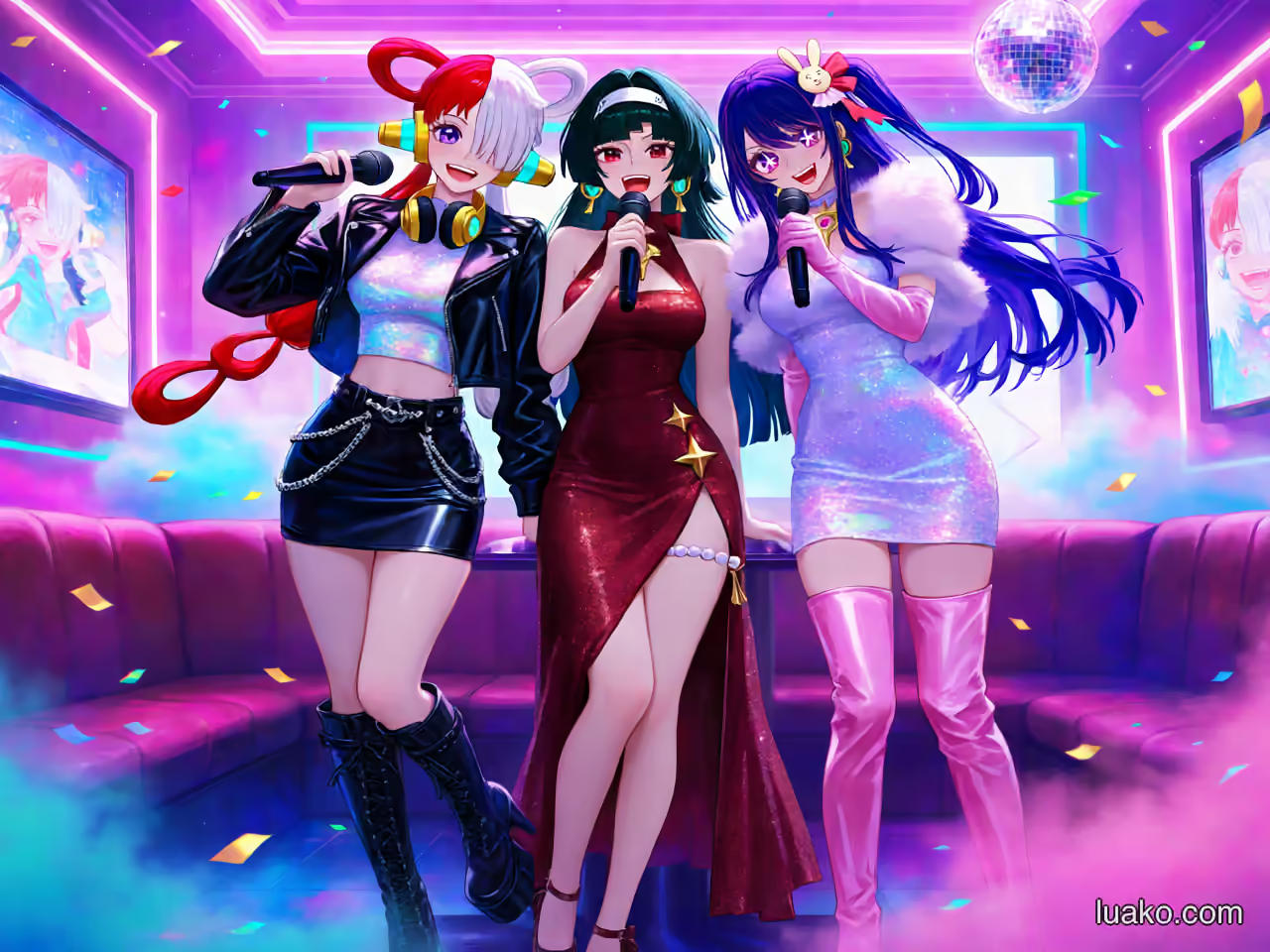
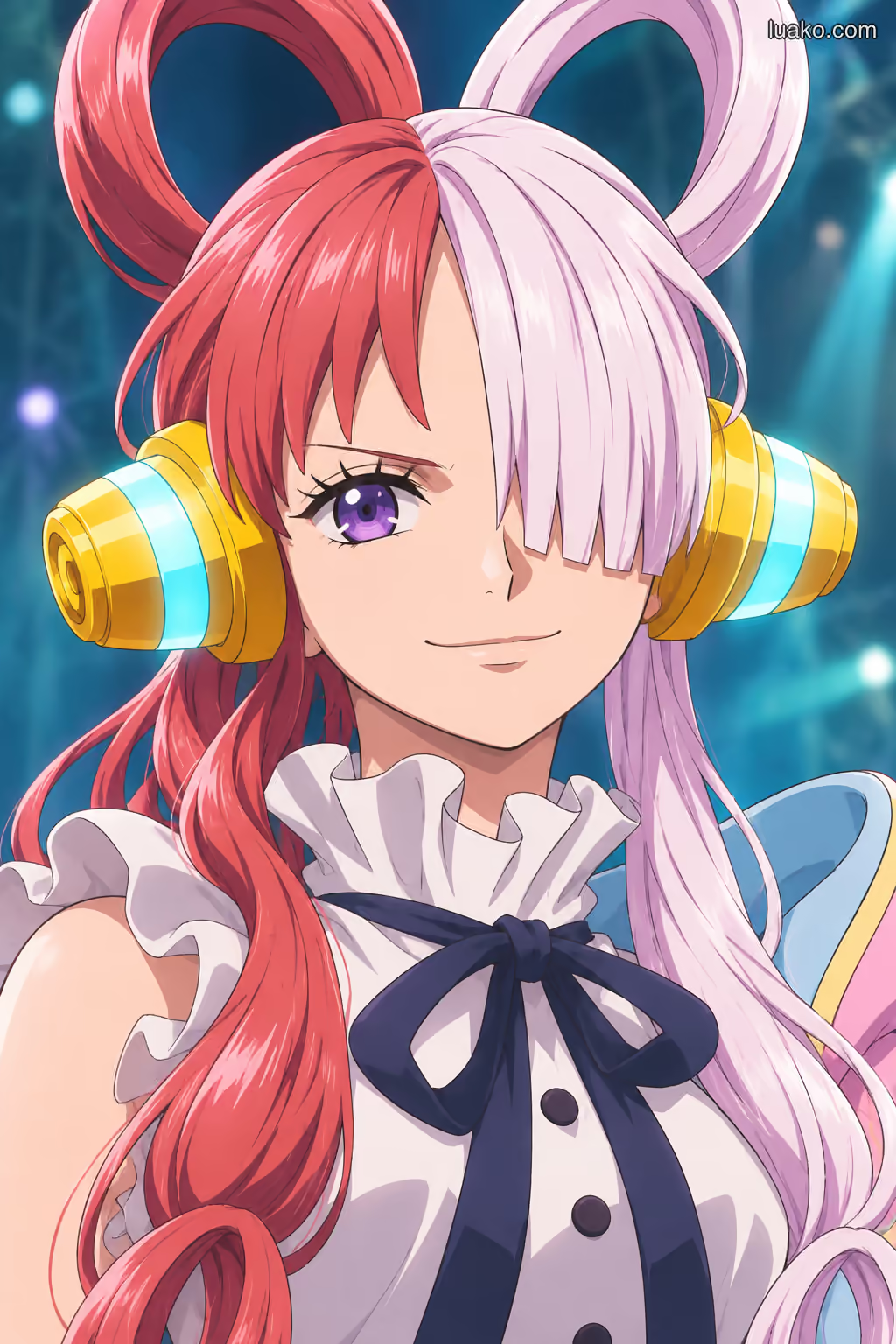
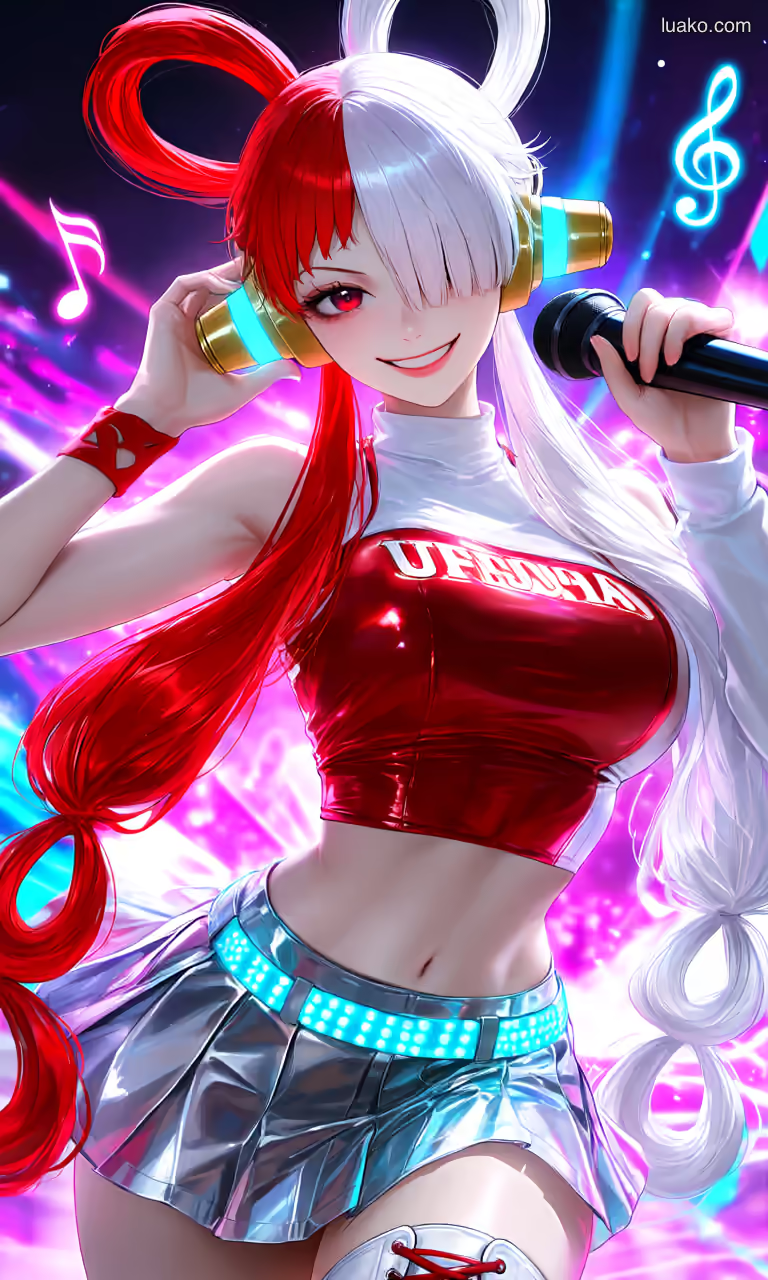
Eiichiro Oda designed Uta with her distinctive split red-and-white hair, already visible in official drawings of her as a child. Her oversized headphones, dramatic accessories, and concert costumes suit a singer whose presence is meant to be felt across an entire arena.
Uta’s songs have an unusually prominent role in the film. Ado supplies her singing voice for seven featured numbers, with contributions from creators including Yasutaka Nakata, Mrs. GREEN APPLE, Vaundy, and Hiroyuki Sawano. The soundtrack moves between defiant anthems, quick-fire rhythms, and gentle ballads rather than giving her a single musical mood.
Uta’s Personality
Uta has the confidence of someone who expects to hold a crowd’s attention, and the competitiveness of someone who still remembers every contest with Luffy. She teases, challenges, and hates to lose. Her brightness feels spontaneous, but the attention she gives to her songs and audience is anything but careless.
Her listeners’ suffering affects her deeply. Uta wants a world in which people no longer have to live in fear of pirates or wonder whether tomorrow will be worse. That desire makes her generous with her voice and stubborn in argument: when someone dismisses her ideal, she is more likely to push back than quietly compromise.
With Shanks, her confident public persona gives way to feelings she has never easily resolved. She remembers a crew that treated her like family, yet separation has left questions she cannot sing away. Her affection and anger can coexist without either being insincere.
Uta’s Appearance
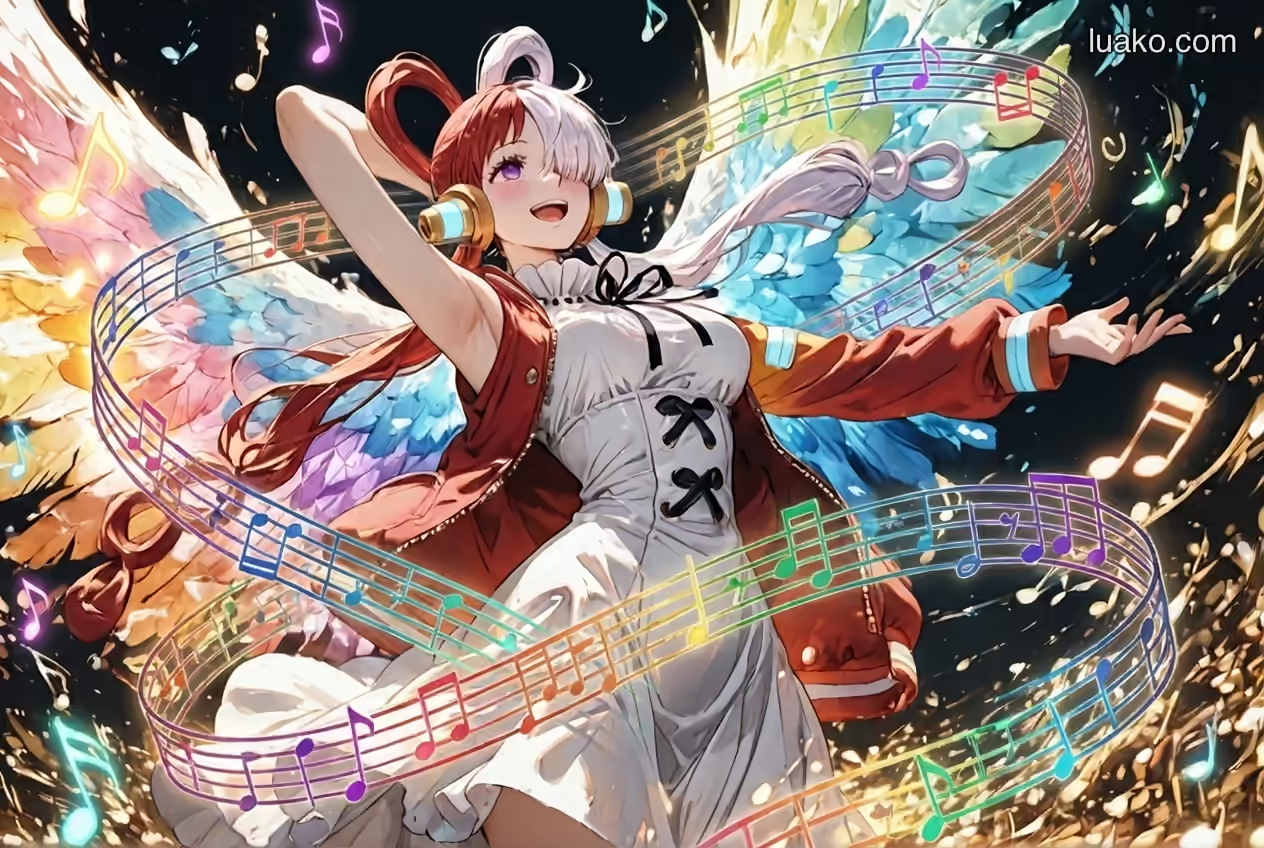
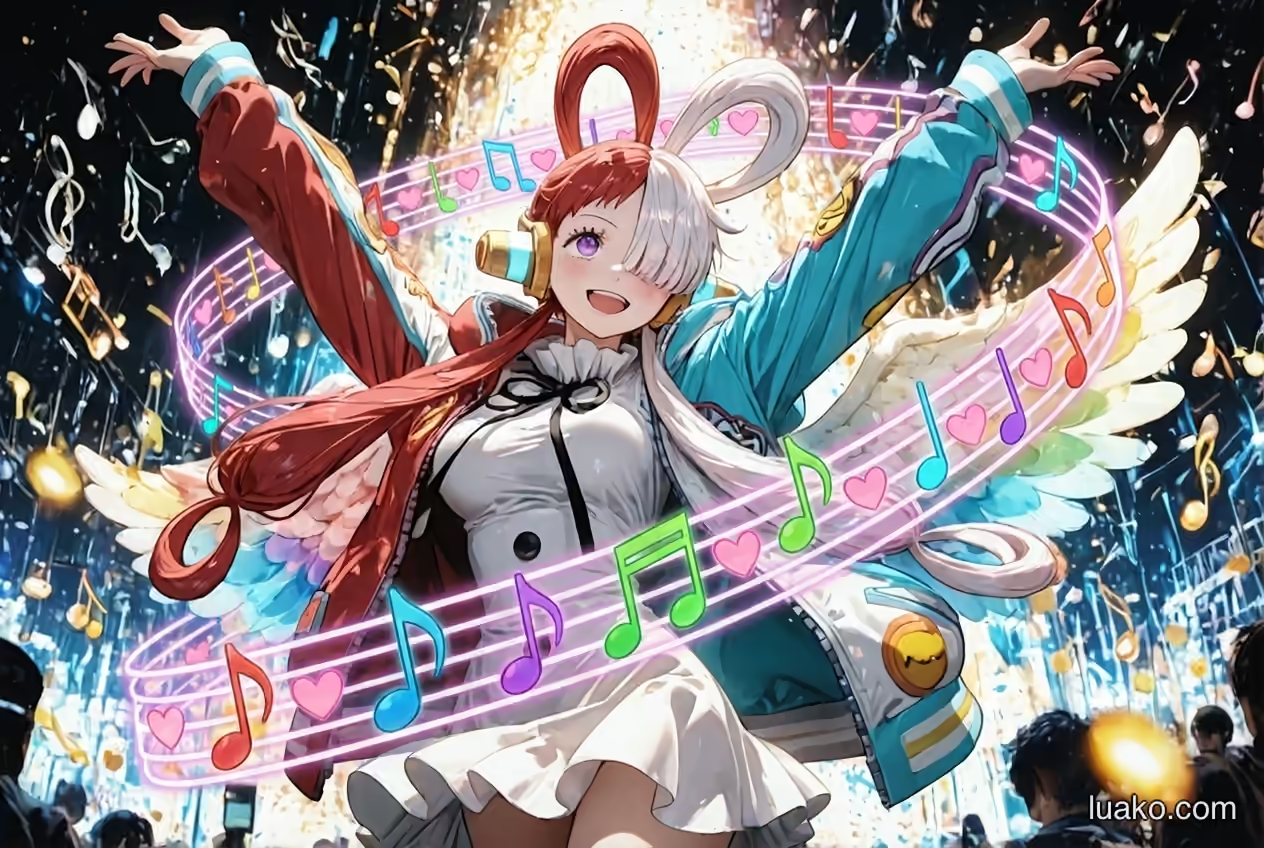
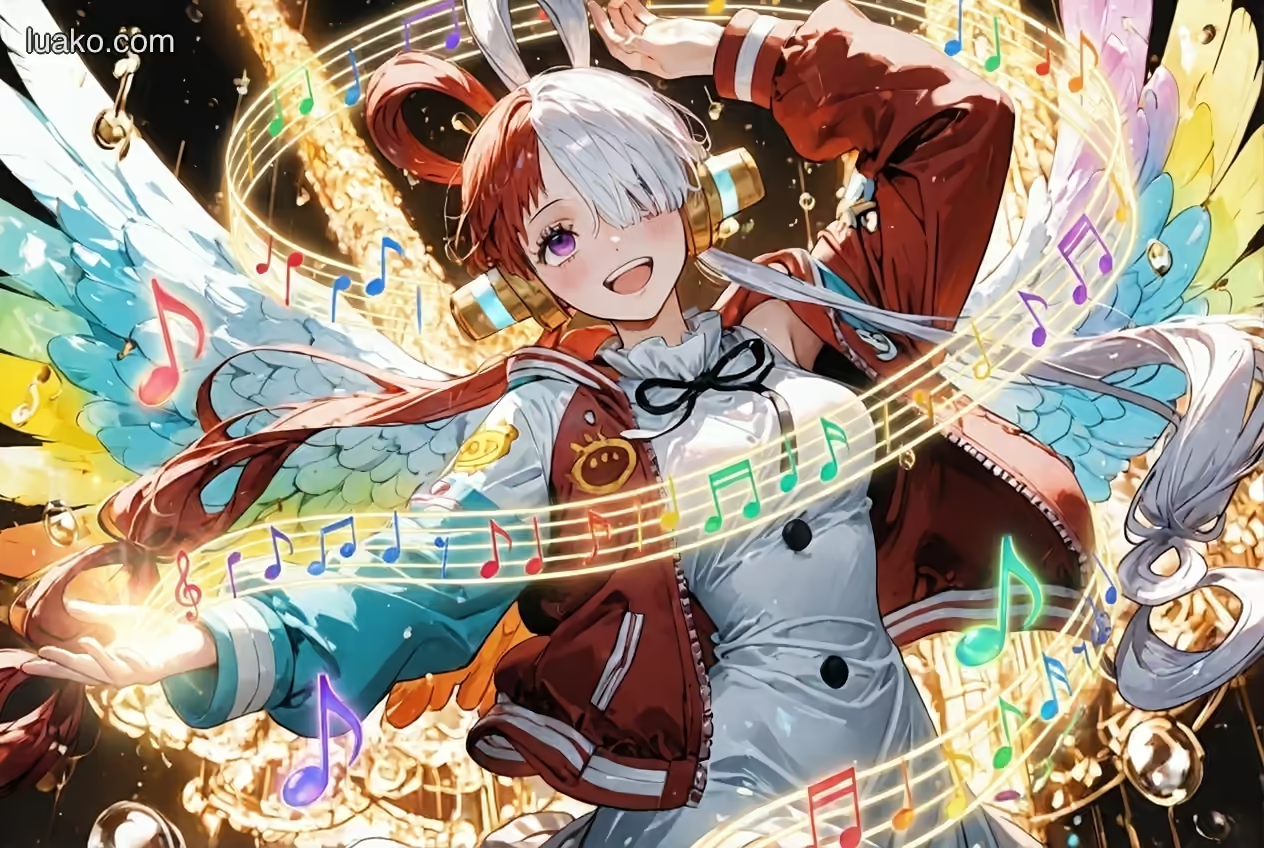
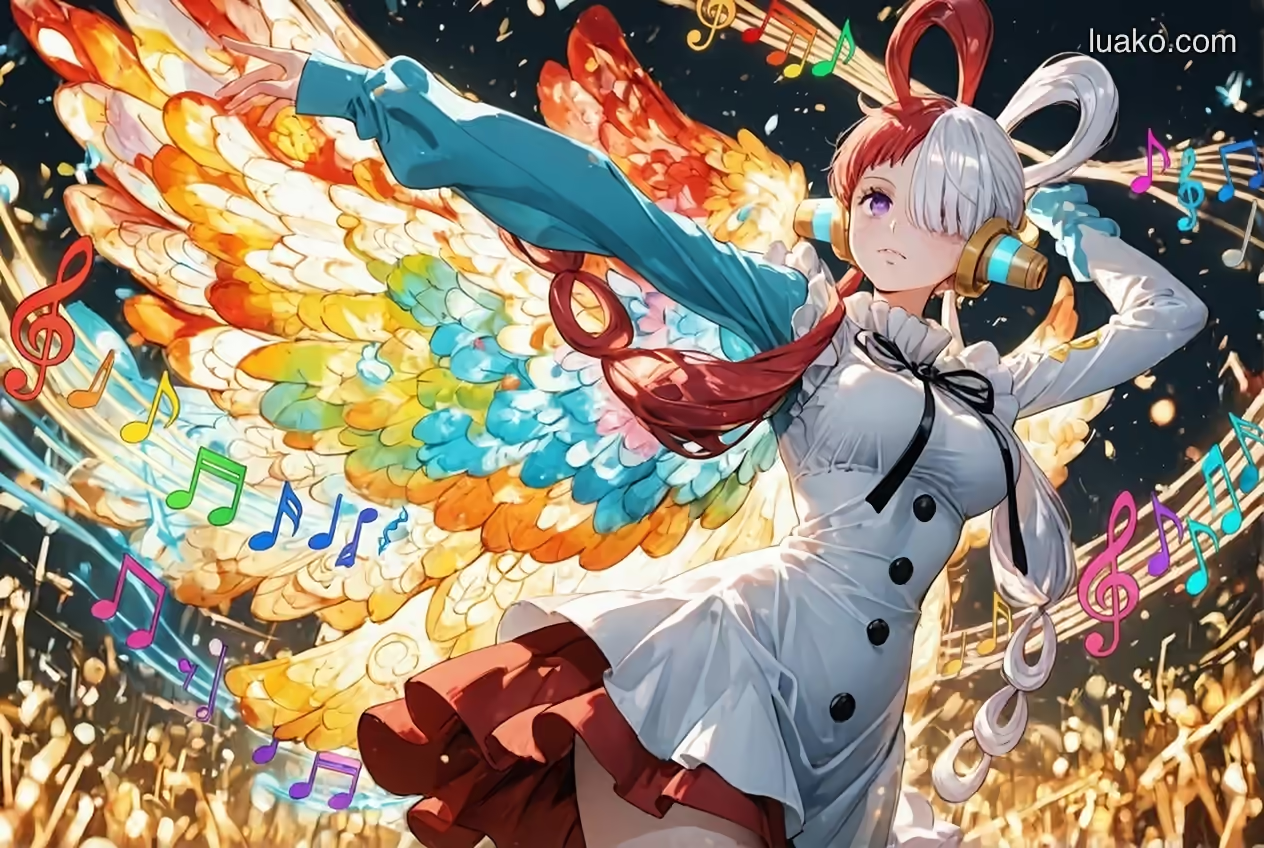
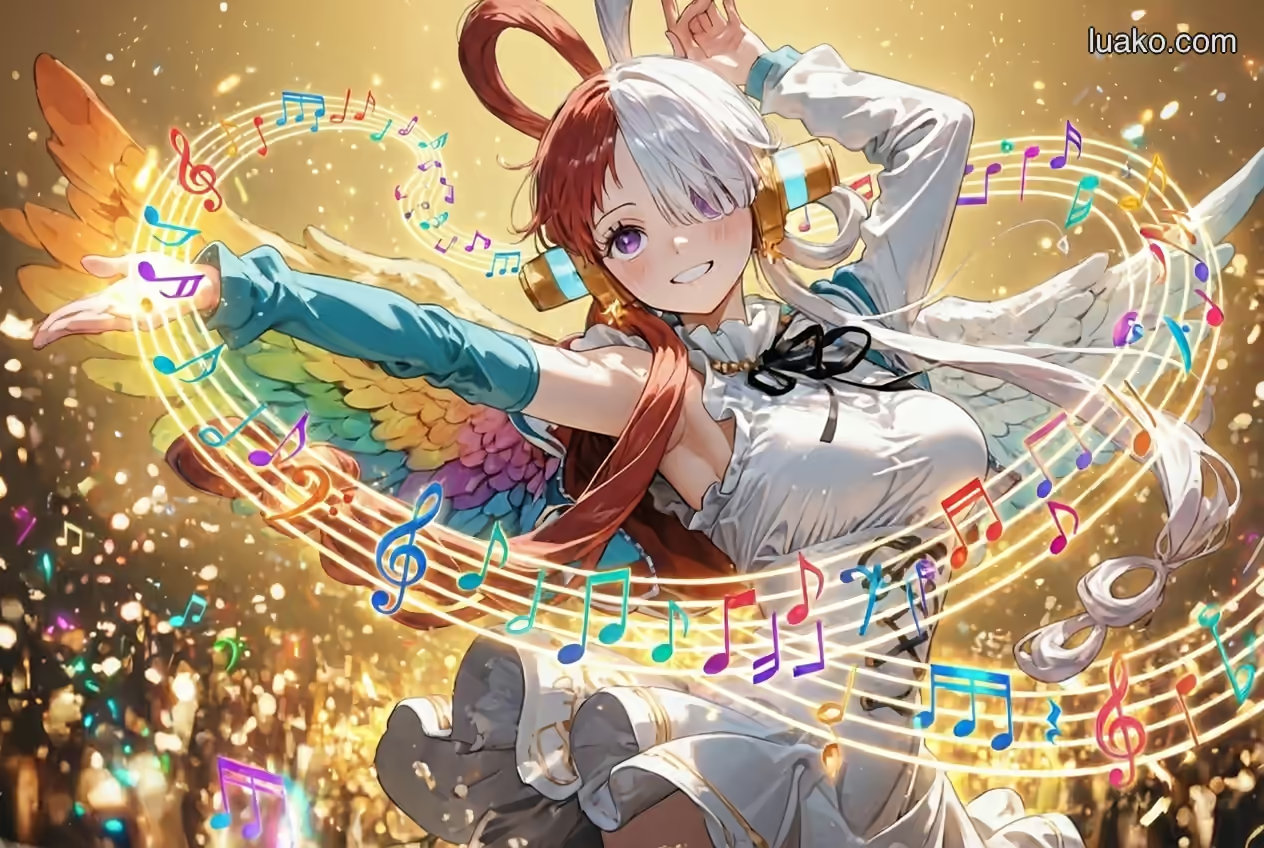
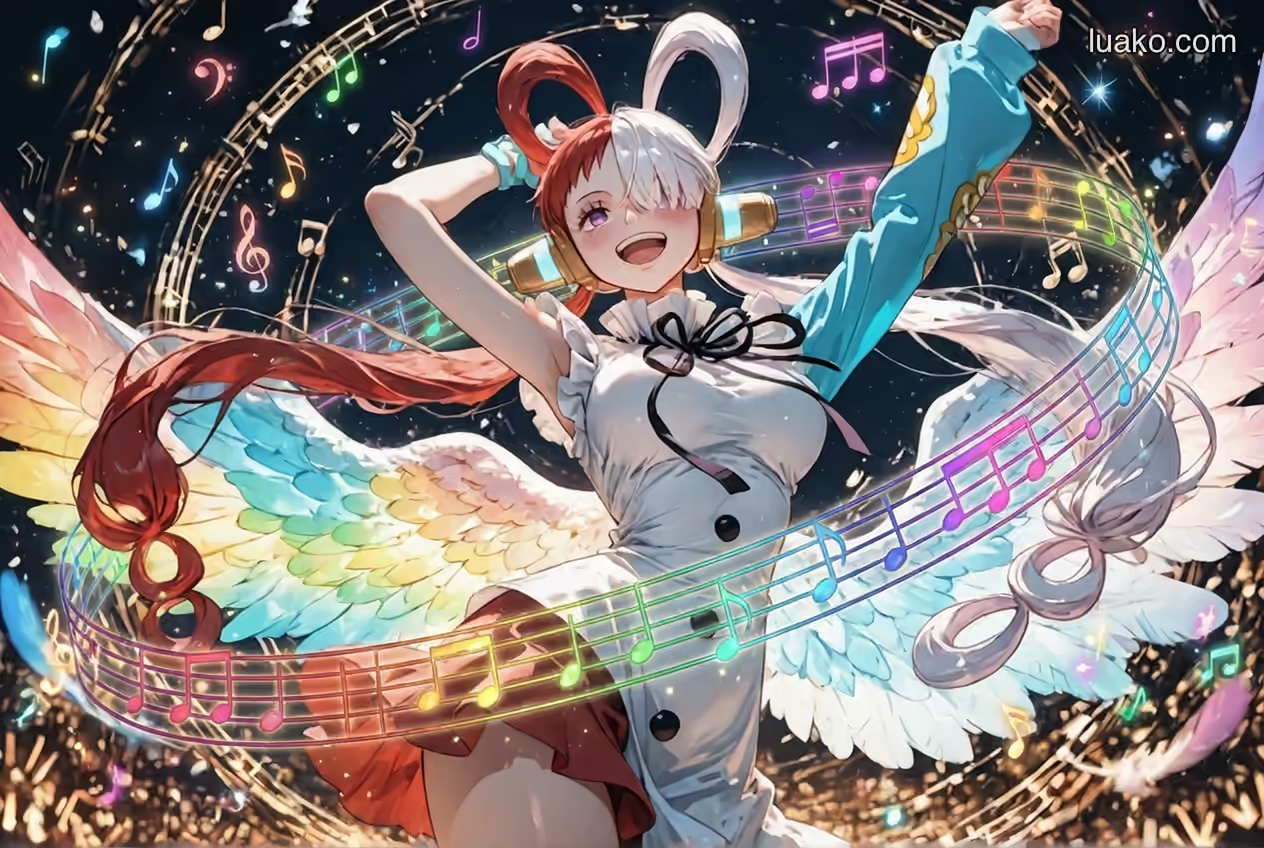
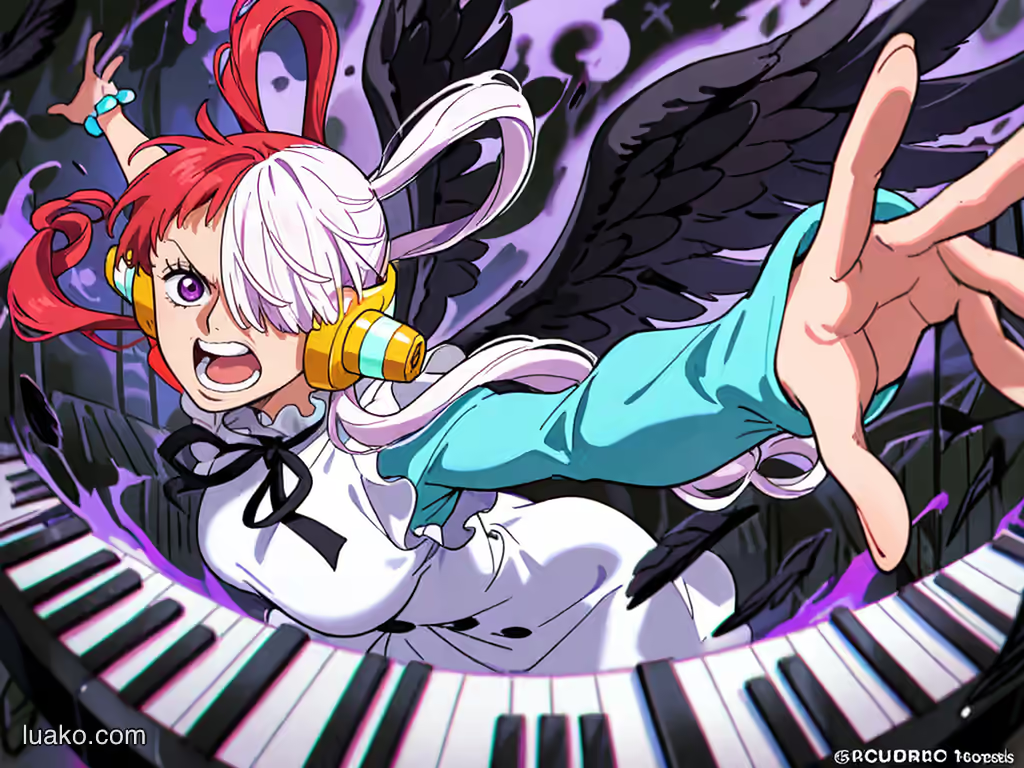
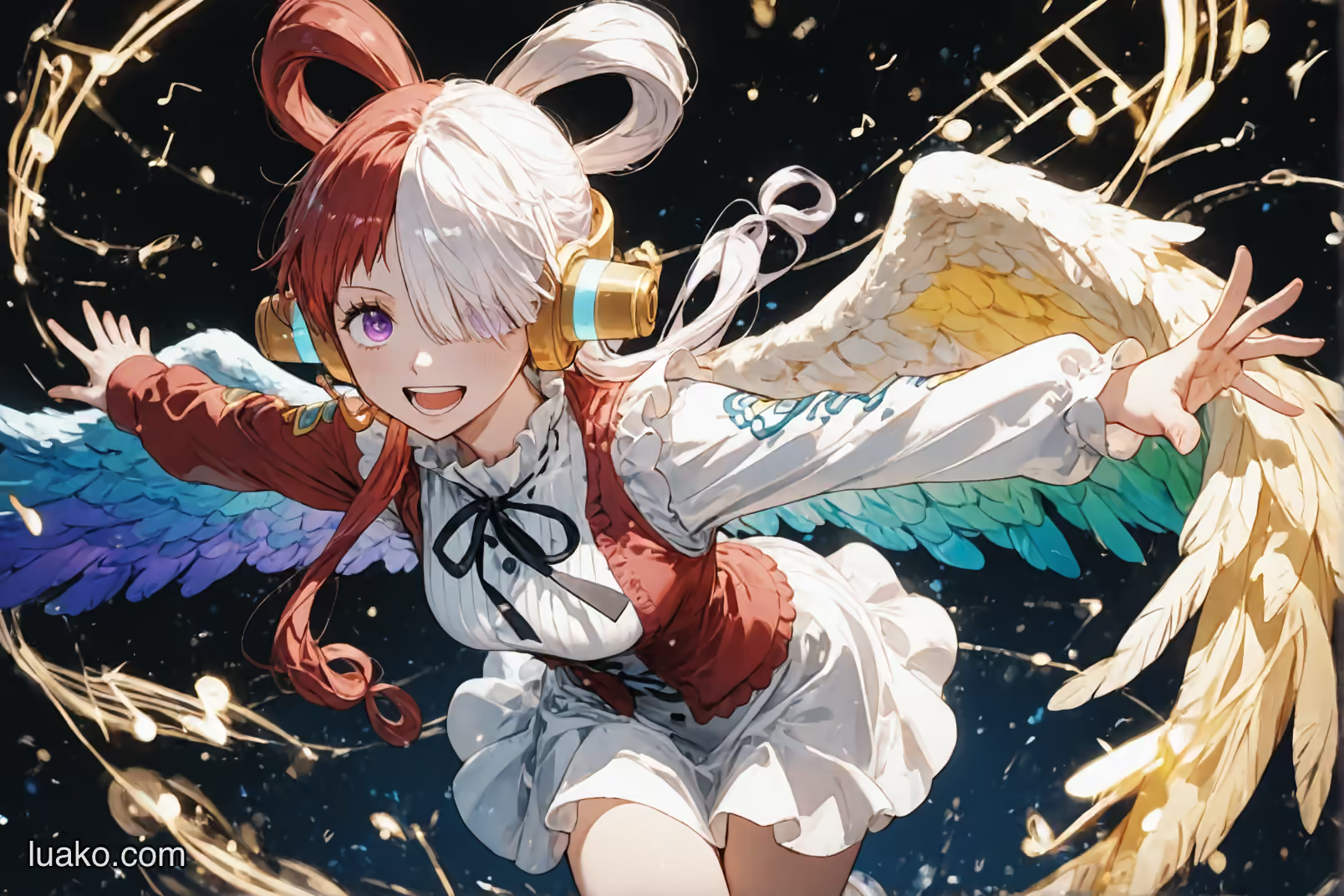
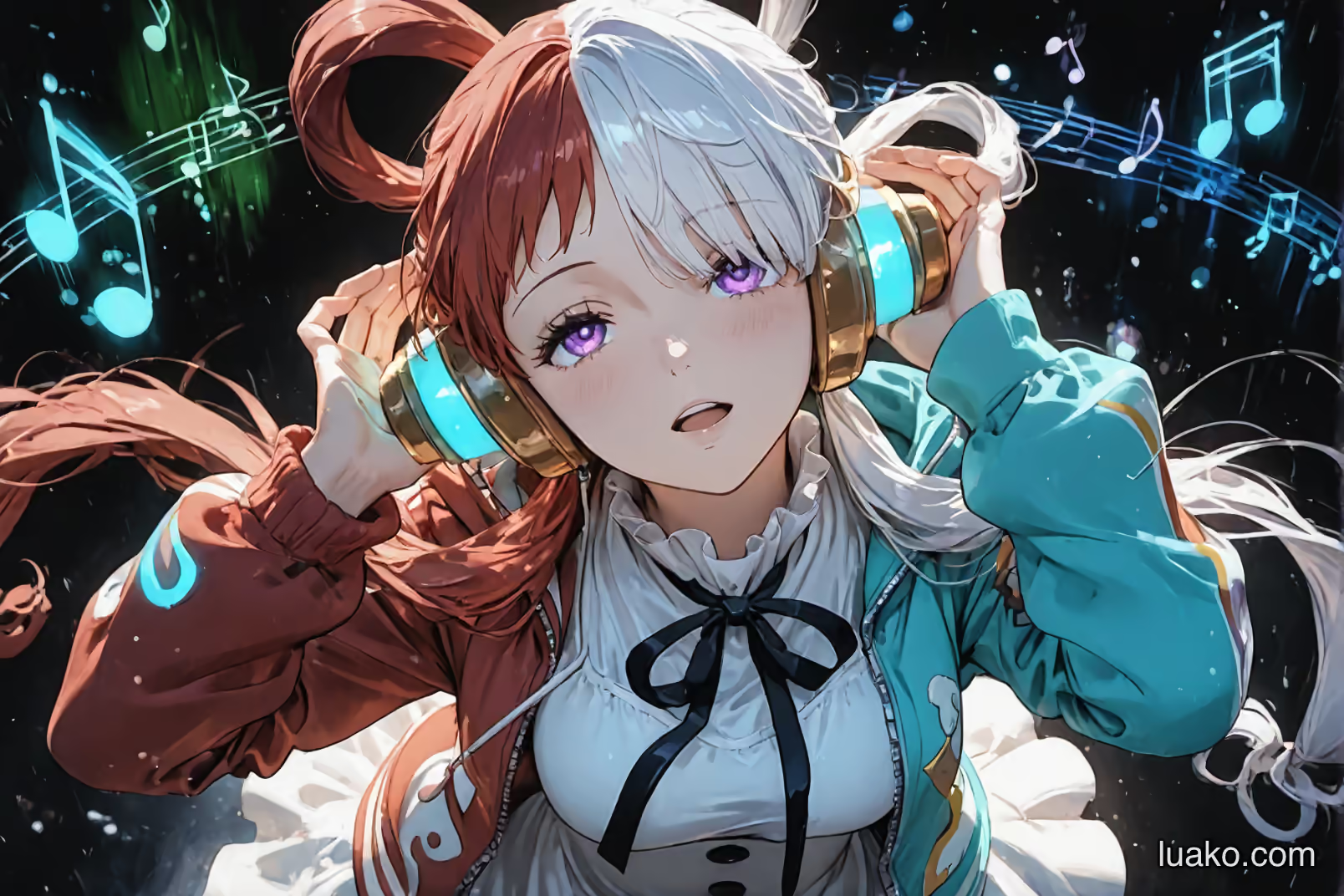
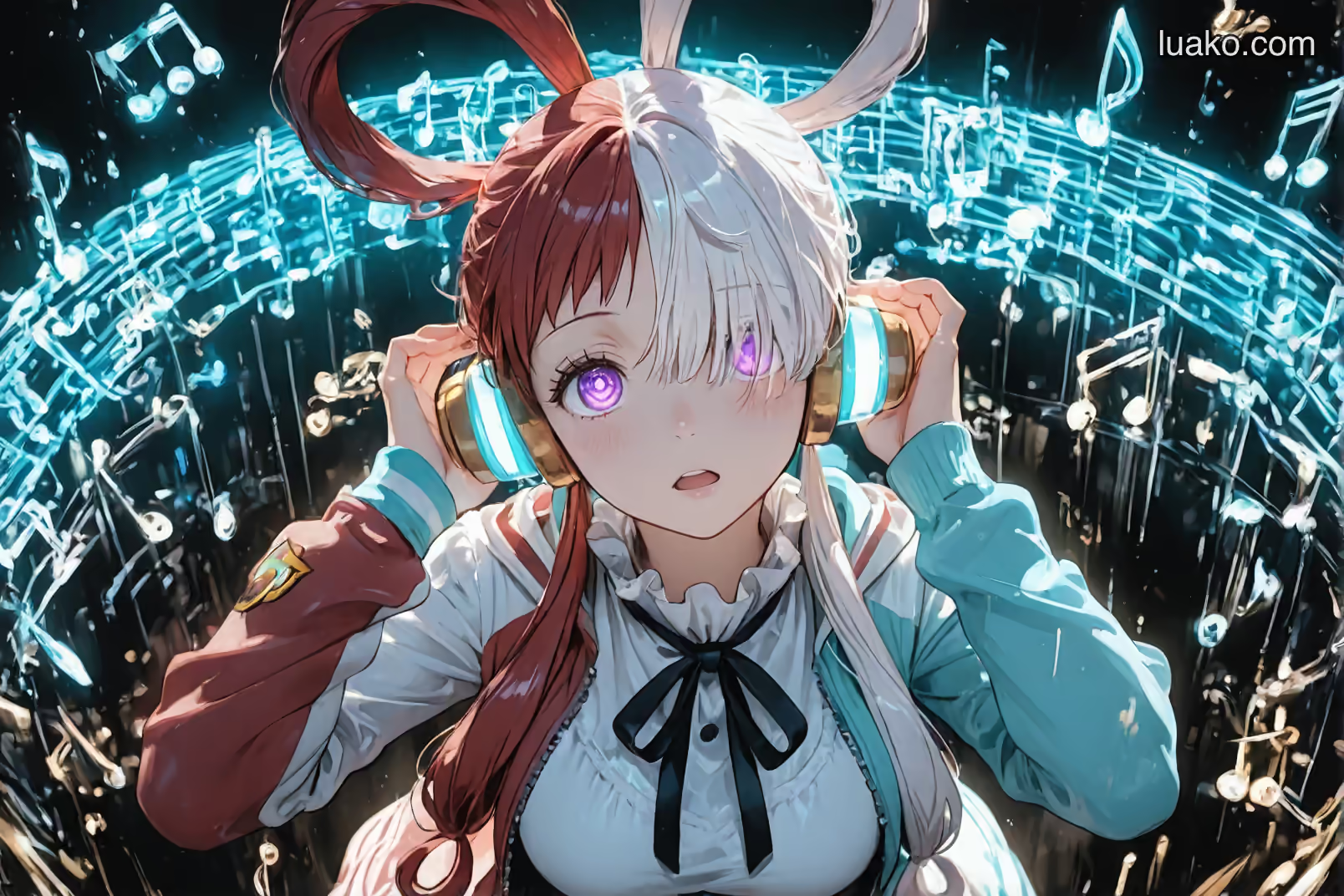
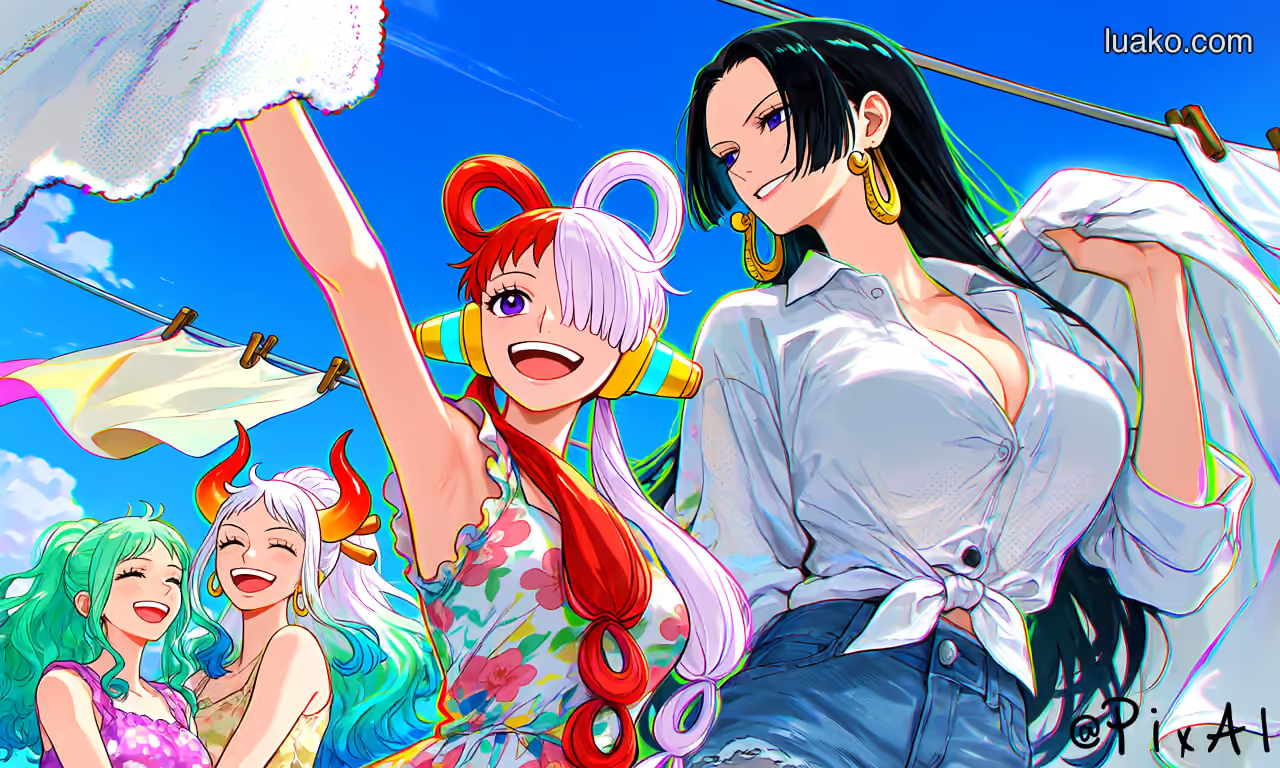
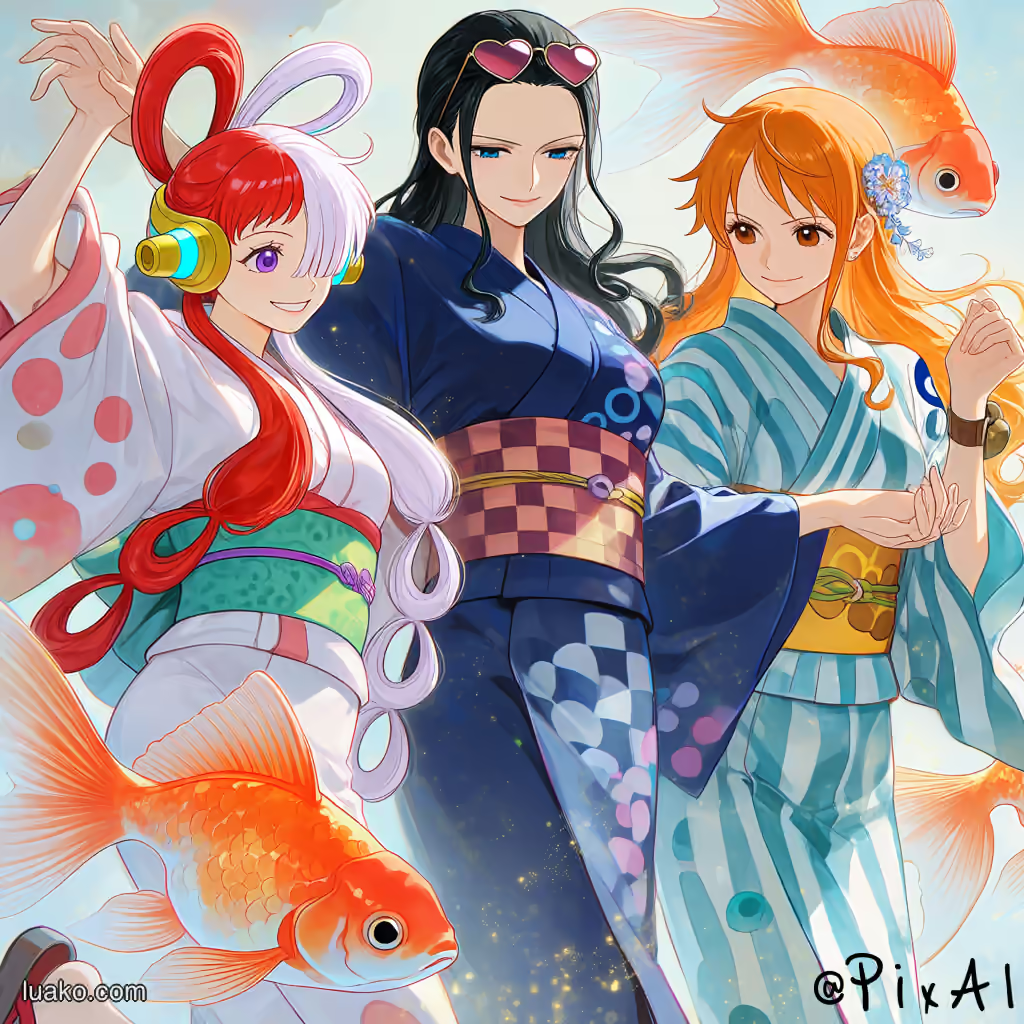
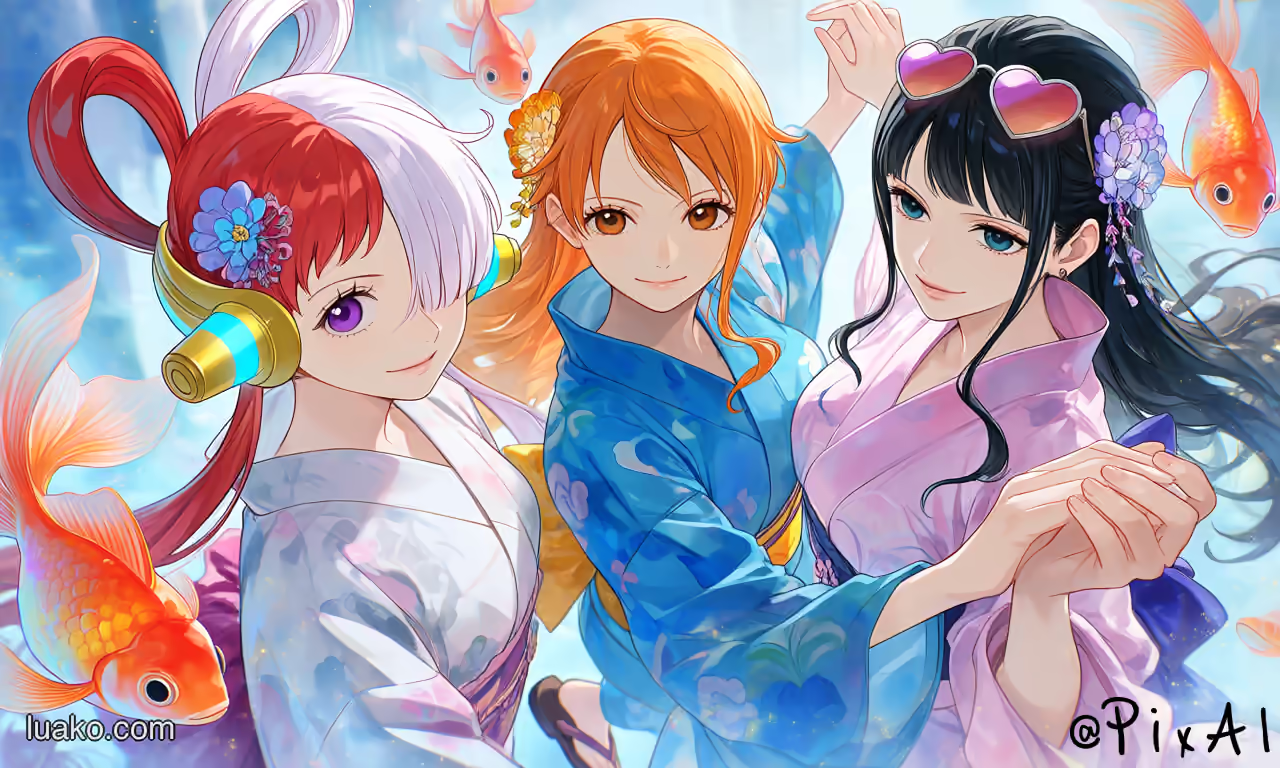
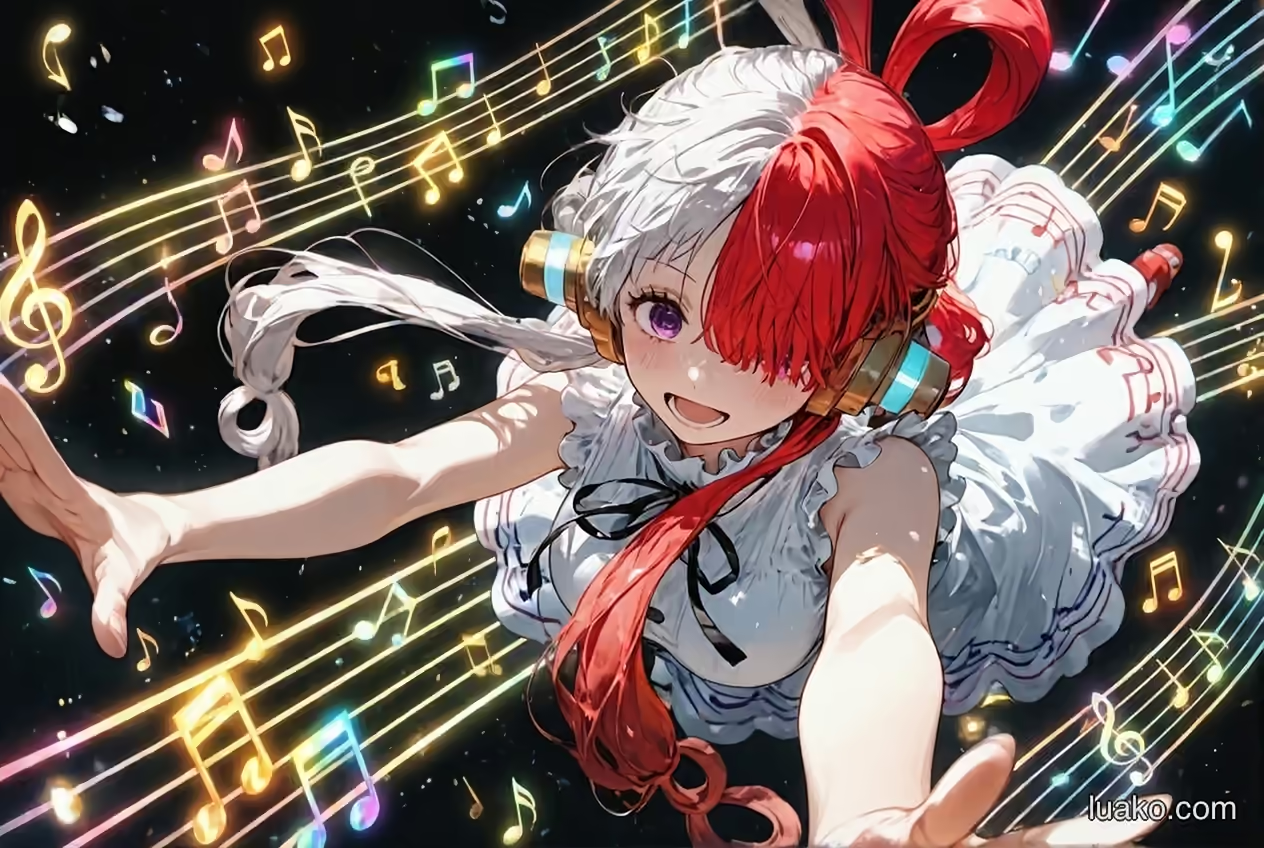
Uta is instantly recognizable by her long hair divided into white and reddish-pink halves, with distinctive looped sections at the crown and long curled lengths. Her red-and-white coloration is an established part of her design even in official illustrations of her childhood, rather than a stage-only makeover.
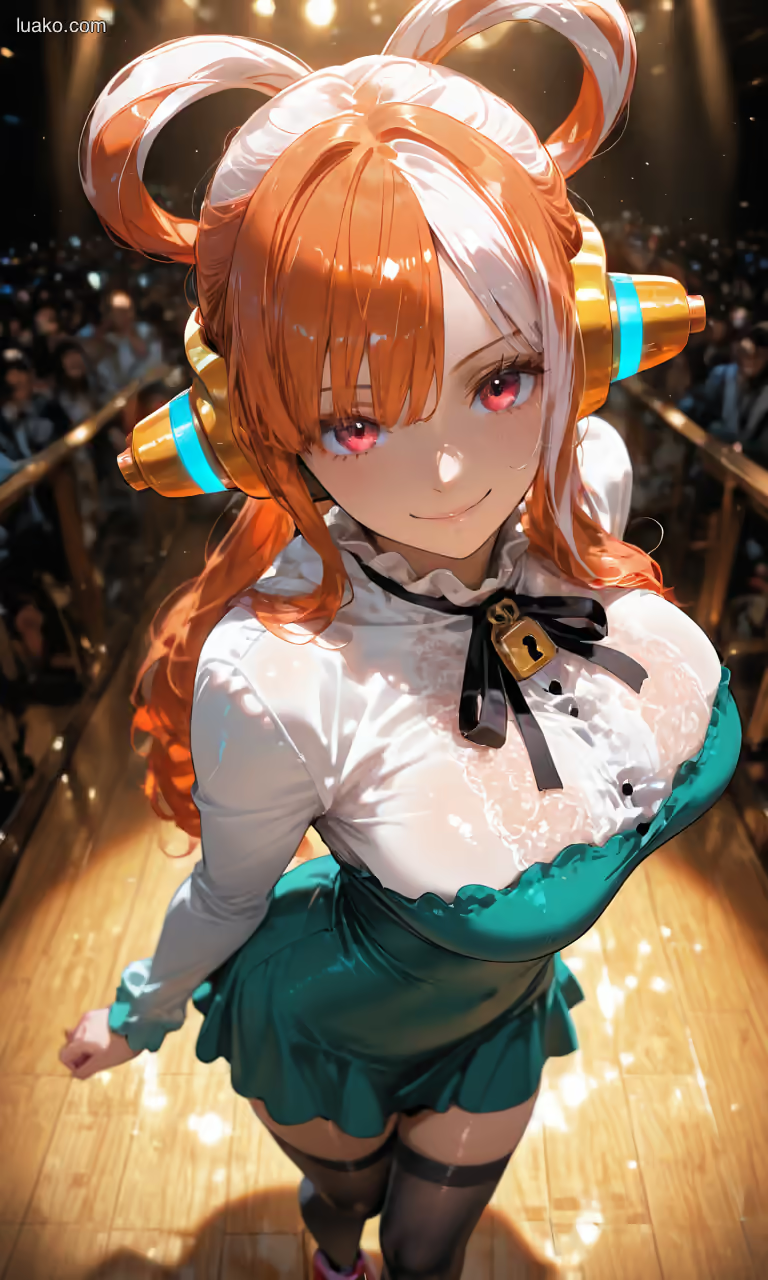
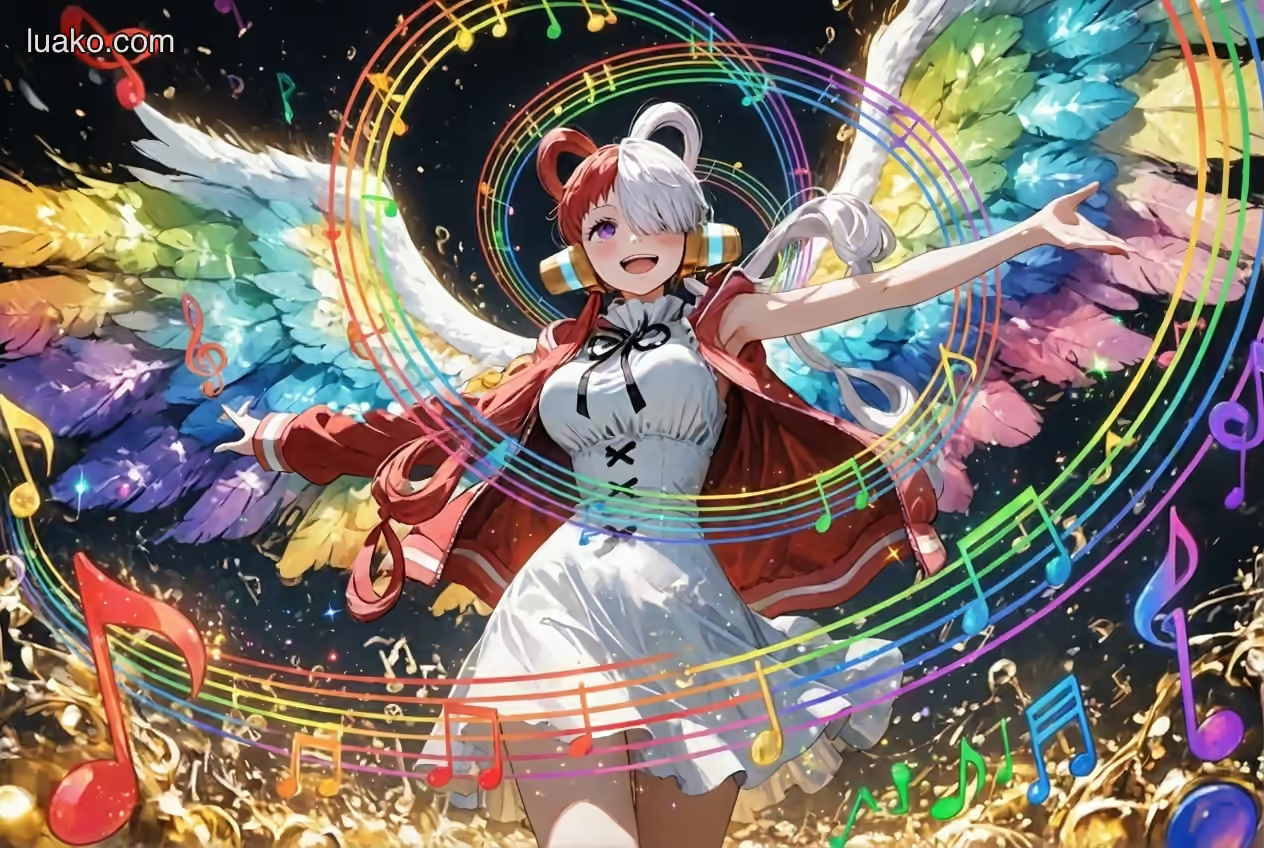
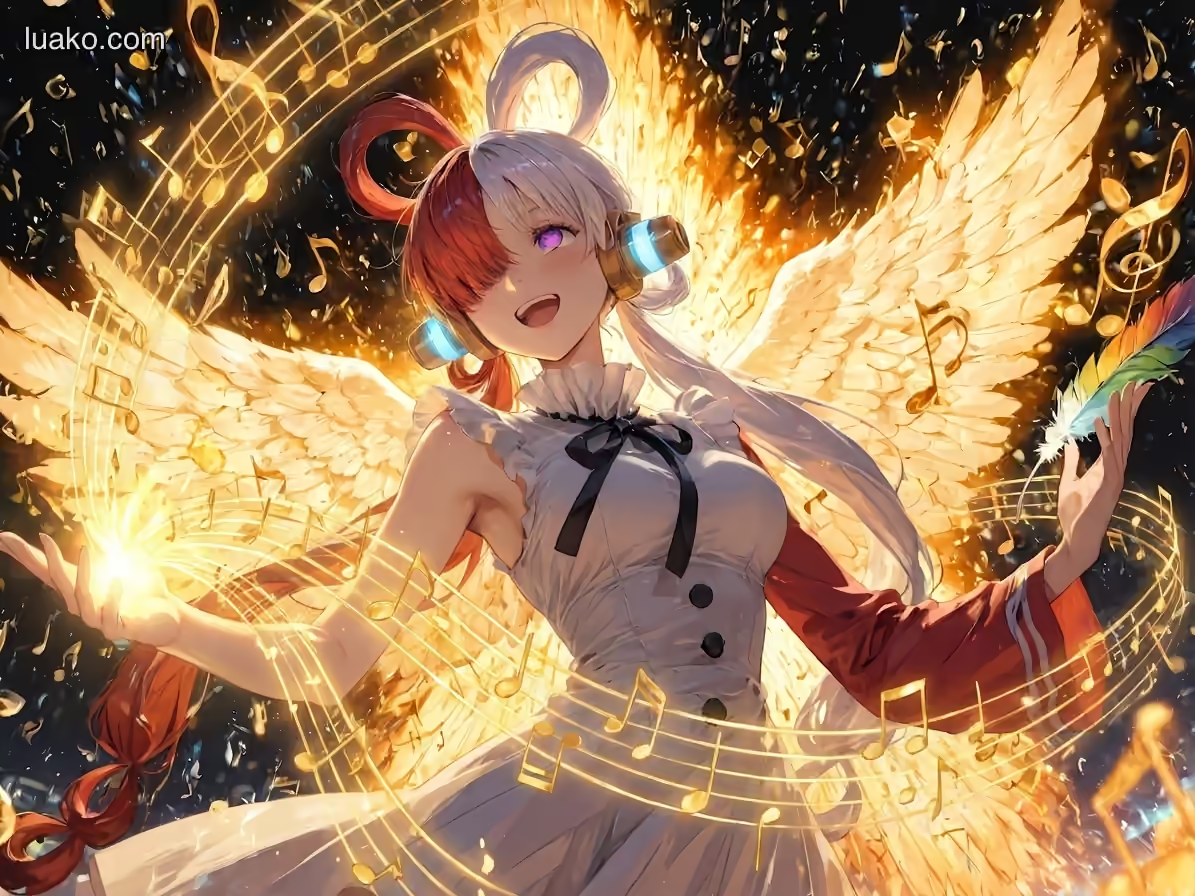
Her signature performance outfit features a short white dress with a dark ribbon, brightly colored oversized headphones, and striking footwear. She also appears with a broad multicolored jacket and winglike accessories in the film’s promotional and character designs. The silhouette combines concert-star polish with the playful exaggeration characteristic of One Piece.
The official character database lists her height as 169 cm. The visual contrast between bright color, large accessories, and her expressive gestures makes her easy to identify even in an ensemble of elaborately costumed characters.
Quick facts
- Name
- Uta (ウタ)
- Series
- One Piece
- Principal appearance
- One Piece Film: Red (2022)
- Role
- World-famous singer; central character of Film: Red
- Age
- 21
- Birthday
- October 1
- Height
- 169 cm
- Devil Fruit
- Uta Uta no Mi (Sing-Sing Fruit)
- Family
- Adopted daughter of Red-Haired Shanks
- Former affiliation
- Musician of the Red Hair Pirates
- Childhood connection
- Monkey D. Luffy of Foosha Village
- Concert location
- Elegia, the island of music
- Favorite food
- Pancakes with plenty of whipped cream
- Japanese dialogue voice
- Kaori Nazuka
- Japanese singing voice
- Ado
- Film release in Japan
- August 6, 2022
- Film tie-in anime episodes
- One Piece episodes 1029–1030 (Uta and Luffy’s childhood)
Abilities
Exceptional Singing Voice
Uta’s defining natural talent is a powerful and expressive singing voice that captivates an international audience and carries the film’s emotional storytelling.
Limitations: Being a gifted singer is separate from the supernatural mechanics of her Devil Fruit.
Uta Uta no Mi (Sing-Sing Fruit)
Her Devil Fruit gives her music supernatural effects on those who hear her. The film gradually discloses the extent of these effects and their dangers.
Limitations: The power is tied to hearing her singing and is not an unlimited ability to reshape the ordinary physical world.
Stagecraft and Audience Connection
Uta can command a large performance with confidence and project a vision of hope that moves listeners from many different backgrounds.
Limitations: Charisma and enthusiasm do not ensure that every listener agrees with her choices.
Relationships
Shanks
Adoptive father
The captain of the Red Hair Pirates raised Uta as his daughter. Their long separation and the question of why they parted are central to Film: Red, so the deeper explanation is reserved for spoilers.
Monkey D. Luffy
Childhood friend and rival
Uta met Luffy during the Red Hair Pirates’ visits to Foosha Village. They turned nearly anything into a contest; when they meet again on Elegia, their old rivalry resurfaces even as their goals pull them in different directions.
Gordon
Guardian and musical mentor
Gordon cares for Uta on Elegia and helps develop her musical gift. He knows more about the island’s past than he has told her, a secret explored in the film’s later revelations.
Red Hair Pirates
Former crew and extended family
Uta sailed as a child musician with Shanks’ crew. Her attachment to that community persists after she grows into a singer known far beyond their ship.
Straw Hat Pirates
Concert guests and later opponents in the film
The crew arrives on Elegia expecting music and finds themselves involved in Uta’s complicated vision of a better world. Their objections highlight the story’s theme of personal choice.
Her fans
Audience and people she wants to protect
Uta’s listeners are not simply a cheering crowd; their everyday difficulties shape her ambitions and drive her determination to make the world kinder.
Interesting facts
Her official favorite food is pancakes piled high with whipped cream.
The small domestic detail offers a playful contrast to her larger-than-life stage persona.
Ado sings Uta’s musical performances, while Kaori Nazuka voices her dialogue in Japanese.
The two-performer approach is important to understanding how the character blends acting and a fully developed pop soundtrack.
Uta’s split red-and-white hairstyle existed in her childhood design.
The production revealed original Eiichiro Oda drawings showing that her signature color contrast is not merely a stage gimmick.
One Piece Film: Red premiered theatrically in Japan on August 6, 2022.
The production was a major part of One Piece’s 25th-anniversary celebration, with Eiichiro Oda serving as general producer.
Her introduction involved a Video Transponder Snail, not an ordinary modern livestream.
The device translates online-style music fandom into the established communications technology of the One Piece world.
“New Genesis,” the film’s main theme, was written, composed, and arranged by Yasutaka Nakata.
The film’s central pop anthem has a specifically credited creator, distinct from the other artists behind Uta’s featured songs.
Uta is briefly represented in the One Piece manga but the movie plot is separate.
It is possible to recognize her as part of the franchise without treating every Film: Red incident as manga history.
Two One Piece anime episodes, 1029 and 1030, were broadcast as Film: Red tie-ins focusing on young Uta, Luffy, and the Red Hair Pirates.
They provide a separate animated look at the childhood rivalry that the film later revisits.
The film’s seven featured Uta songs range from “New Genesis” to “The World’s Continuation,” with Ado performing across markedly different musical styles.
The soundtrack gives Uta distinct public, confrontational, and reflective musical voices; it is not a set of interchangeable concert tracks.
Frequently asked questions
Who is Uta in One Piece?
Uta is a world-famous singer, the adopted daughter of Red-Haired Shanks, and the central character of One Piece Film: Red. She has a shared childhood history with Luffy.
Is Uta Shanks’ biological daughter?
No. Shanks is her adoptive father; he raised her as his daughter, and their family bond remains essential to her story.
How old is Uta?
The official One Piece character database lists Uta as 21 years old.
When is Uta’s birthday?
October 1.
What Devil Fruit does Uta have?
She has the Uta Uta no Mi, commonly called the Sing-Sing Fruit. Its full effect is a major element of the movie’s plot.
How does Uta know Luffy?
Uta met Luffy as a child when she accompanied the Red Hair Pirates to Foosha Village. They meet again years later on Elegia.
Who sings for Uta in One Piece Film: Red?
Ado provides Uta’s singing voice in the Japanese production, while Kaori Nazuka performs her spoken voice.
Where does Uta perform her first public concert?
On Elegia, an island known for music.
Is One Piece Film: Red canon to the manga?
Uta herself is acknowledged in the broader manga setting, including a brief Chapter 1055 silhouette, but the events of Film: Red should not be assumed to be part of the manga’s main chronology.
What does Uta want?
She wants music to make people happy and hopes to ease the suffering she sees around her. The film explores the price of pursuing that dream without respecting every person’s freedom to choose.
Which One Piece anime episodes feature Uta and young Luffy?
Episodes 1029 and 1030 are Film: Red tie-in stories showing their childhood in Foosha Village alongside Shanks and the Red Hair Pirates.
Major story spoilers below.
Shanks’ Decision and the Destruction of Elegia
In the film’s childhood backstory, Elegia is devastated while Uta is still traveling with the Red Hair Pirates. For years, she believes Shanks and his crew destroyed the island and then abandoned her. Gordon raises her afterward, while the apparent betrayal hardens her anger toward pirates.
The disaster actually followed a young Uta’s unwitting performance of the forbidden music that summons Tot Musica. The unleashed entity devastated Elegia; Shanks chose to take the blame and left her with Gordon, hoping she could pursue her talent without the dangers of a pirate’s life or the weight of knowing what happened. His attempt to protect her also left her believing he had betrayed her.
The Truth Uta Had Already Discovered
Gordon’s revelation is not the first time Uta has encountered the truth. She later admits that, about a year after her music began reaching listeners, she found a Video Transponder Snail recording of the catastrophe. She thus knew before the concert that Shanks was not responsible for destroying Elegia, even though she continued to speak as if he were.
Uta explains that the demands and desperate hopes of her fans made it difficult for her to turn away from the new era she had promised them. Her resolve is therefore more troubling than a misunderstanding that can be fixed simply by telling her the facts: she persists even while knowing part of the story she tells herself is false.
The Sing-Sing World and the New Genesis Plan
Uta’s Uta Uta no Mi does far more than embellish a performance. When people hear her sing, their consciousness can be drawn into an alternate realm often called Uta World or the Sing-Sing World, where her imagination controls what is possible. Their real bodies remain unconscious while they experience her musical reality.
She plans to keep her audience in that realm as a permanent escape from war, cruelty, hunger, and piracy, calling her ideal a new era. What she sees as compassion becomes a denial of the listeners’ ability to leave. When some resist, her desire to protect them hardens into coercion.
Her abilities ordinarily end when she sleeps. To prevent the return to ordinary life, she consumes wake-shrooms that stop her from sleeping but poison her body. The film makes this a devastating trap: her effort to guarantee everyone else’s happiness puts her own life and the trapped listeners in extreme danger.
Tot Musica and the Two-World Battle
As the concert’s conflict escalates, Uta summons Tot Musica, and the creature manifests across the real world and her song-created realm. The combined battle requires the two sides to coordinate their attacks; Usopp and his father Yasopp help connect the fighters, and Luffy and Shanks deliver the final blows in the confrontation.
Gordon’s account explains why Shanks accepted the blame, but Uta’s own confession shows that she already knew the truth before the battle. Defeating Tot Musica does not immediately free everyone whose consciousness has been swallowed by the song world. Uta must decide what her music is for when the people she wanted to protect are still trapped.
Uta’s Choice and the Film’s Ending
Shanks offers Uta medicine that would allow her to sleep and counter the wake-shrooms’ lethal effects. She refuses to take it before singing again, choosing to free the people still trapped in her world. Her final restorative song returns them, and Shanks stands between his daughter and the Marines as the two reconcile.
The film then leaves Uta’s fate emotionally stark rather than presenting a simple triumphant survival. Her collapse and the solemn scene aboard Shanks’ ship strongly imply her death in the movie. This is an implication of Film: Red’s ending, not a confirmed death in the manga timeline; character status in the main continuity must be treated separately.
Additional story facts
Shanks accepted blame for Elegia’s destruction in the film.
The revelation changes the apparent reason for his separation from Uta and gives the story its central family tragedy.
Uta’s artificial song realm depends on a listener hearing her.
This turns a universal medium of connection into the mechanism of both comfort and imprisonment.
Wake-shrooms allow Uta to remain awake at terrible physical cost.
They make her refusal to stop performing a life-threatening decision rather than an ordinary act of stamina.
Tot Musica must be confronted across two different realities.
The cooperation between Luffy’s side and Shanks’ crew emphasizes the limits of solving conflict through individual power alone.
Uta’s final performance is an act of release rather than control.
It gives her musical gift a different meaning than it had at the height of her New Genesis plan.
The film strongly implies a fatal ending but does not establish a manga-canon death.
This distinction prevents a movie-specific outcome from being misreported as a settled fact in the original comic.
Uta had found a recording of the Elegia disaster before her concert, revealing Shanks’ innocence to her earlier than the audience first realizes.
Her decision to pursue New Genesis cannot be explained solely by ignorance of the past; loyalty to her fans and her own refusal to retreat also matter.
Spoiler questions
Why did Shanks leave Uta on Elegia?
In Film: Red, Shanks took responsibility for the destruction caused by the awakened Tot Musica and left young Uta with Gordon to protect her and give her the chance to sing freely. Keeping the truth secret had painful consequences.
What is Uta World?
It is a realm generated by Uta’s Sing-Sing Fruit, into which the minds of people who hear her songs can be drawn while their bodies sleep in the real world.
Why does Uta take wake-shrooms?
She uses them to remain awake so that her song world will not disappear, despite their deadly side effects.
What is Tot Musica?
A destructive entity linked to a forbidden song; its awakening was responsible for the devastation of Elegia in the movie’s backstory.
How is Tot Musica defeated?
Forces fighting in both realms coordinate simultaneous attacks, with Luffy and Shanks delivering the decisive blows.
Does Uta die at the end of One Piece Film: Red?
The ending strongly suggests that she dies after rejecting life-saving medicine and singing to free everyone. The film presents this largely through implication; it is not a declaration of her fate in manga canon.
Does Uta give up her plan?
Yes. After the catastrophe and reconciliation with Shanks, she ultimately uses her voice to release the people held in her musical world, rather than keep them there against their will.
Did Uta already know the truth about Elegia before her concert?
Yes. In Film: Red she admits that she found a recording of the disaster after her singing career began. She knew Shanks had been blamed for Tot Musica’s destruction but continued her plan because of the hopes she believed her fans had placed in her.
Tags
Uta (One Piece) Artwork Gallery
Discover Uta’s unmistakable red-and-white hair, colorful concert fashion and expressive stage persona from One Piece Film: Red.