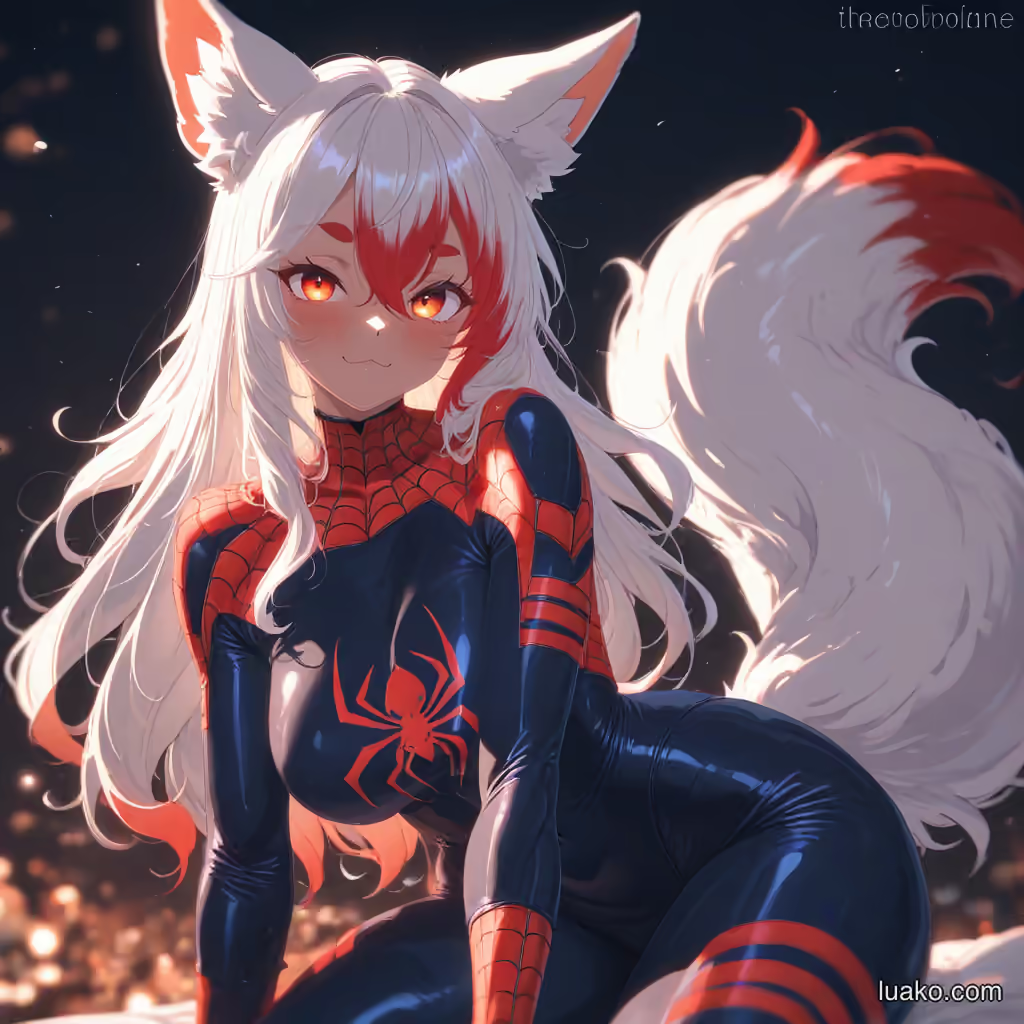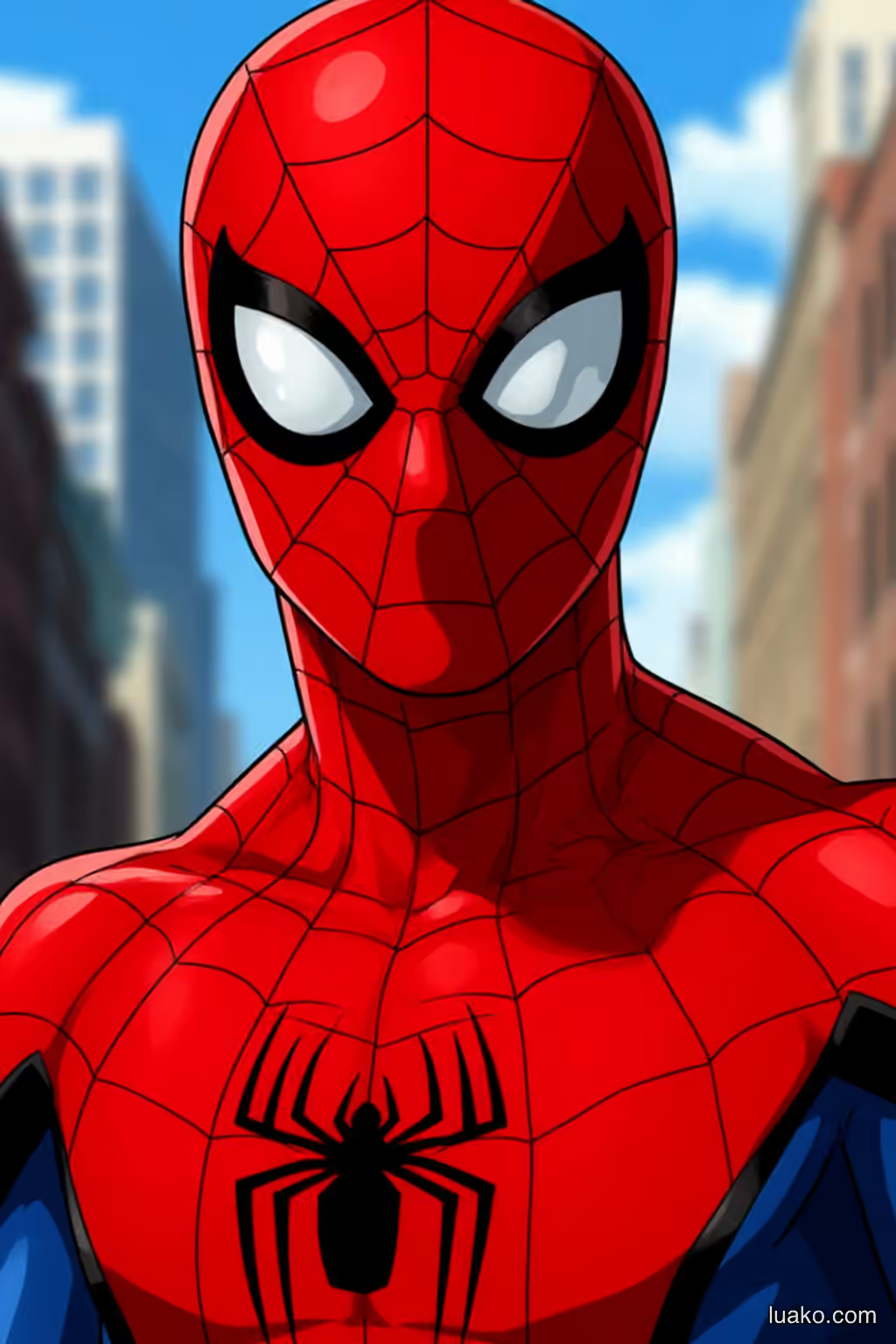
Spider-Man (Peter Parker) — Marvel Comics
BiographyBiography
The story, the personality, and everything in between.Read biographyClose biography
Biography
The story, the personality, and everything in between.Read biographyClose biographySpider-Man
New York superhero and science-minded civilian protagonist of The Amazing Spider-Man (mainline Marvel Comics)
Spider-Man is Peter Parker, the scientifically gifted New Yorker introduced in Marvel Comics’ Amazing Fantasy #15 (1962). After a radioactive spider bite gives the shy teenager extraordinary agility, strength, wall-crawling, and a warning sense for danger, he invents his own web-shooters and initially seeks fame. The death of his Uncle Ben transforms that ambition into a commitment to help others.
Peter’s sharp humor, inventive problem-solving, family obligations, and constant struggle to balance an ordinary life with extraordinary responsibility define the original mainline comics version of the hero.
Biography
The Student from Forest Hills
Orphaned young, Peter Parker grows up in the Queens neighborhood of Forest Hills with Aunt May and Uncle Ben. Exceptionally talented in science but socially isolated at Midtown High, he is mocked by classmates and finds greater comfort in experiments than in school popularity. This ordinary, vulnerable starting point is essential to Marvel’s original Peter Parker, distinct from the many Spider-Men of other universes.
The Bite and the First Costume
A radioactive spider bites Peter at a science exhibition. His newfound abilities include climbing sheer surfaces, exceptional reflexes, and feats of strength far beyond his size. He develops a red-and-blue disguise, builds wrist-mounted mechanical web-shooters, and performs publicly under the name Spider-Man. At first, the attention and money offer an escape from being dismissed as “puny Parker.”

The Lesson That Changes His Life
Peter refuses to stop a fleeing criminal when he has the chance. That same criminal later kills Uncle Ben. Realizing the terrible cost of his indifference, Peter captures the killer and redirects his gifts toward protecting people. His vow is not a guarantee that he will always succeed; it is the standard he keeps trying to meet.
Crimefighting Between Classes and Deadlines
As Spider-Man, Peter confronts threats including Doctor Octopus, the Vulture, and the Green Goblin, while his civilian obligations do not disappear. He sells photographs of Spider-Man to the Daily Bugle, whose outspoken publisher J. Jonah Jameson campaigns against the masked hero. The arrangement helps Peter earn money while exposing him to persistent public suspicion.
Growing Up Without Leaving the Mask Behind
Peter graduates from Midtown High and continues his studies at Empire State University, where his circle widens to include Harry Osborn and Gwen Stacy. His scientific work, responsibilities to May, and feelings for others repeatedly collide with emergencies that cannot wait for a convenient moment. His friendship with Mary Jane Watson also becomes a significant part of his life.

Personality and Motivations
Peter is quick-witted in costume, firing off jokes even when he is frightened or outmatched. His wisecracks can distract opponents, but also create a contrast with the self-conscious young man who first struggled to fit in at school. He is a problem-solver who reaches for chemistry, engineering, and observation as readily as brute strength.
His defining ethical habit is to ask whether he could have prevented someone else’s suffering. That reflex makes him compassionate and stubborn, but can also leave him overwhelmed by guilt and conflicting obligations. He does not possess unlimited time, certainty, or resources; the character’s tension comes from trying to do right when every choice has a cost.
Peter’s ties to Aunt May, friends, and other heroes keep him rooted in an everyday community rather than a life of uninterrupted superhero spectacle. His friendship and teasing rivalry with Johnny Storm reveal that he can be playful and competitive without losing his concern for others.
Appearance
In the mainline comics, Peter Parker is depicted as a lean, athletic young man with brown hair and hazel eyes. His ordinary civilian appearance is intentionally different from the anonymous masked figure who swings through New York.
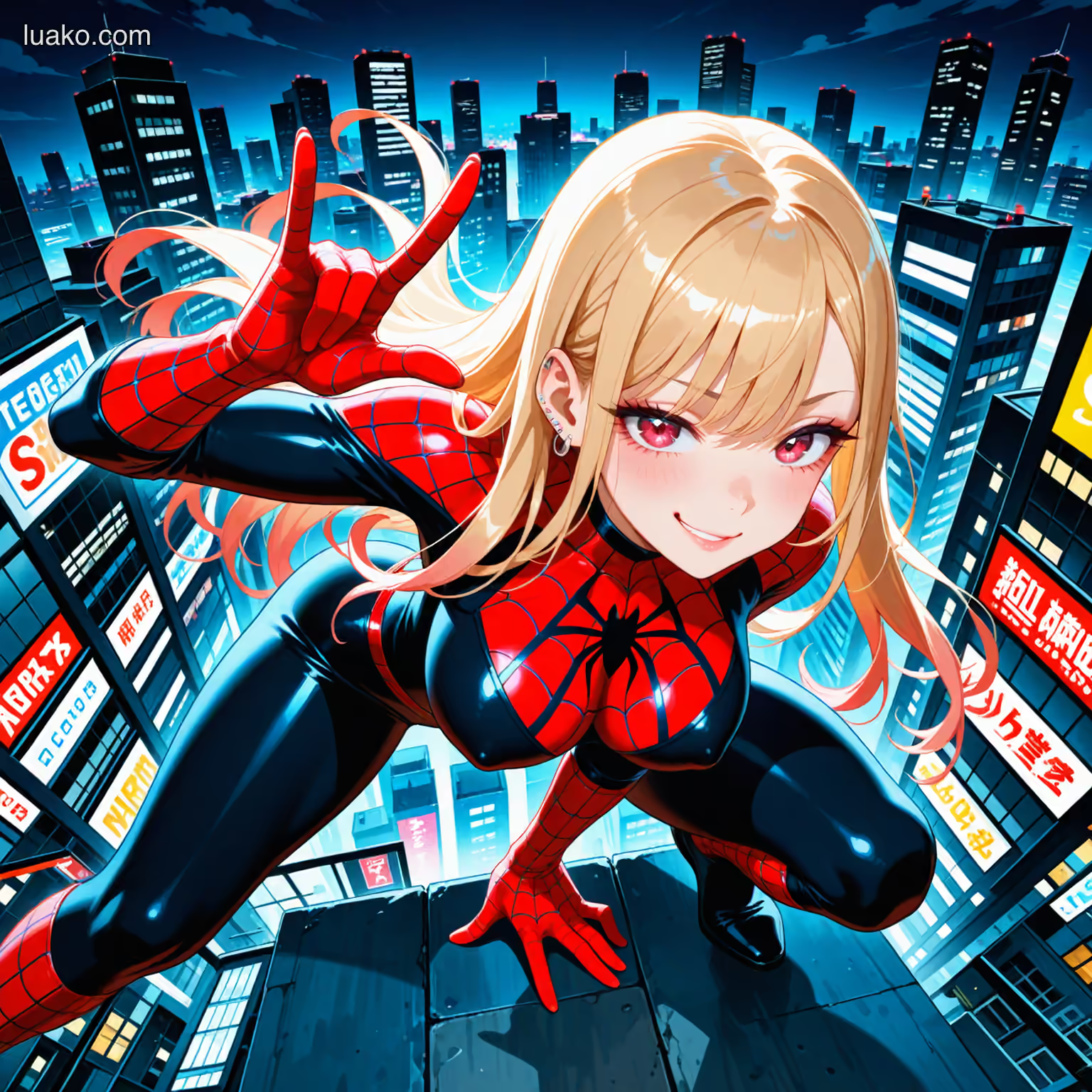
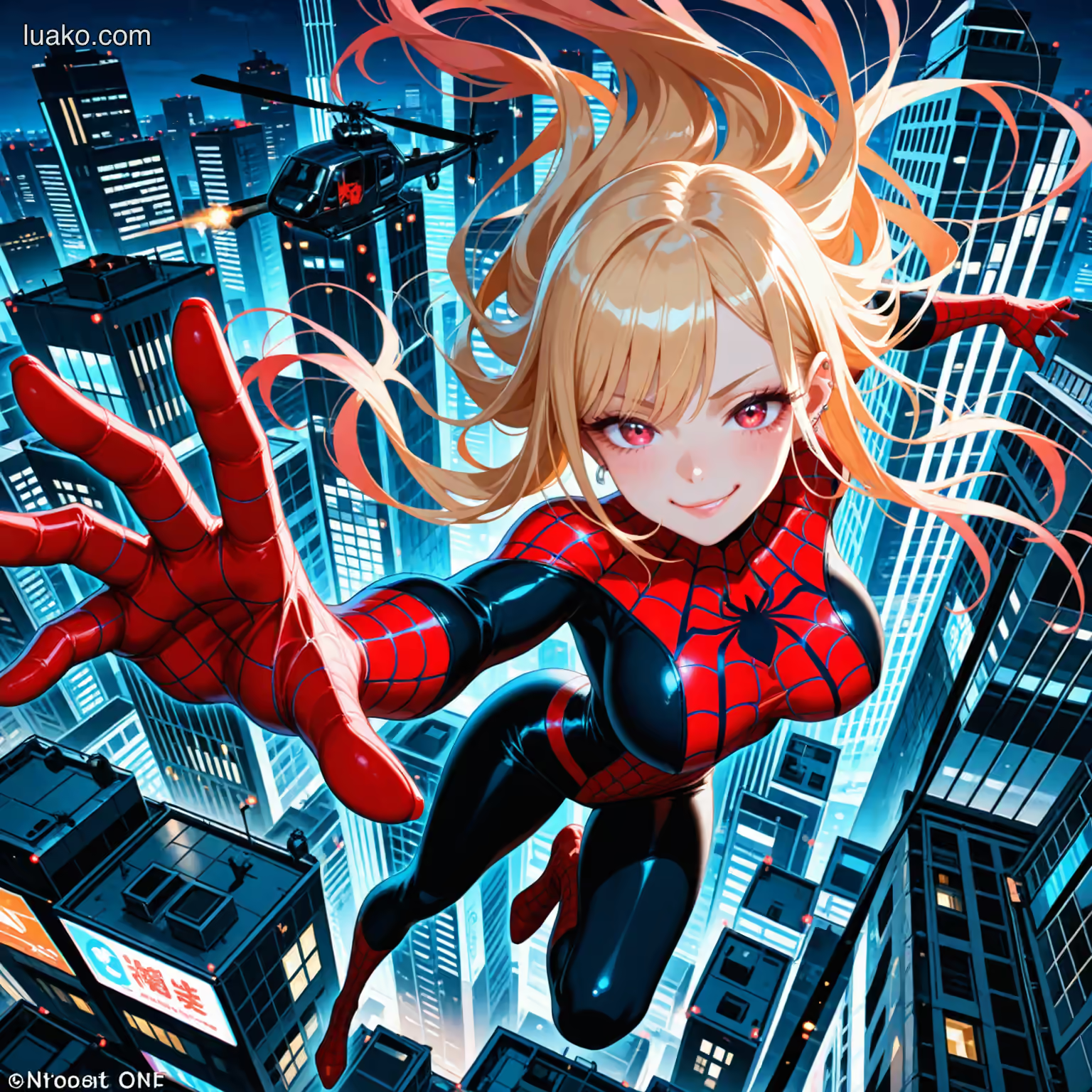
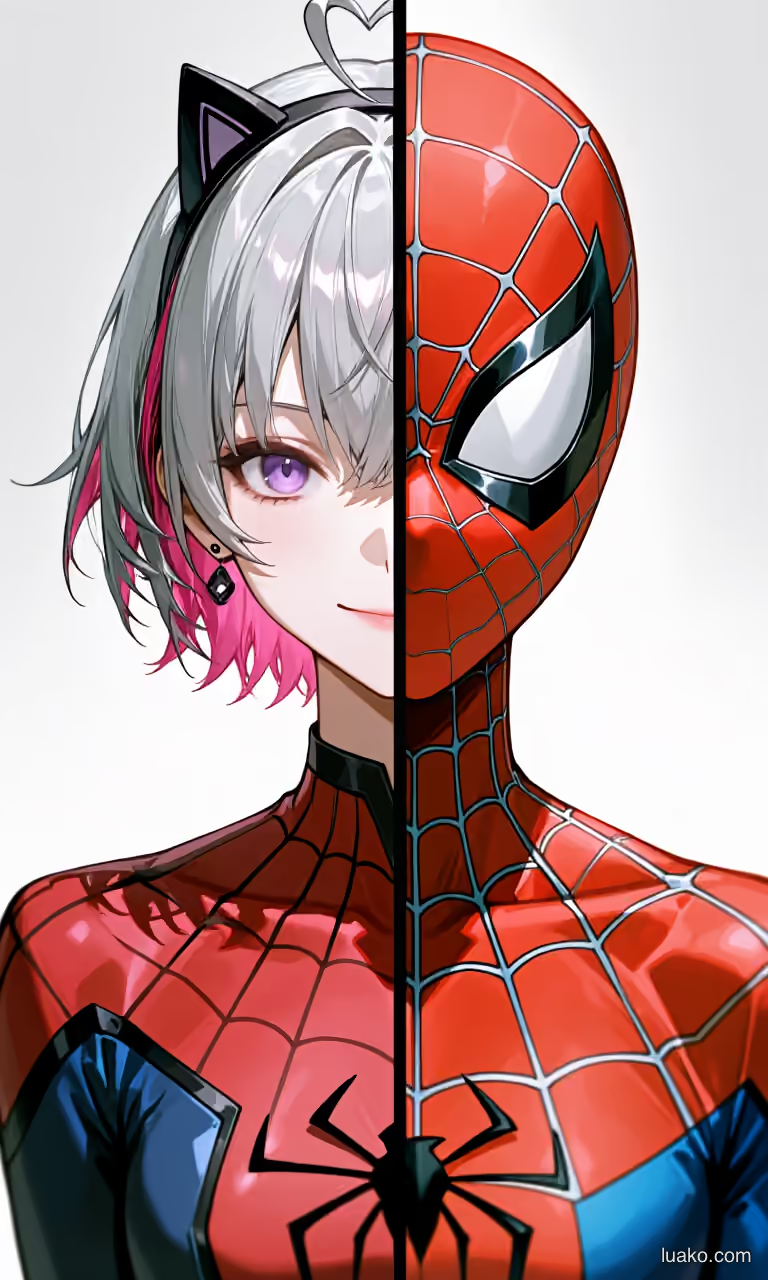
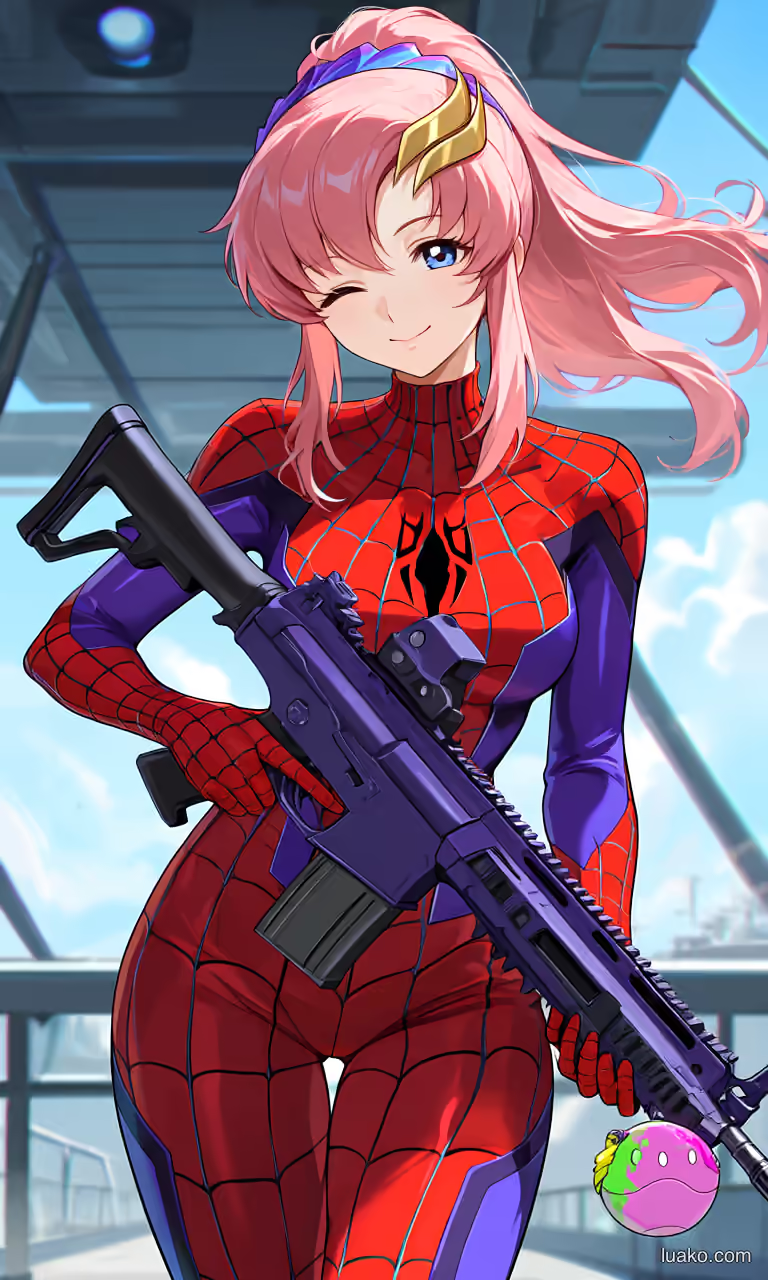
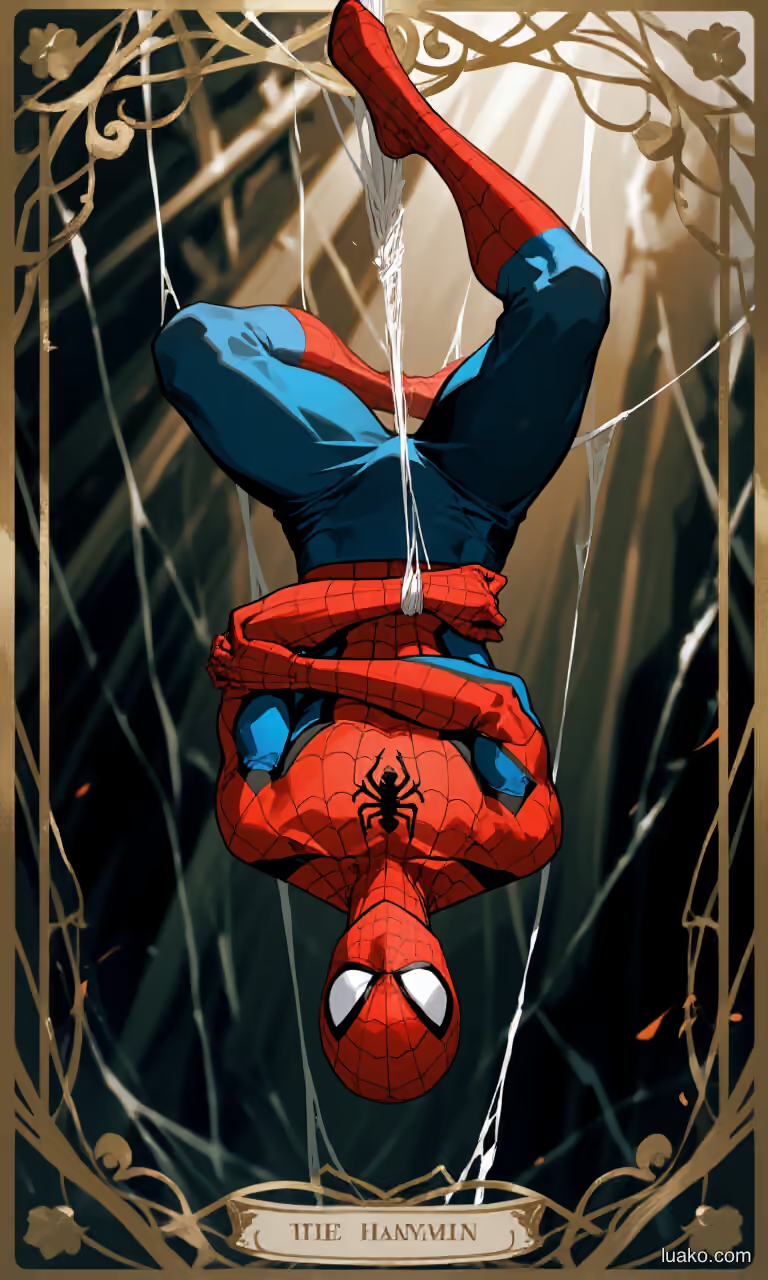
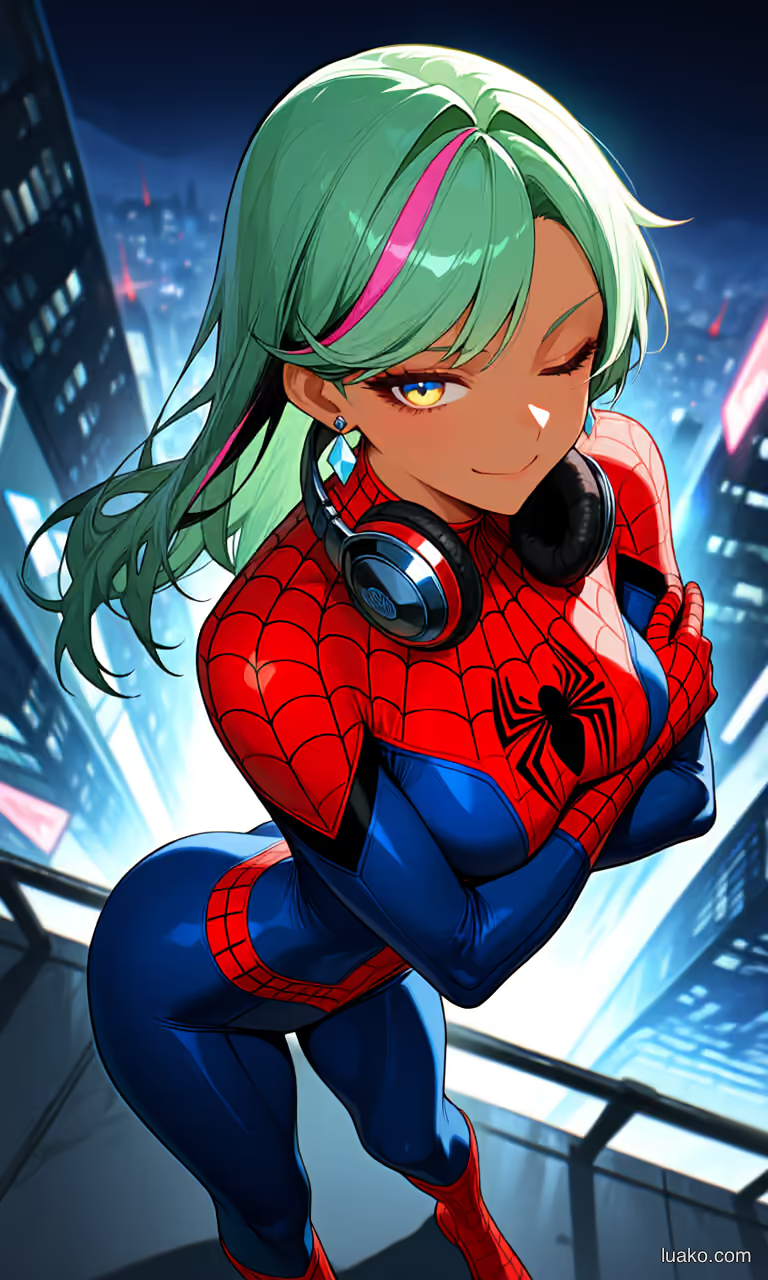
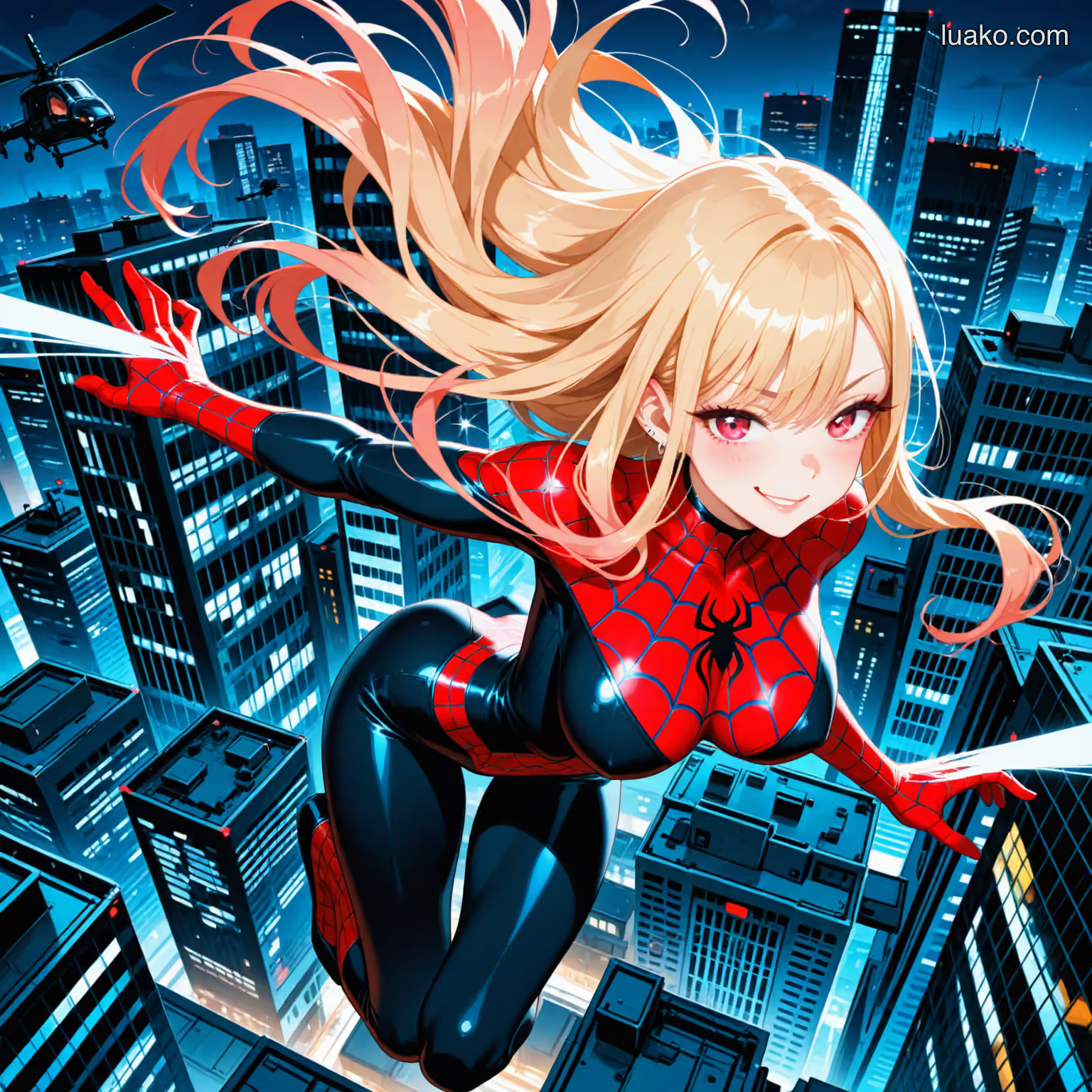
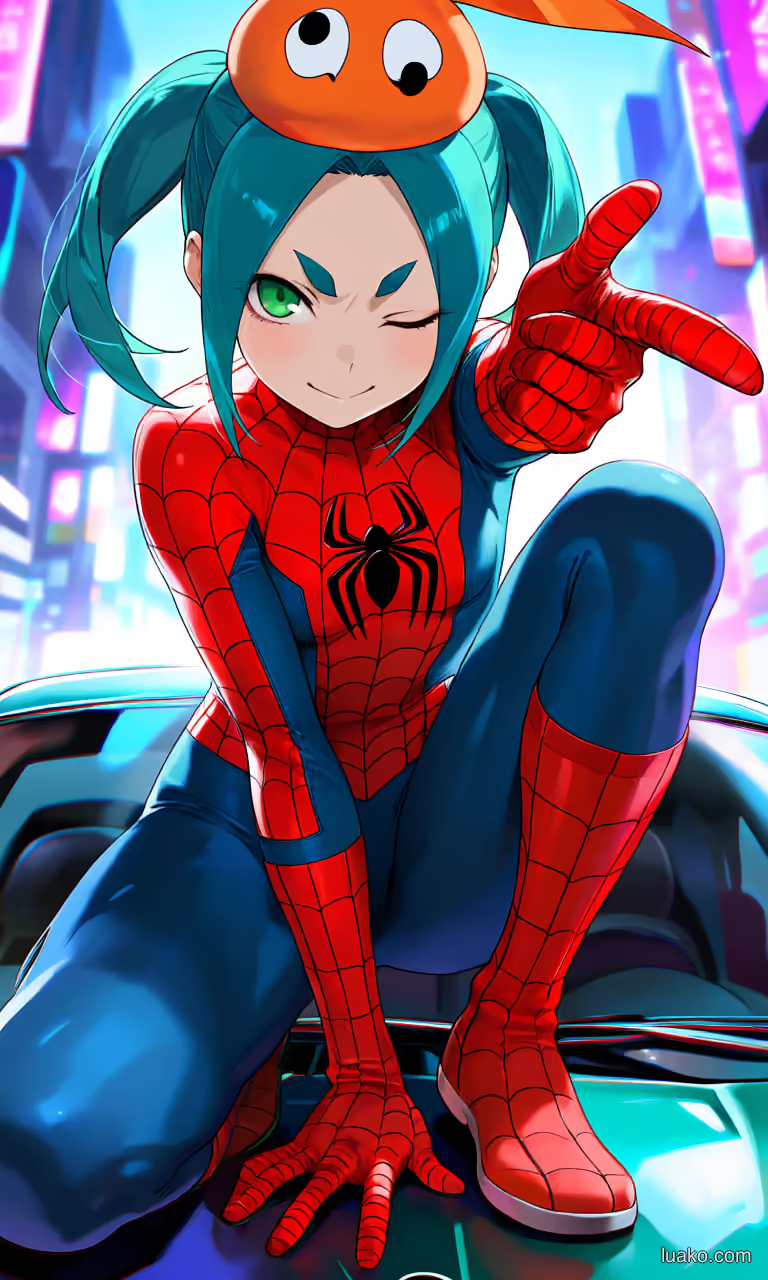
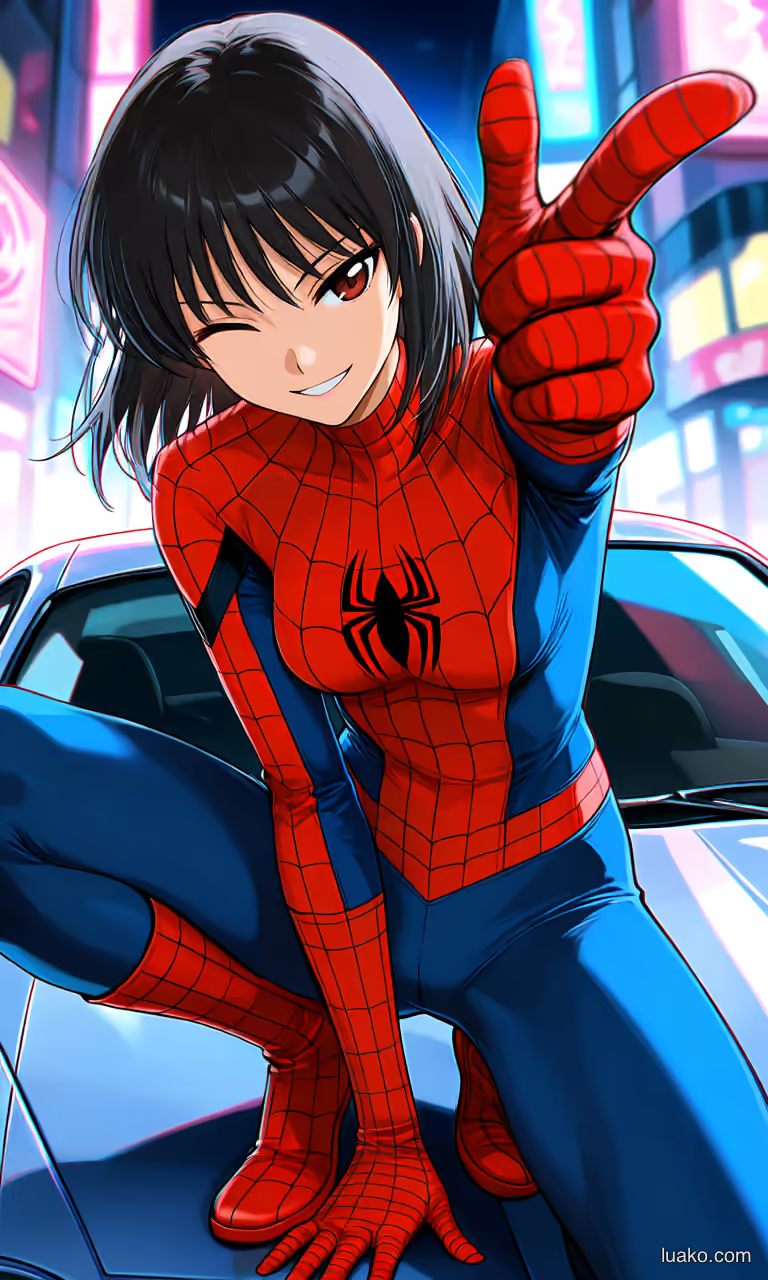
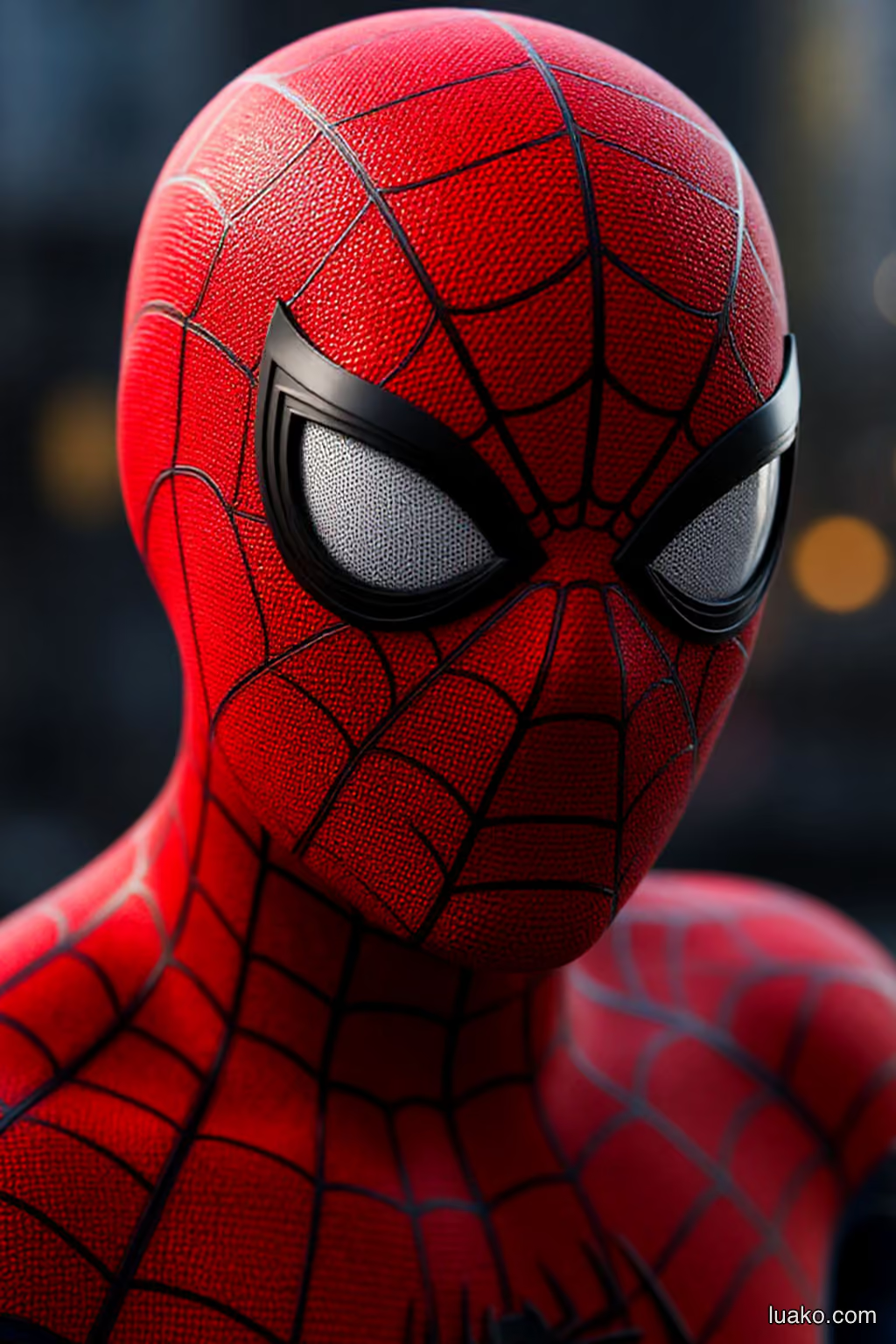
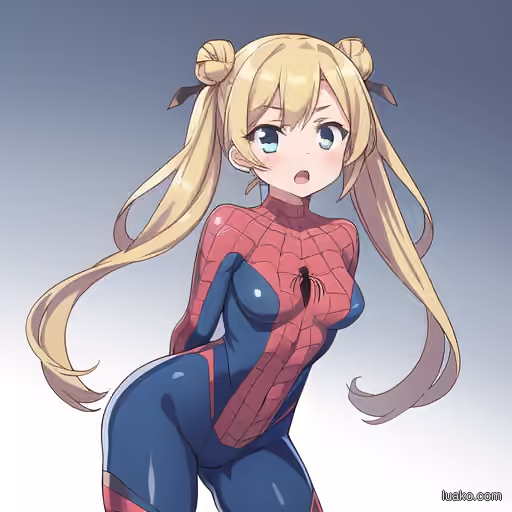
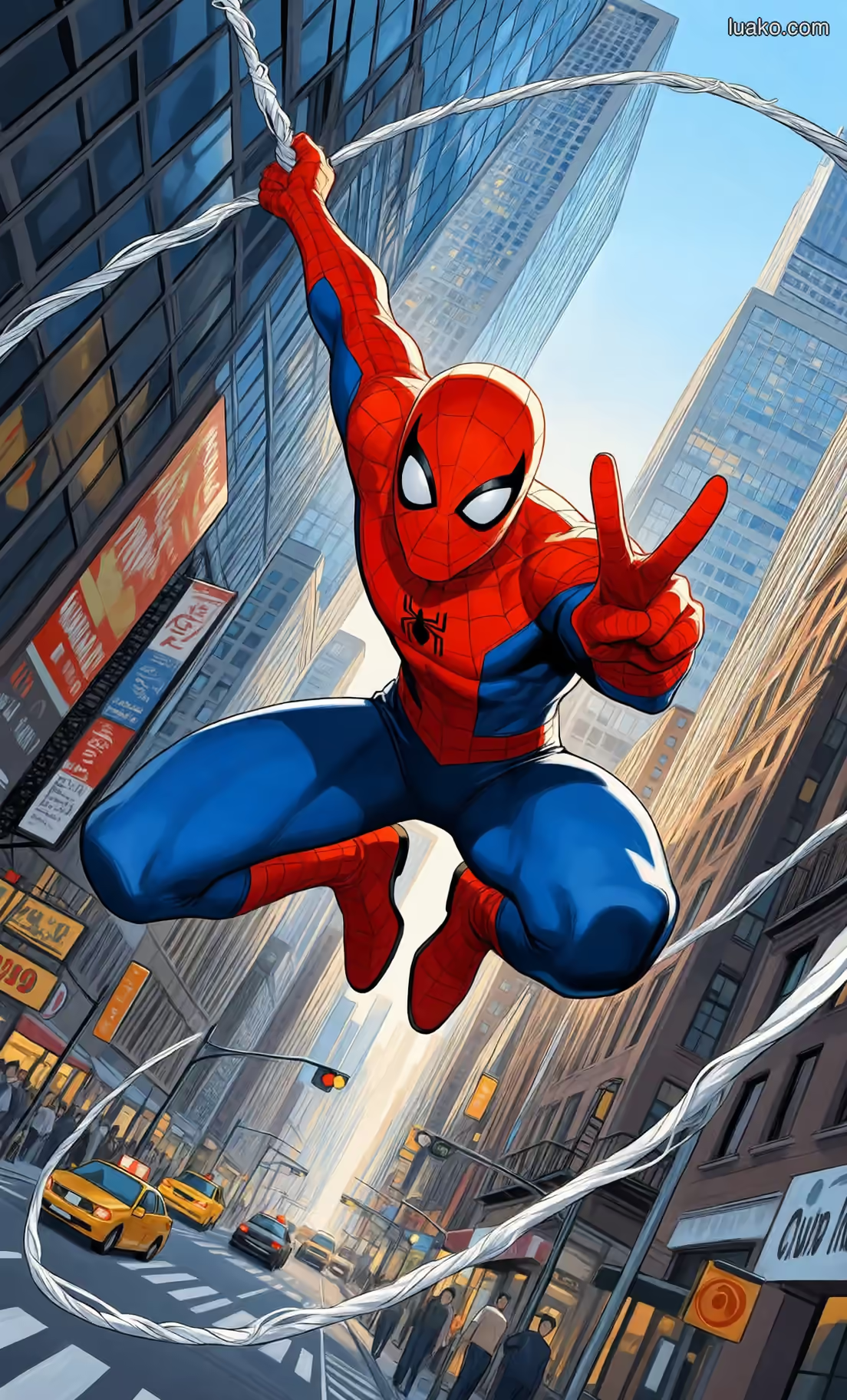
Spider-Man’s classic costume is close-fitting red and blue, with a black web pattern, spider emblems, and a full-face red mask marked by large white eye lenses. The costume’s design emphasizes movement and conceals Peter’s features. He has worn other suits, but this is his familiar early and recurring appearance.
Quick facts
- Civilian identity
- Peter Benjamin Parker
- First comic appearance
- Amazing Fantasy #15 (1962)
- Creators
- Stan Lee and Steve Ditko
- Primary setting
- New York City; raised in Forest Hills, Queens
- Original school
- Midtown High School
- Later studies
- Empire State University
- Early occupation
- Freelance photographer for the Daily Bugle
- Typical crimefighting tools
- Mechanical web-shooters and spider-tracers of his own design
Abilities
Wall-Crawling
Peter can adhere to walls, ceilings, and other surfaces, giving him unusual routes through buildings and across the city.
Limitations: Surface access does not eliminate the danger of falls, attacks, or losing his balance.
Superhuman Strength and Agility
He can leap remarkable distances, lift far more than an ordinary person, and react with extraordinary coordination.
Limitations: He can still be hurt, overwhelmed, or exhausted, and he is not invulnerable.
Spider-Sense
An instinctive danger warning alerts him to approaching threats and complements his fast reflexes.
Limitations: The warning is not a complete explanation of an attacker’s plan or a guarantee that he can avoid every danger.
Invented Web-Shooters
Peter designs wrist devices that launch his custom web fluid, useful for swinging, making lines, restraining adversaries, and catching objects.
Limitations: The equipment and web fluid are manufactured rather than an inexhaustible natural supply; his usual synthetic webbing eventually dissolves.
Scientific and Technical Ingenuity
Peter applies physics, chemistry, and engineering to invent and improvise under pressure. His spider-tracers transmit a signal he can follow through his spider-sense, turning a small device into a practical way to track people or objects.
Limitations: He needs working materials, time, and sound judgment; scientific skill cannot make every crisis predictable.
Photography and Observation
Peter earns money taking photographs for the Daily Bugle, often documenting Spider-Man’s own exploits while keeping his civilian identity hidden. Capturing useful images requires timing and ingenuity as well as a camera.
Relationships
May Parker
Aunt and guardian
May raises Peter with Ben and remains a central source of care and everyday responsibility in his life.
Ben Parker
Uncle and guardian
Ben helps raise Peter; his murder becomes the formative tragedy behind Peter’s decision to use his powers for others.
J. Jonah Jameson
Daily Bugle publisher and outspoken critic
Jameson buys Peter’s Spider-Man photographs while publicly accusing the masked hero of being a menace.
Gwen Stacy
College classmate and early romantic interest
Gwen becomes important to Peter during his Empire State University years, as his double life complicates their connection.
Mary Jane Watson
Friend and eventual romantic interest
Mary Jane is part of Peter’s expanding social circle, and their bond becomes important in his longer-running comics story.
Harry Osborn
College friend
Harry belongs to Peter’s college circle; the friendship becomes complicated by the shadow of Harry’s father, Norman.
Johnny Storm (Human Torch)
Fellow superhero, friend, and friendly rival
Johnny and Peter exchange barbs and compete, but they also respect and support each other.
Norman Osborn (Green Goblin)
Recurring adversary
Osborn’s alter ego, Green Goblin, creates a deeply personal rivalry with Spider-Man.
Otto Octavius (Doctor Octopus)
Recurring adversary
Otto’s mechanical arms and scientific intellect make him an especially dangerous opponent for Peter.
Flash Thompson
Former school bully and later friend
Flash initially torments Peter at school but their relationship changes across their shared history.
Interesting facts
Spider-Man debuted in the final issue of Amazing Fantasy, #15, dated August 1962.
The character’s origin began as a feature within an existing anthology rather than in a solo titled series.
Peter’s webbing can be formulated at different tensile strengths depending on what a particular shot needs to hold.
His most recognizable tool is a configurable engineering solution, not just a single stock substance.
In The Amazing Spider-Man #31–33, Peter frees himself from heavy machinery while seeking a serum that could save Aunt May.
One of his notable feats of strength is given emotional urgency by a family obligation rather than a public contest.
Peter’s early Midtown High graduation is depicted in The Amazing Spider-Man #28.
His mainline story does not freeze him permanently as a high-school student, even though many adaptations revisit that age.
Stan Lee and Steve Ditko developed Spider-Man as a teen superhero who was not simply an older hero’s sidekick.
That creative choice helps explain why the original stories devote so much attention to Peter’s independent financial, academic, and family pressures.
Frequently asked questions
Who is Spider-Man in Marvel Comics?
The best-known original Spider-Man is Peter Parker, a New York science student whose spider-derived powers and homemade web-shooters lead him into superhero work.
How did Peter Parker get his powers?
He was bitten by a radioactive spider at a science exhibition and developed strength, agility, wall-crawling, and a danger-warning spider-sense.
Does the original Spider-Man shoot webs naturally?
Usually no. Mainline comics Peter Parker built mechanical web-shooters and created his own web fluid. Particular later transformations and alternate versions should not be confused with that standard origin.
Why does Spider-Man wear a mask?
Peter initially adopts the Spider-Man identity to keep his private life and guardians out of the public spotlight. The mask also lets him act without revealing who he is.
Where does Spider-Man live?
Peter grows up in Forest Hills, Queens, and most of his original comics adventures are centered on New York City.
Why does J. Jonah Jameson dislike Spider-Man?
Jameson uses the Daily Bugle to campaign against Spider-Man, frequently portraying his actions as dangerous or untrustworthy even while employing Peter as a photographer.
What is Spider-Man’s spider-sense?
It is a warning sensation that helps him notice imminent danger and react more quickly; it does not make him all-knowing.
Are Peter Parker and Miles Morales the same Spider-Man?
No. Peter Parker and Miles Morales are distinct characters who both use the Spider-Man name. This profile focuses on mainline comics Peter Parker.
Who created Spider-Man?
Stan Lee and Steve Ditko are credited as the creators of Spider-Man, whose first comic appearance was in Amazing Fantasy #15 in 1962.
Major story spoilers below.
Gwen Stacy and a Devastating Loss
At Empire State University, Peter falls in love with Gwen Stacy, though his life as Spider-Man repeatedly complicates their relationship. Her father, police captain George Stacy, dies amid a clash between Spider-Man and Doctor Octopus, and Gwen blames the masked hero. Later, Norman Osborn learns that Peter is Spider-Man and, as the Green Goblin, abducts Gwen. In The Amazing Spider-Man #121 (1973), he throws her from the George Washington Bridge; Peter catches her with a web-line, but the abrupt stop proves fatal. Enraged, Peter pursues Norman yet does not deliberately kill him. Norman is apparently impaled by his own glider. Peter is left carrying the knowledge that even his fastest attempt to save someone can end in tragedy.
Mary Jane, the Black Costume, and Kraven
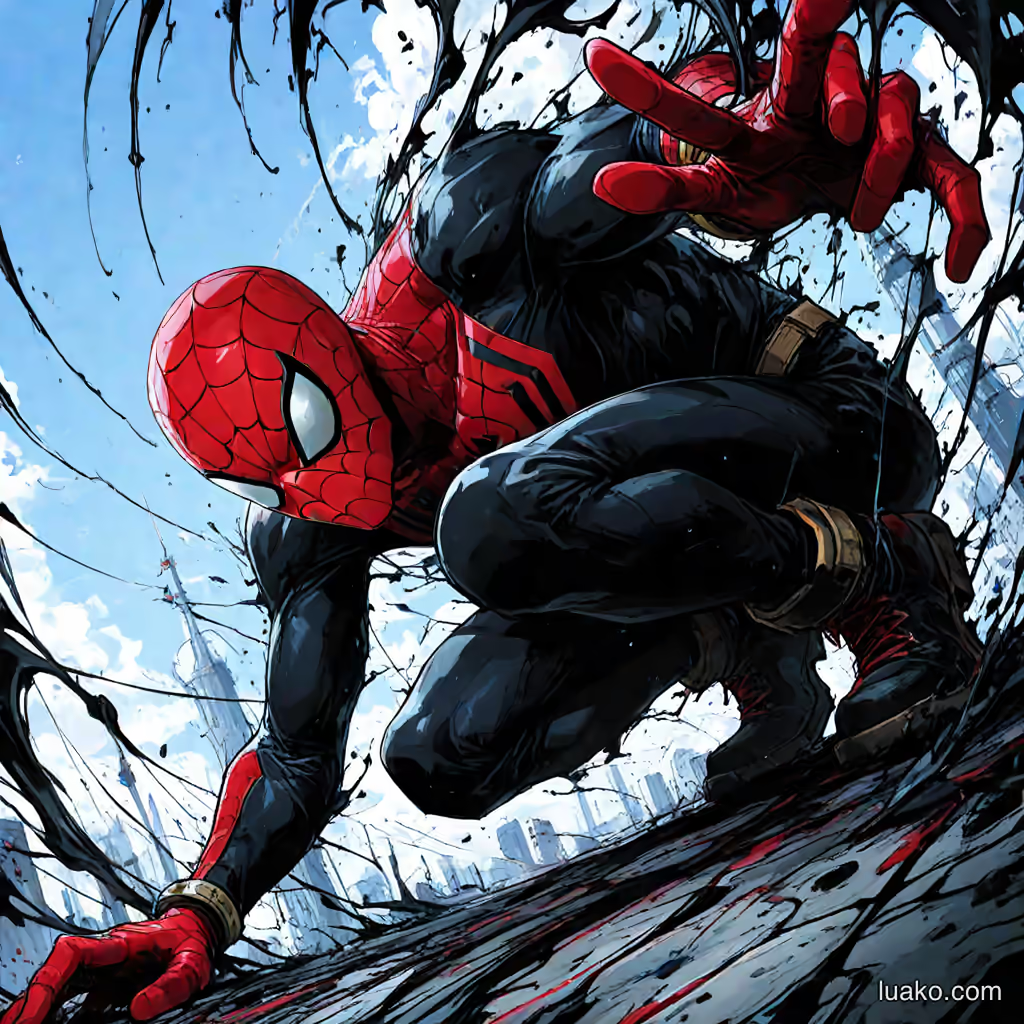
During the original Secret Wars, Peter acquires a black costume that he later discovers is a living alien symbiote. He rejects the creature’s attempt to remain bonded to him. His bond with Mary Jane Watson meanwhile develops into marriage. In Kraven’s Last Hunt, Kraven incapacitates Peter, buries him alive, and impersonates Spider-Man until Peter escapes and reclaims his identity. The rejected symbiote subsequently bonds with Eddie Brock to become Venom. Across these ordeals, Peter learns that neither his costume nor an enemy’s imitation can replace his choices as Spider-Man.
The Clone Saga and Ben Reilly
The Jackal’s cloning experiments bring Ben Reilly back into Peter’s life. Manipulated evidence makes Peter question whether he is the original, and he temporarily steps aside while Ben operates as Spider-Man. The saga establishes that Ben is the clone and exposes Norman Osborn’s role in the deception. Ben apparently dies protecting Peter during the confrontation with Norman, and Peter resumes the Spider-Man mantle. Later stories revive Ben, whose troubled identity continues to intersect with Peter’s.
Morlun and the Spider-Totem Mystery
Ezekiel Simms approaches Peter with a provocative claim: his spider-powers may have a mystical dimension in addition to their scientific origin. Ezekiel warns him about Morlun, a predatory hunter of spider-totems, and Peter survives a brutal confrontation with the threat. The comics leave Ezekiel’s explanation of the powers open to question; the encounter does not erase Peter’s established radioactive-spider origin.
In this wider period of his adult life, Aunt May also learns that Peter is Spider-Man, changing a long-standing secret within their family. That trust does not make his responsibilities simpler, but it means he is no longer hiding his entire other life from the person who helped raise him.
Unmasking, Civil War, and One More Day
During the superhuman-registration conflict known as Civil War, Peter reveals his secret identity publicly while aligned with Tony Stark, placing his loved ones at risk. After Aunt May is gravely wounded, Mephisto offers to save her in exchange for erasing Peter and Mary Jane’s marriage. They accept, fundamentally rewriting their shared history and restoring the secrecy of Spider-Man’s civilian identity. The marriage was real within the preceding published story; One More Day retroactively changes the continuity rather than simply recording a normal breakup.
Doctor Octopus Becomes the Superior Spider-Man
A dying Otto Octavius swaps minds with Peter, leaving Peter trapped in Otto’s failing body while Otto occupies Peter’s. Otto declares himself the Superior Spider-Man and tries to outdo his old enemy using harsher methods and additional technology. Peter’s surviving consciousness eventually regains control when Otto recognizes that Peter is the one capable of saving those endangered by the Goblin crisis. Peter must then repair damage done to his relationships and public life during the impersonation.
Parker Industries and the Wider Spider-Verse
After regaining his body, Peter takes charge of Parker Industries, the company begun during Otto Octavius’s impersonation, while continuing to patrol as Spider-Man. In the Spider-Verse crisis he joins spider-powered heroes from multiple realities against the Inheritors, who prey on spider-totems. The team includes other Spider-Men and spider-heroes whose lives must not be mistaken for Peter’s own. Later, Parker Industries collapses, ending his period as a wealthy businessman and returning him to familiar financial uncertainty.
Kindred, Beyond, and Fractured Connections
Kindred’s campaign against Peter draws in Sin-Eater, Norman Osborn, and painful secrets connected to the Stacy family; the plot ultimately involves the Stacy clones and Mephisto. During the later Beyond era, the corporation backs Ben Reilly as Spider-Man after Peter is incapacitated, and Peter must confront Ben after Beyond damages his memories. Peter’s bond with Mary Jane is further strained when she becomes stranded in another reality with Paul following Benjamin Rabin’s attack. Mary Jane eventually returns to Peter’s world, but the time apart and her new attachments prevent an easy return to their former relationship. These are events in the ongoing mainline comics, not the MCU or an alternate Ultimate Spider-Man universe.
An Ongoing Hero in the 2025–2026 Comics
The Amazing Spider-Man began a new numbered run in April 2025, opening with Peter unemployed and confronting a rampaging Rhino amid a larger villainous scheme. By May 2026, Marvel’s issue descriptions place him back on Earth after an extended off-world absence and battles involving Torment, Venom, and Carnage. A publisher listing for the October 28, 2026 release of Amazing Spider-Man #1002 describes another clash with Ravage and hints at a personal cost. Those descriptions establish the premises of the issues, not the full outcomes of every confrontation. As of November 8, 2026, the mainline Peter Parker story is ongoing and has no single final ending.
Additional story facts
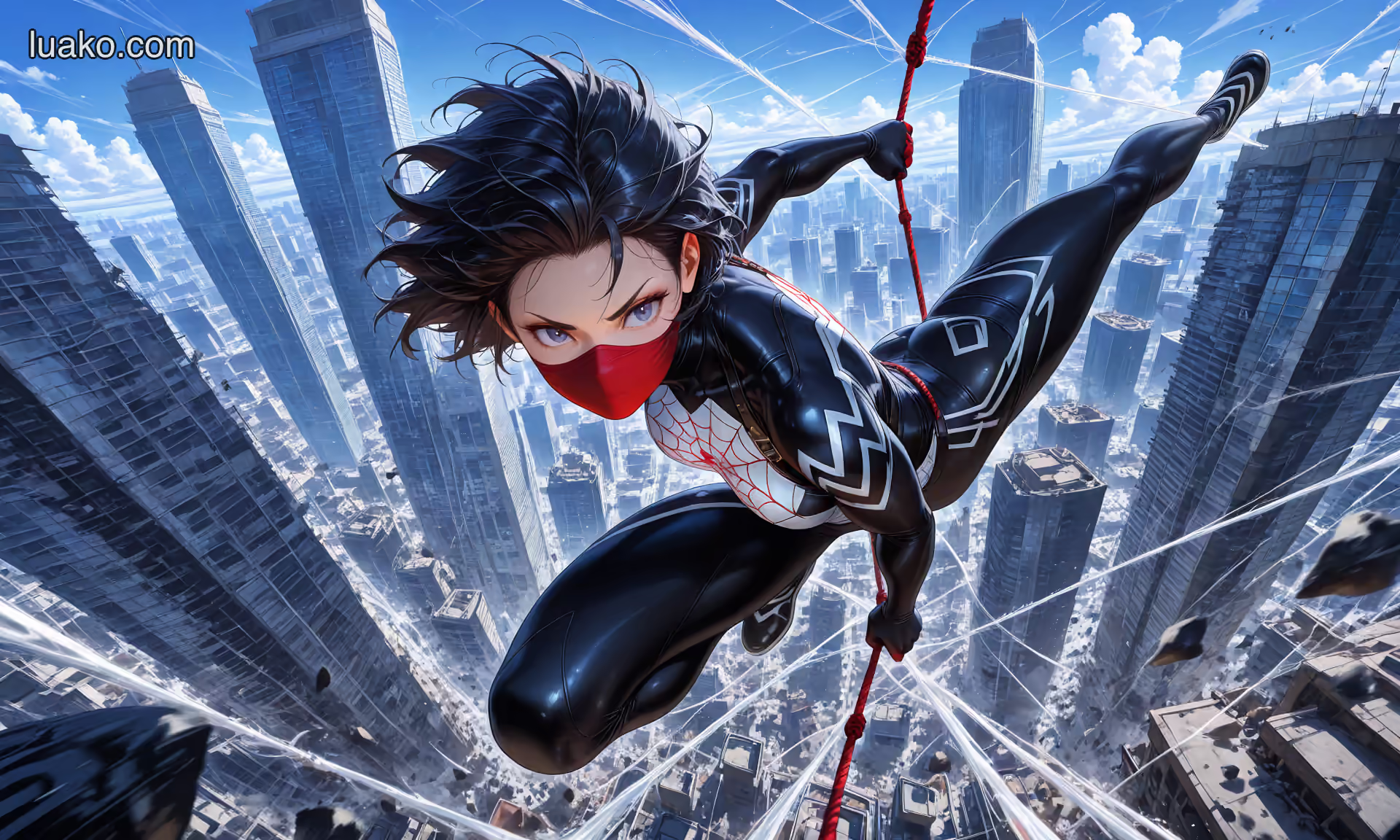
Cindy Moon was also bitten by the spider connected to Peter’s origin and later becomes the superhero Silk.
It complicates what initially appears to be a one-person origin story without making Cindy an alternate Peter Parker.
Ben Reilly takes his first name from Uncle Ben and his surname from Aunt May’s maiden name.
The clone’s chosen name directly reflects Peter’s formative family connections even as Ben seeks an identity of his own.
As the Superior Spider-Man, Otto Octavius deploys small Spider-Bots to patrol the city and alert him to crimes.
His automated surveillance network reveals a different method of being Spider-Man from Peter’s more immediate, improvisational patrols.
Spoiler questions
Does Gwen Stacy die in the original Marvel comics?
Yes. She dies during the Green Goblin story in The Amazing Spider-Man #121, despite Peter’s attempt to save her.
Were Peter Parker and Mary Jane Watson married?
Yes. They married in the mainline comics, but the One More Day storyline later changed their history through Mephisto’s bargain.
Who is Ben Reilly to Peter Parker?
Ben is a clone of Peter created through the Jackal’s experiments. For a time he serves as Spider-Man while Peter steps away.
Was Spider-Man ever Doctor Octopus?
Doctor Octopus transferred his mind into Peter Parker’s body and operated as the Superior Spider-Man. Peter ultimately recovered control.
Is Spider-Man’s story finished?
No. The original mainline Peter Parker story continues in Marvel Comics; the 2026 Amazing Spider-Man installments do not constitute an established final ending.
How did Peter first get the alien black suit?
He acquired it during the original Secret Wars, later discovered it was a living symbiote, and separated from it. The symbiote eventually bonded with Eddie Brock.
Did Peter Parker reveal his identity during Civil War?
Yes. He publicly unmasked, but later continuity changes connected with One More Day removed that disclosure from the public record.
Tags
Spider-Man Artwork and Images
Discover artwork of Marvel’s web-slinging hero, Peter Parker, and explore the character story behind the mask.
Videos · 17