Mai Sakurajima — Character Biography & Gallery
Interesting factsBiographyThe story, the personality, and everything in between.Read biographyClose biography
Mai Sakurajima桜島麻衣
A nationally known actress and Minegahara High School upperclassman whose encounter with Sakuta Azusagawa begins the story
Mai Sakurajima is a nationally recognized actress and third-year student at Minegahara High School in Hajime Kamoshida’s Rascal Does Not Dream of Bunny Girl Senpai. A career that began in childhood has left her famous yet detached from ordinary school life. When Sakuta Azusagawa meets her in a library wearing a bunny-girl costume, he discovers that the people around them cannot perceive her.
Mai’s composed manner, dry teasing, and determination to be treated as a person rather than a celebrity make that extraordinary encounter the beginning of a deeply personal story.
Biography
A familiar face who feels like a stranger
Mai began acting as a child and became a familiar face across Japan. Work commitments already on her calendar kept her from settling into the first term at Minegahara High School, where classmates formed their circles without her. At the beginning of the story she is on hiatus from entertainment, but neither her fame nor her distance from ordinary school life has faded.
Mai is recognized by strangers yet struggles to find a place among her peers. Her classmates know who she is, but she is accustomed to being treated as someone outside their everyday world. That gap between public recognition and personal acknowledgment sets the stage for the extraordinary problem she faces.
Her mother also managed her entertainment career. Their relationship deteriorated after Mai was assigned work she did not want, including swimsuit gravure photography. Mai’s decision to suspend her career was a refusal to let someone else choose her work for her, not proof that she had lost interest in acting itself.
The library encounter
During Golden Week, Sakuta Azusagawa visits a library and spots Mai walking around in a bunny-girl outfit. The costume is conspicuous by design: she is testing whether anyone else can see her. Other visitors overlook her completely, but Sakuta recognizes both the famous actress and his third-year schoolmate.
Mai initially keeps Sakuta at a distance rather than welcoming an investigation into her private life. Yet his continued concern gives her someone with whom she can speak candidly about the increasingly unsettling experience of being overlooked. Their conversations develop through teasing, skepticism, and gradually earned trust.

When being overlooked becomes literal
The phenomenon affecting Mai is called Adolescence Syndrome, a label used in the series for strange experiences connected with emotional and social pressures. In her case, the sense of being treated as nonexistent manifests as other people failing to see or remember her. It is an involuntary predicament, not a power she can summon at will.
As the problem spreads, changing locations offers no simple remedy. People can lose not only the ability to see Mai but also their memory of her. For someone already treated like an outsider at school, the phenomenon makes the fear of being forgotten terrifyingly literal.
More than a public image
Mai is serious about her commitments and does not easily surrender control over her decisions. She can be blunt, even playfully intimidating, but her manner is also courteous and attentive when the situation calls for it. Her professional poise contrasts with the uncertainty she feels when her everyday existence is no longer acknowledged.
Even while Mai insists on her privacy, she begins to trust the one schoolmate willing to address her directly rather than the actress everyone thinks they know. Their tentative conversations allow her humor, irritation, vulnerability, and independence to appear without an audience or a script.

Personality and Motivations
Mai is observant, self-possessed, and unafraid to challenge someone who speaks thoughtlessly. Her jokes are often delivered with a straight face, particularly when she is responding to Sakuta’s audacity. The effect is teasing rather than helplessness: she remains an active participant in their exchanges.
Her reserve should not be mistaken for indifference. Years of working in public have made personal boundaries important, while her isolation at school gives unusual significance to being listened to without a camera or an audience. The narrative repeatedly contrasts the version of Mai people think they know with the person capable of making her own choices.
She takes responsibility seriously and can show care through practical actions rather than elaborate speeches. Cooking is an established skill, and her combination of professionalism, firmness, and understated affection helps explain why quieter scenes are as revealing as dramatic ones.
Appearance
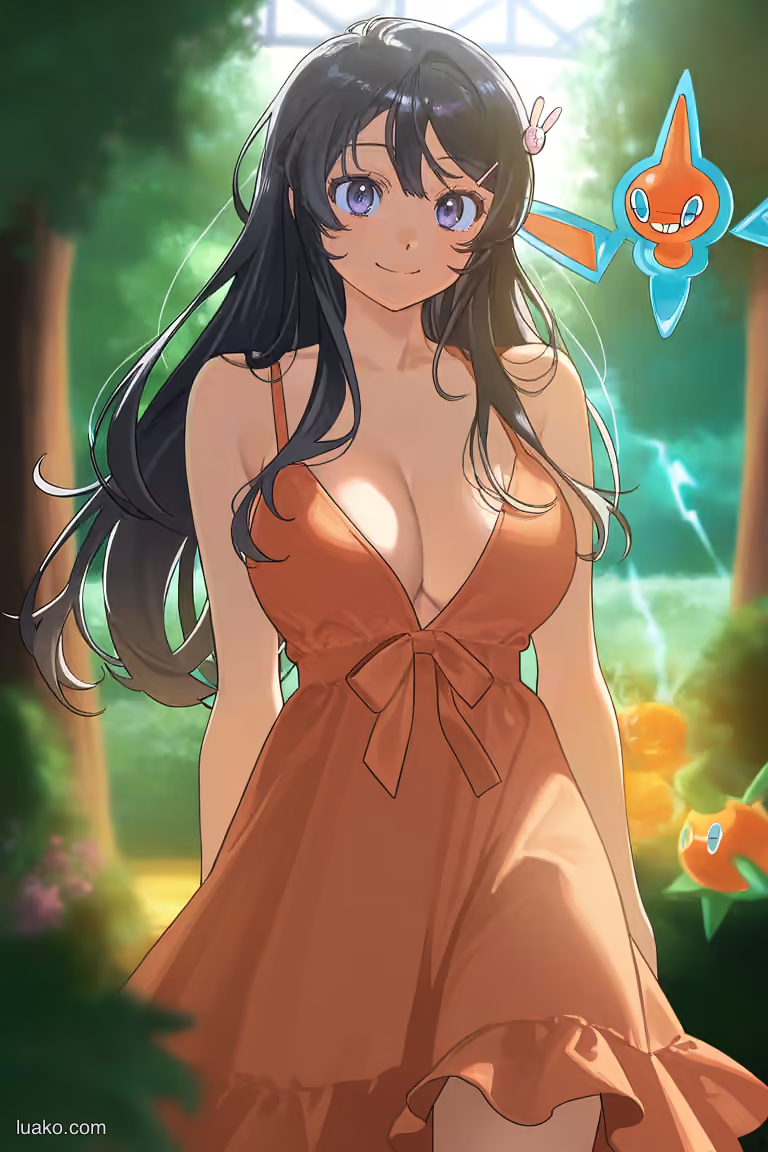
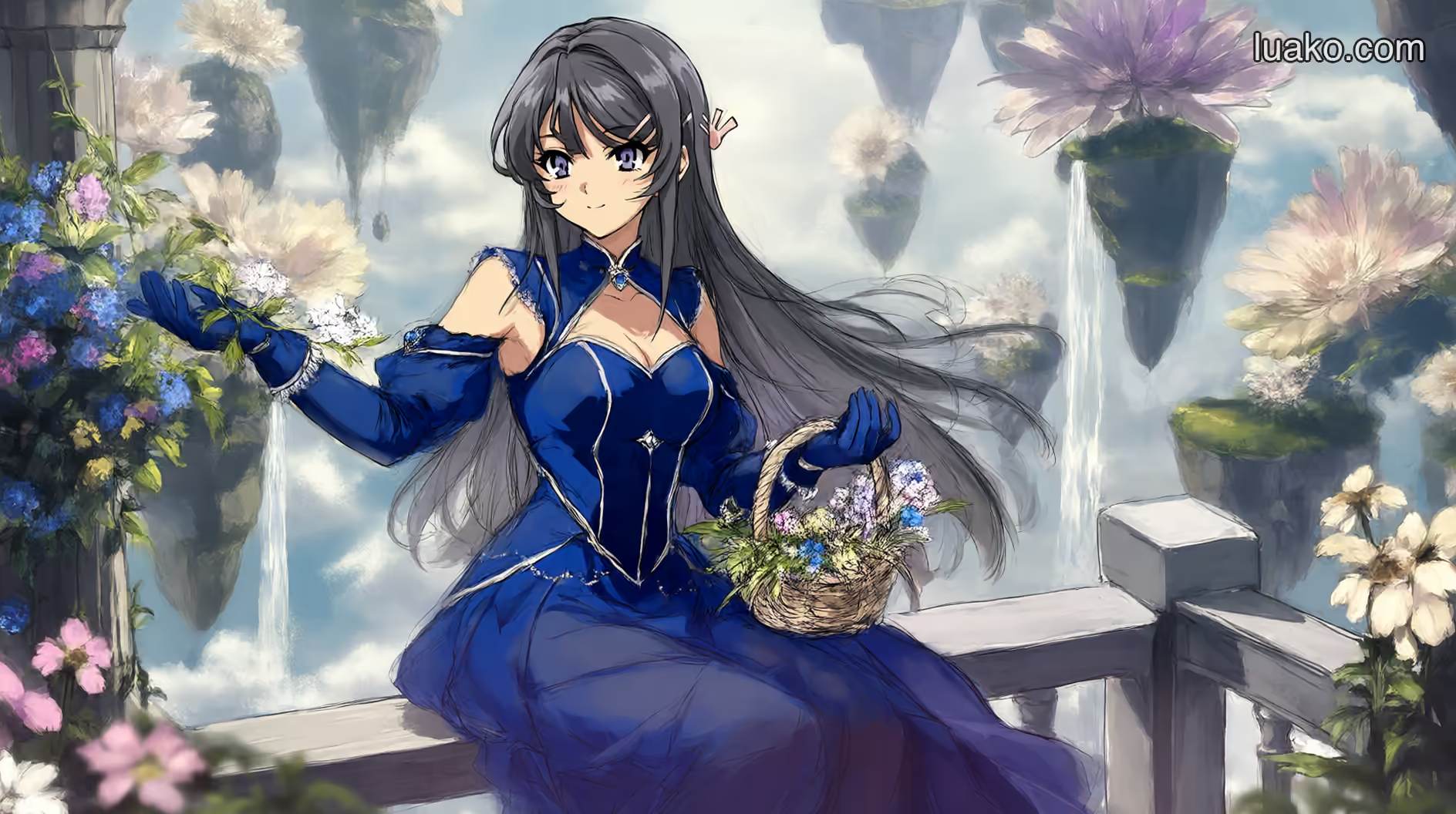
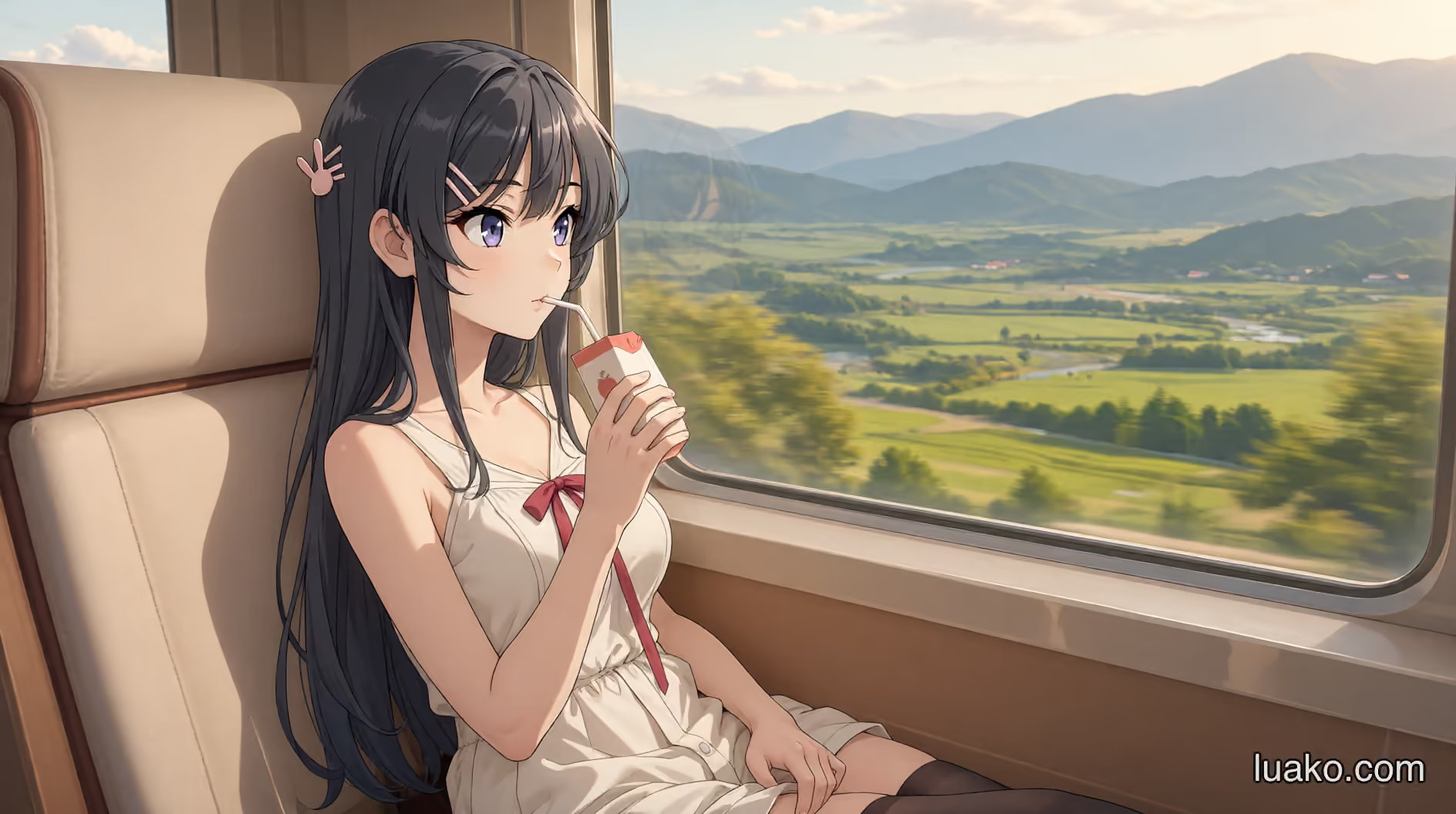
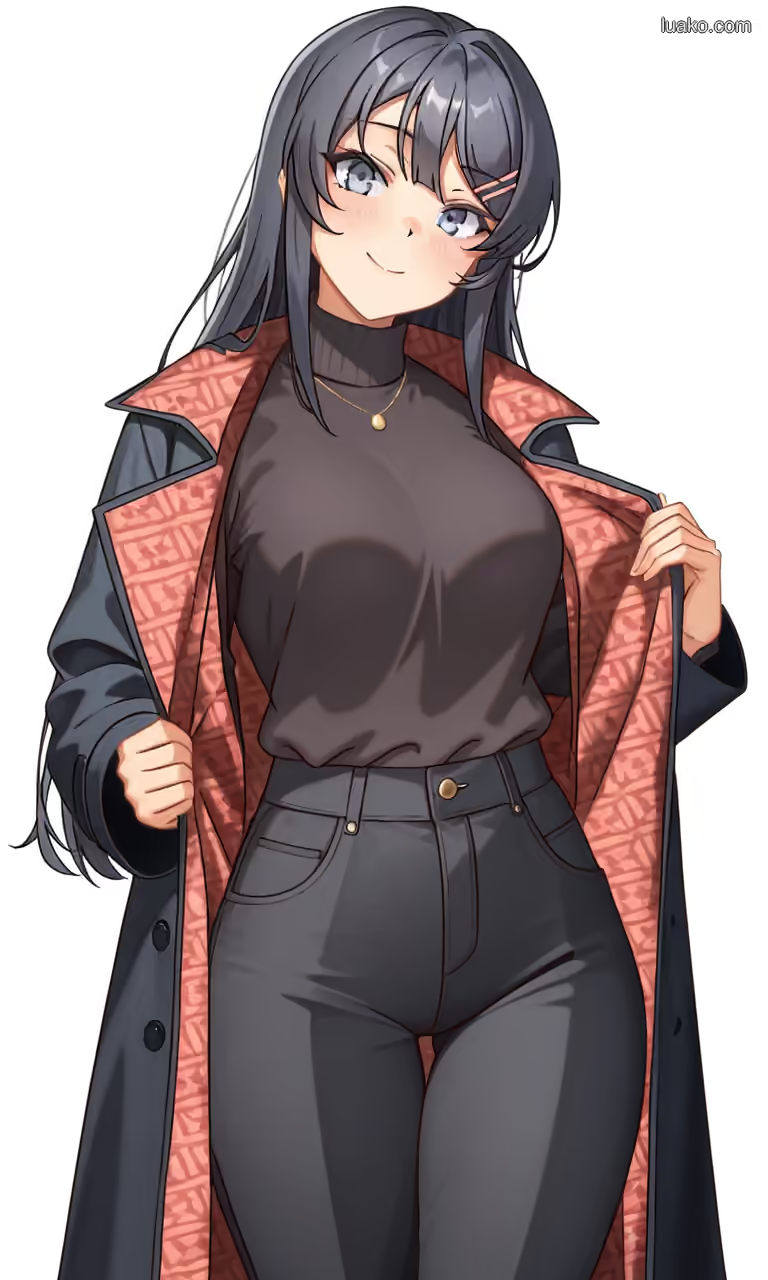
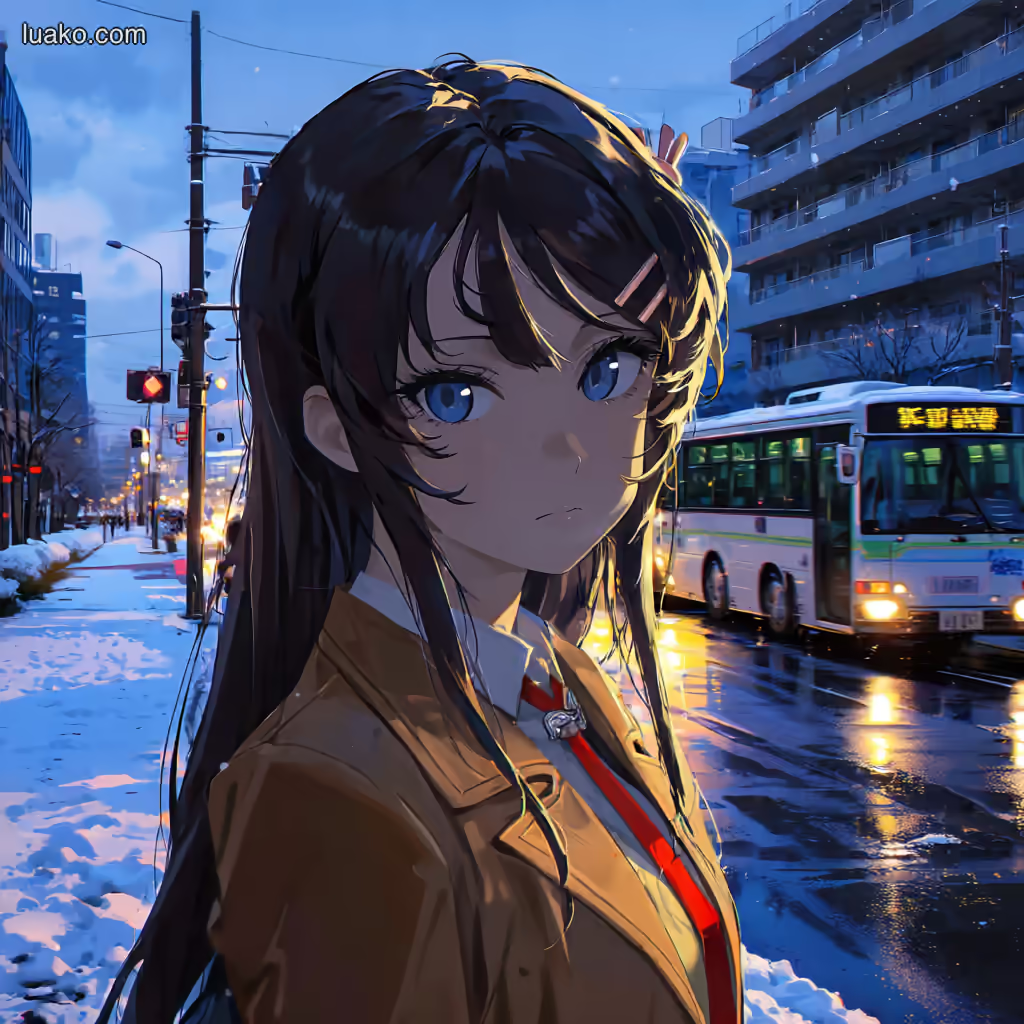
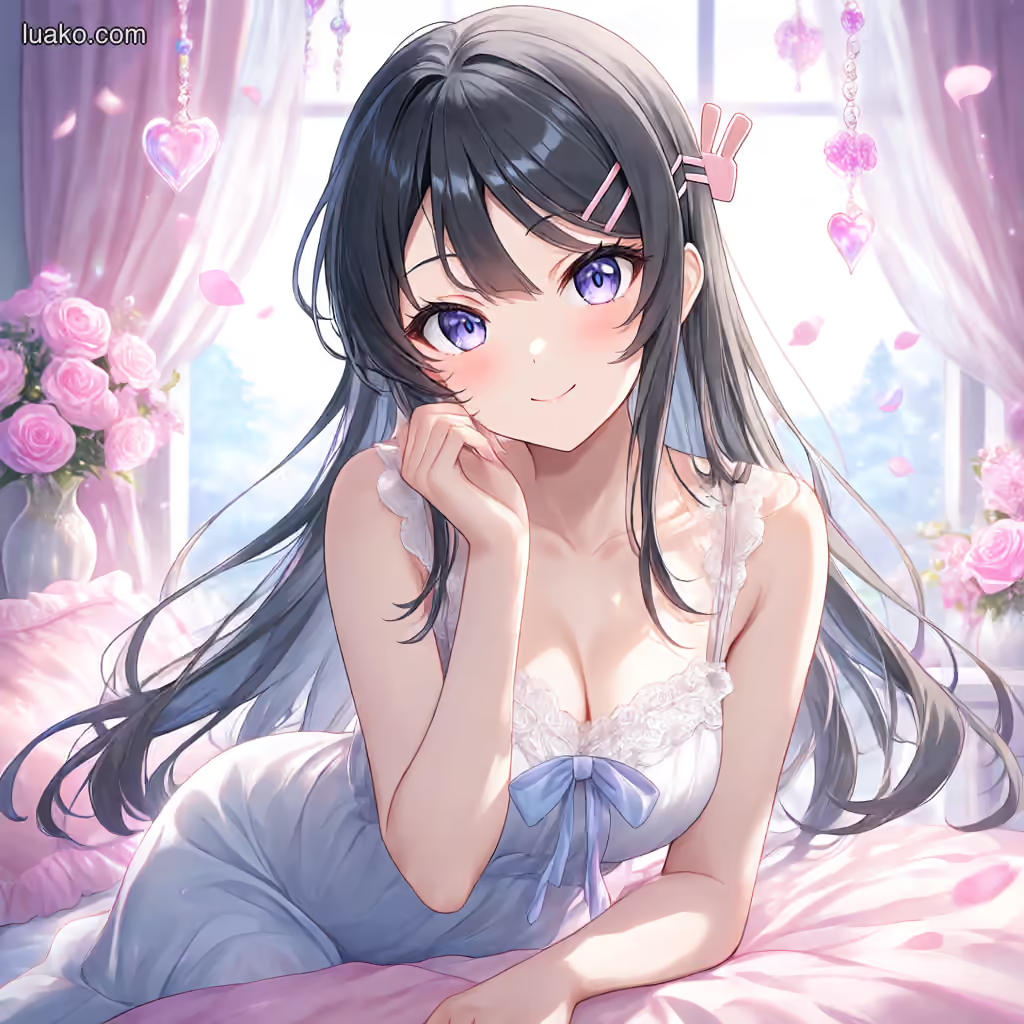
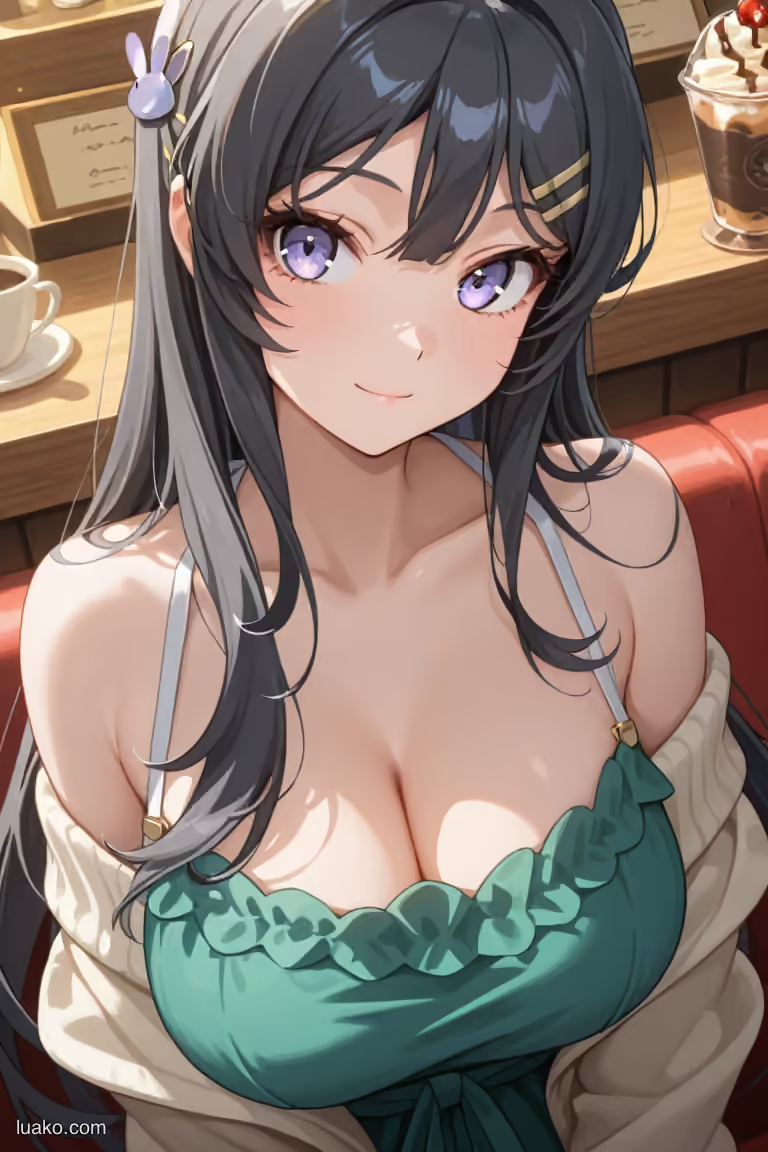
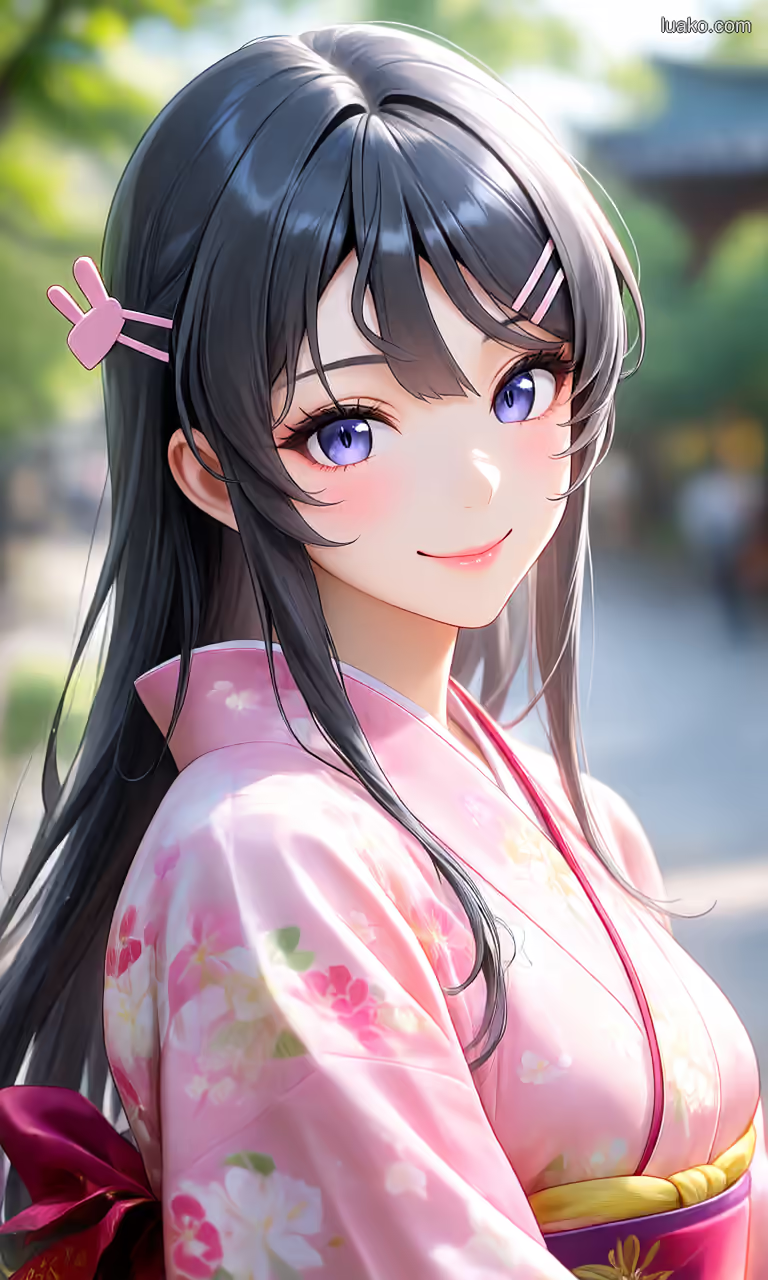
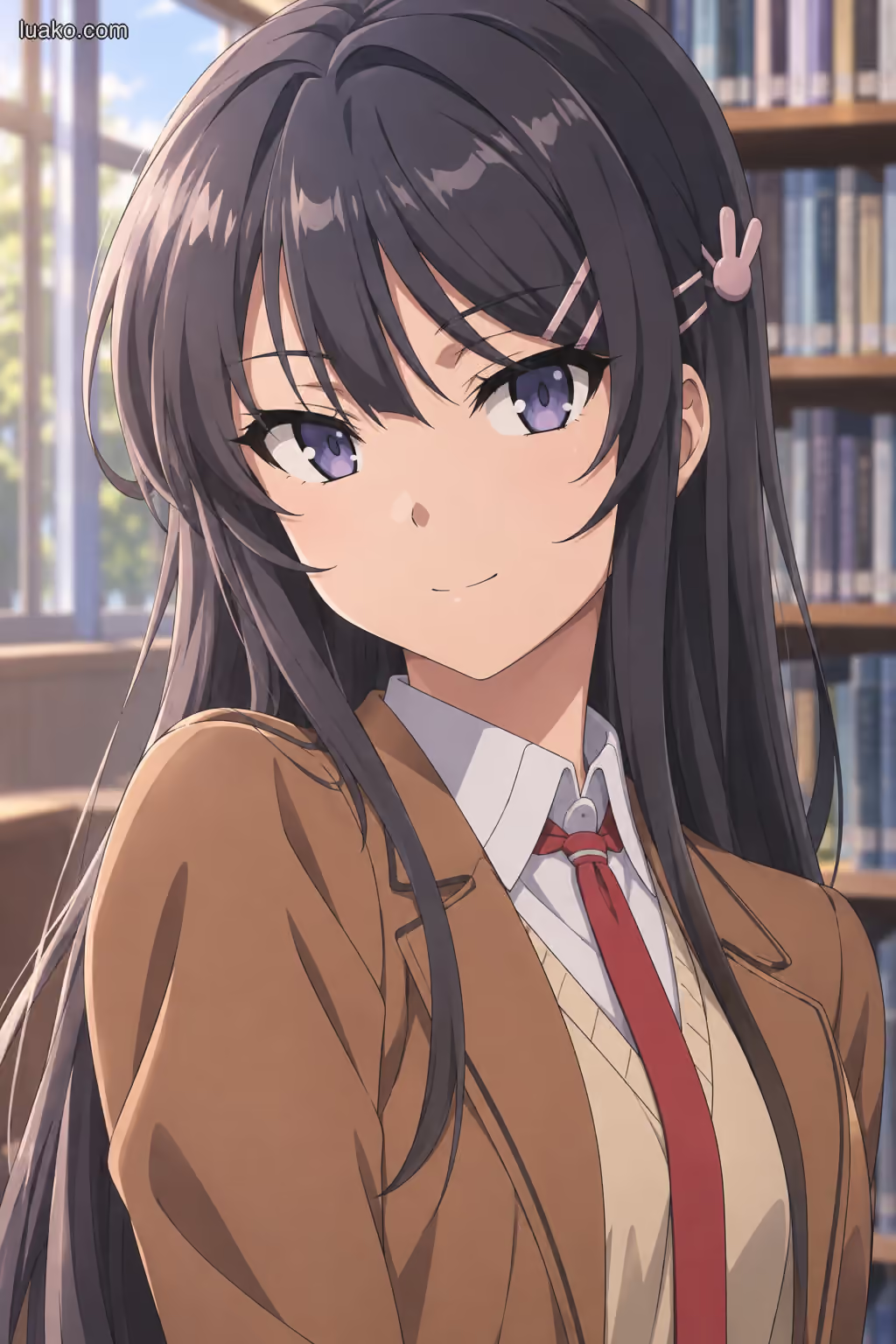
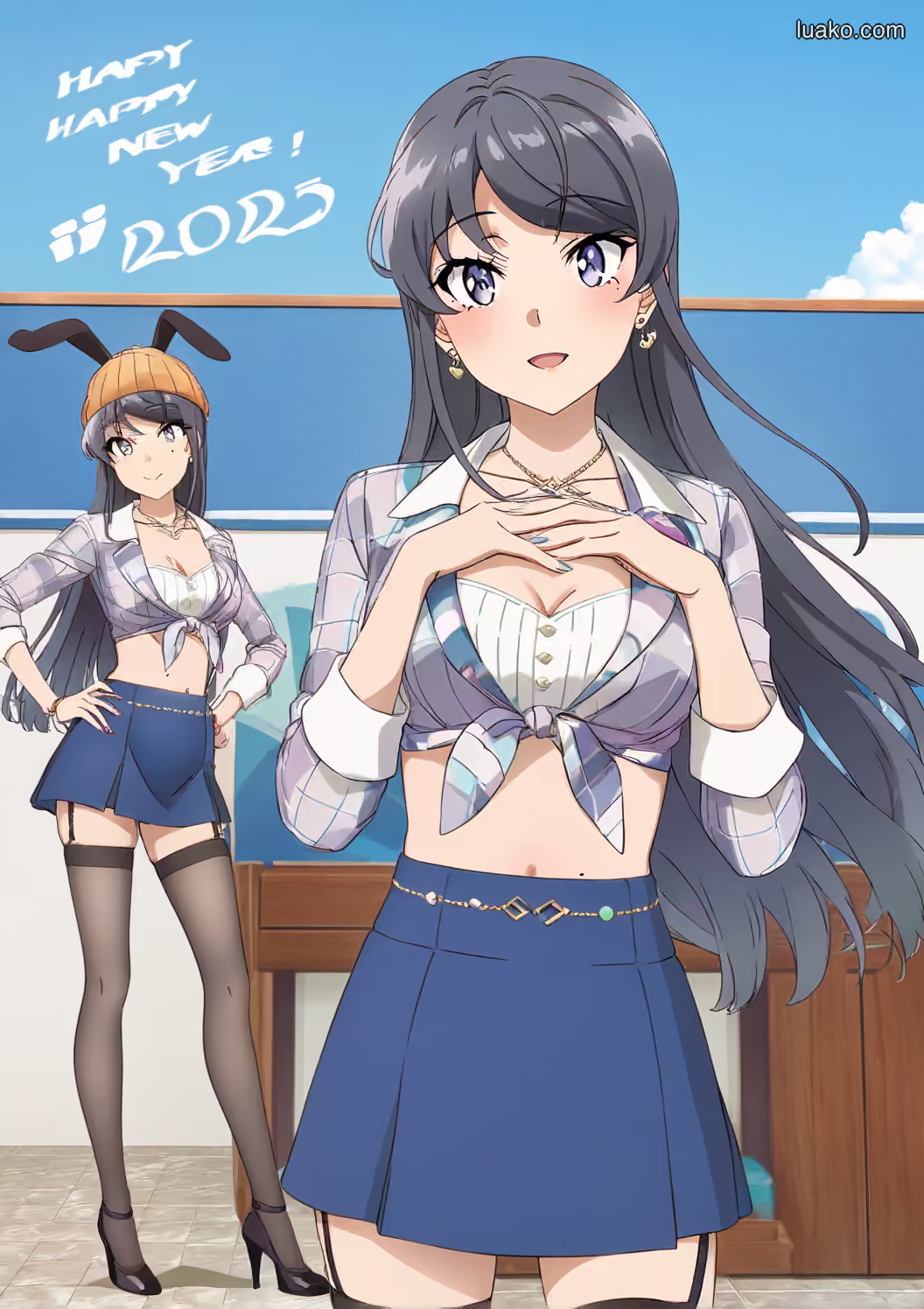
Mai is depicted with long, straight dark hair, fair skin, and violet-toned eyes in the official anime designs. She often wears a small rabbit-themed hair accessory, a quieter visual reference to the costume associated with her first appearance.
Her Minegahara High School uniform includes a brown blazer, white shirt, red tie, pleated skirt, and dark tights. The bunny-girl costume belongs to the opening library incident; it is not her everyday school attire. The Japanese official character profile lists her height as 165 cm.
Quick facts
- Japanese name
- 桜島麻衣
- Literary debut
- Rascal Does Not Dream of Bunny Girl Senpai (light novel, 2014)
- Initial school
- Minegahara High School, third year
- Occupation
- Actress; on hiatus at the beginning of the story
- Birthday
- December 2
- Height
- 165 cm (Japanese official profile)
- Noted talent
- Cooking
- Original light-novel author
- Hajime Kamoshida
- Original light-novel illustrator
- Keji Mizoguchi
Abilities
Professional acting
Mai has performed professionally since childhood and built a nationally recognized acting career. Her experience includes the discipline needed to work on productions while continuing her education.
Cooking
Cooking is explicitly listed as one of Mai’s talents in the official character profile.
Relationships
Sakuta Azusagawa
Schoolmate who becomes her boyfriend
Sakuta is a younger Minegahara student who can initially perceive Mai when others cannot. Their banter and mutual attention grow into a romantic relationship early in the series.
Mai’s mother
Mother and former manager
Mai’s mother once managed her career, but taking on unwanted work damaged their relationship and contributed to Mai’s hiatus. Their professional conflict is distinct from Mai’s own interest in acting.
Nodoka Toyohama
Younger paternal half-sister
Nodoka, a member of the idol group Sweet Bullet, is Mai’s younger half-sister through their father. Comparisons between their careers have made the relationship difficult; its later turning point is reserved for the spoiler section.
Kaede Azusagawa
Sakuta’s younger sister
Kaede is Sakuta’s younger sister. Mai comes to know her through Sakuta, whose concern for Kaede is an important part of his home life.
Shoko Makinohara
A girl closely connected to Sakuta’s earlier life
Shoko’s appearance creates a difficult personal situation for Mai and Sakuta. The implications of that situation involve major later spoilers.
Interesting facts
Asami Seto had already played Mai in a majority-vote drama production before reprising the role for the 2018 television anime.
The anime casting continued an earlier performance of Mai rather than introducing an entirely new voice interpretation.
The television anime received an English dub in December 2024, with Erica Mendez voicing Mai and Asami Seto retaining the Japanese role.
The English-language performance arrived years after the original Japanese television broadcast, reflecting a later stage of the adaptation’s release history.
The Japanese character profile lists Mai at 165 cm, while the English adaptation page rounds her height to 5 ft 4 in.
Readers comparing profiles may encounter slightly different figures; the Japanese metric value is the original stated measurement.
Frequently asked questions
Who is Mai Sakurajima?
Mai is a well-known actress and an older student at Minegahara High School in Rascal Does Not Dream of Bunny Girl Senpai. Sakuta meets her when other people have mysteriously stopped noticing her.
Why is Mai wearing a bunny-girl costume in the library?
The conspicuous costume makes it possible to test whether anyone can perceive her. The scene introduces her strange predicament rather than an everyday fashion preference.
Why can people not see Mai?
The story connects her disappearance from others’ perception to Adolescence Syndrome and the experience of being socially ignored. Its consequences are explored in the opening arc.
Is Mai actually an actress?
Yes. She became nationally recognizable through acting, although she is taking a break from the entertainment industry at the beginning of the story.
What is Mai’s personality like?
She is serious, polite, strong-willed, and adept at teasing people with dry humor. Her guarded manner reflects a strong preference for personal boundaries.
What is Mai Sakurajima’s birthday?
Her official character profile lists her birthday as December 2.
Does Mai have a supernatural ability she controls?
No voluntary invisibility ability is established. Her inability to be seen is an unwanted manifestation of Adolescence Syndrome.
Is Bunny Girl Senpai based on a light novel?
Yes. Hajime Kamoshida writes the Rascal Does Not Dream light novels, illustrated by Keji Mizoguchi. The story begins with the volume named Bunny Girl Senpai.
Major story spoilers below.
A declaration against being forgotten
Mai’s Adolescence Syndrome escalates until people not only fail to notice her but forget that she exists; even her mother no longer recognizes her. Sakuta struggles to stay awake so that he will not lose his memories of her. His declaration of love in front of the school finally breaks through the collective disregard, restoring her place in other people’s perception.
By the time her crisis resolves, Mai has decided to return to acting under a different agency rather than accept the arrangements that caused her hiatus. She takes ownership of the career she still wants, and she and Sakuta begin dating after the school-wide declaration brings her back into view.
Nodoka and the cost of comparison
Mai’s younger paternal half-sister Nodoka Toyohama has grown up under comparisons with Mai’s success. In the fourth light novel, Adolescence Syndrome causes the two sisters to exchange bodies. Mai must live publicly as Nodoka, while Nodoka is forced to perform the role of her famous sister, exposing anxieties that ordinary conversation had not resolved.
The body-swap crisis makes the sisters confront their difficult relationship rather than merely exchange outward appearances. Their bond becomes warmer, and Nodoka later lives with Mai. The story treats Mai’s fame as something that can inadvertently burden the people close to her, even when Mai never intended that burden.
The future in which Mai dies
The Shoko Makinohara storyline confronts Mai with a terrible conflict: Sakuta is drawn toward a fatal traffic accident while trying to save a younger Shoko who needs a heart transplant. In one possible sequence, Mai pushes Sakuta clear of the car and dies in his place. That temporary future would make Mai, rather than Sakuta, the donor of the heart Shoko needs.
This is not Mai’s permanent fate. Sakuta intervenes to prevent the accident, and the story moves toward a revised future in which Mai lives. Her acting career also matters to the resolution: a film featuring Mai helps bring about a heart donor for Shoko. Their continued life together makes clear that the tragic alternative was not the story’s final outcome.
Graduation and the image of her younger self
By the ninth volume, Mai graduates from Minegahara High School. Around that transition, Sakuta meets a little girl who looks remarkably like Mai during her child-acting years. The uncanny resemblance belongs to a broader mystery confronting Sakuta and his family; it does not establish that Mai herself has literally become a child.
Mai continues preparing for adult life while sustaining the professional and personal commitments that have defined her. The pressure of leaving school and choosing a future is treated as a meaningful transition rather than a simple epilogue to the library encounter.
An actress and a university student
During the university arc, Sakuta and Mai attend the same university. Mai is again active in acting, and the two are publicly known to be dating. Her demanding schedule continues to compete with the quiet time she values with him. Official supplementary materials describe her taking a year away from university and beginning first-year study alongside Sakuta afterward.
New Adolescence Syndrome cases involving the students around Sakuta carry the story into a different stage of life. Mai remains central to the stakes even when she is not the person experiencing each case.
The mystery of Touko Kirishima
In the later university story, the mysterious singer Touko Kirishima becomes linked to warnings that Mai is in danger. At a music festival, Sakuta encounters multiple apparent versions of Mai, while her participation in the performance leads to a public announcement that she is Touko Kirishima. The Japanese publisher explicitly describes that declaration in the fourteenth novel.
The announcement is a dangerous development rather than a straightforward confirmation of Mai’s secret career as an anonymous singer. It coincides with reality becoming unstable and brings Sakuta into the final mystery. Official adaptation materials describe the declaration as the beginning of the world’s apparent rewriting, but the film’s scene-level presentation is supplementary to the light novel.
The fifteenth volume and the conclusion
In the fifteenth and final main light novel, Rascal Does Not Dream of a Dear Friend, the mystery of Touko Kirishima becomes entangled with Miori’s past and Sakuta’s final case of Adolescence Syndrome. Mai’s apparent identification with the singer is only one part of the crisis: Sakuta must decide how to respond when the world he remembers no longer matches the world around him.
In the 2026 film adaptation, the singer whose songs appeared online as Touko is connected to Miori’s lost childhood friend. Miori takes the stage to sing in her friend’s place; Mai, who has been caught in a distorted version of reality, returns to herself. The film later shows Mai and Sakuta together by the shore.
The life Mai chooses after being seen
Mai’s professional life does not disappear with the resolution of her first syndrome: she resumes acting and eventually attends university alongside Sakuta. They are still together during the final arc. In the theatrical adaptation’s closing imagery, their time together at the Shichirigahama shore brings the series back to the ordinary encounters that mattered long before the larger mysteries reached their conclusion.
Spoiler questions
Does Mai Sakurajima die permanently?
No. A tragic possible outcome in the Shoko storyline has Mai die while protecting Sakuta, but the story later changes that outcome. She appears alive in subsequent published novels.
Do Mai and Sakuta become a couple?
Yes. Their relationship becomes official after Mai’s first Adolescence Syndrome case, and they continue dating during the university portion of the light novels.
Why do Mai and Nodoka switch bodies?
Nodoka’s insecurity and sense of inferiority toward her famous half-sister are central to the Adolescence Syndrome incident that swaps their bodies.
Does Mai graduate from Minegahara High School?
Yes. Her graduation has already taken place by the opening of Rascal Does Not Dream of a Knapsack Kid.
Is Mai really Touko Kirishima?
Mai publicly claims the name Touko Kirishima in volume 14, but that declaration occurs amid a reality-distorting Adolescence Syndrome incident. The final novel connects the deeper mystery to Miori; the 2026 film adaptation portrays Mai’s apparent identity as part of the distortion, not a permanent disclosure that she was the original singer.
How far does the original light novel continue?
The main Rascal Does Not Dream light-novel sequence concludes with volume 15, Rascal Does Not Dream of a Dear Friend, released in Japan on October 10, 2024.
Tags
Mai Sakurajima Artwork & Images
Browse artwork of Mai Sakurajima, the actress and mysterious upperclassman from Rascal Does Not Dream of Bunny Girl Senpai.