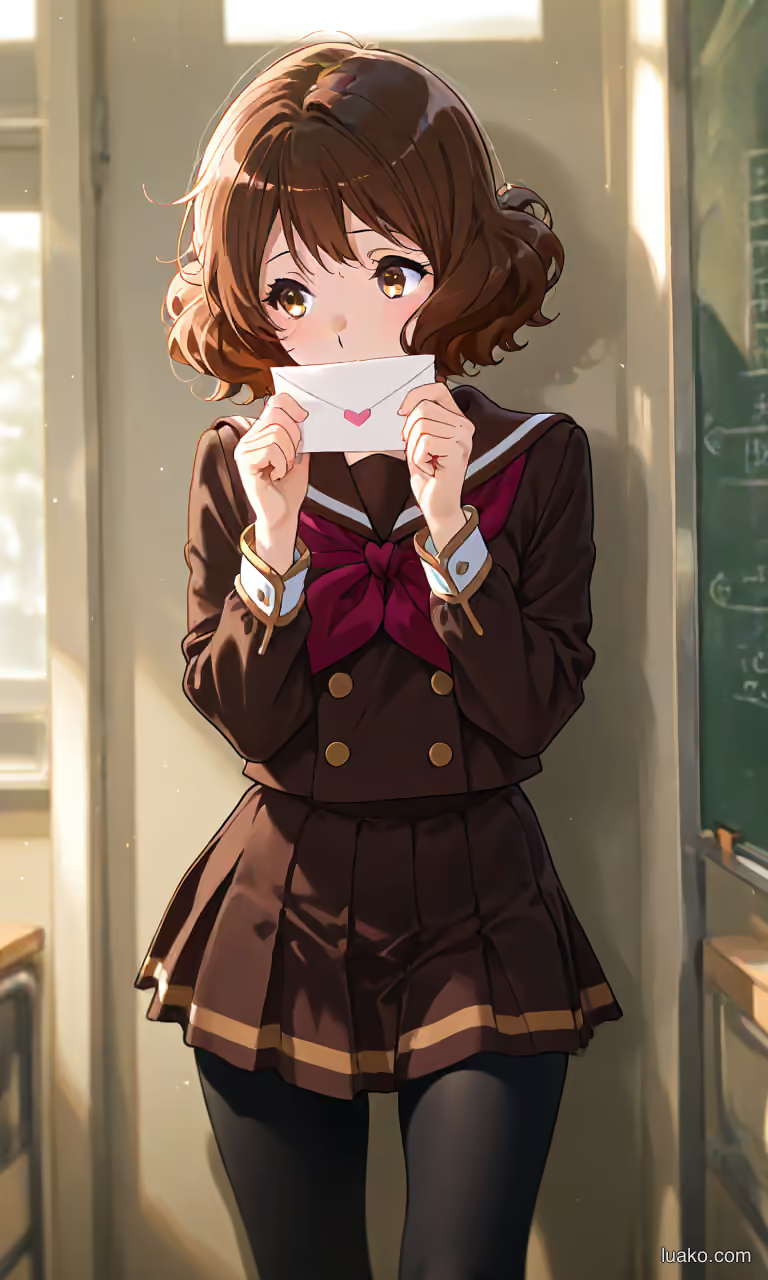
Kumiko Oumae — Sound! Euphonium
BiographyBiography
The story, the personality, and everything in between.Read biographyClose biography
Biography
The story, the personality, and everything in between.Read biographyClose biographyKumiko Oumae黄前 久美子
Kitauji High School concert-band euphonium player and central viewpoint character
Kumiko Oumae is the central character of Sound! Euphonium, the Kyoto Animation adaptation of Ayano Takeda’s novels. A student at Kitauji High School, she plays the euphonium in the school concert band.
She enters high school hoping for a fresh start after an uncomfortable memory from middle-school competition, only to encounter Reina Kousaka, the serious trumpeter involved in that memory. Often observant, hesitant, and startlingly candid, Kumiko gradually learns to treat music—and the difficult people and decisions surrounding it—with a commitment she initially struggles to articulate.
Biography
A fresh start and an old memory
Kumiko arrives at Kitauji High School after playing in her middle-school concert band. She hopes her new school life will put some emotional distance between her and the awkward aftermath of a competition, especially a moment involving Reina Kousaka. When classmates Hazuki Katou and Sapphire Kawashima invite her to visit Kitauji’s band, Kumiko discovers that Reina has enrolled there too. The choice to join is therefore more complicated than it first appears.
The euphonium becomes her choice
Kumiko has experience on the euphonium from childhood, but experience is not the same as conviction. In Kitauji’s increasingly demanding rehearsals, instructor Noboru Taki’s expectations force her to confront passages she cannot play to her own satisfaction. Her frustrated determination to improve marks a turning point: rather than simply drifting along with the band, she begins to want technical progress for herself.


Learning to listen to people
The band brings Kumiko into contact with musicians whose aims and temperaments differ sharply. Reina pursues exceptional musical standards; Hazuki and Midori help make the new club feel approachable; and older euphonium players, including Asuka Tanaka, reveal how much can remain hidden behind a casual manner. Kumiko’s habit of noticing what others avoid becomes useful, even as she learns that speaking honestly can have consequences.
A more demanding second year
During her second year at Kitauji, Kumiko works with Kabe to welcome and guide incoming band members while continuing to compete for a place in the ensemble. Helping juniors makes her confront problems that cannot be fixed through her own practice alone. As the senior leadership prepares to graduate, she is chosen to lead the band into its next chapter.


Personality and Motivations
Kumiko is perceptive but not always diplomatic. She can hesitate when conflict is near, then unexpectedly say what she actually thinks. The contrast makes her neither a naturally commanding extrovert nor a passive observer: she often needs time to recognize when silence has become a choice of its own.
Music makes Kumiko's contradictions harder to ignore. Reina's exacting standards challenge her earlier willingness to follow the crowd, and a difficult euphonium passage can bring out stubborn determination. She listens carefully to other players yet can become frustrated or defensive herself. Her progress is less about becoming permanently confident than about admitting when she truly wants something.
Appearance
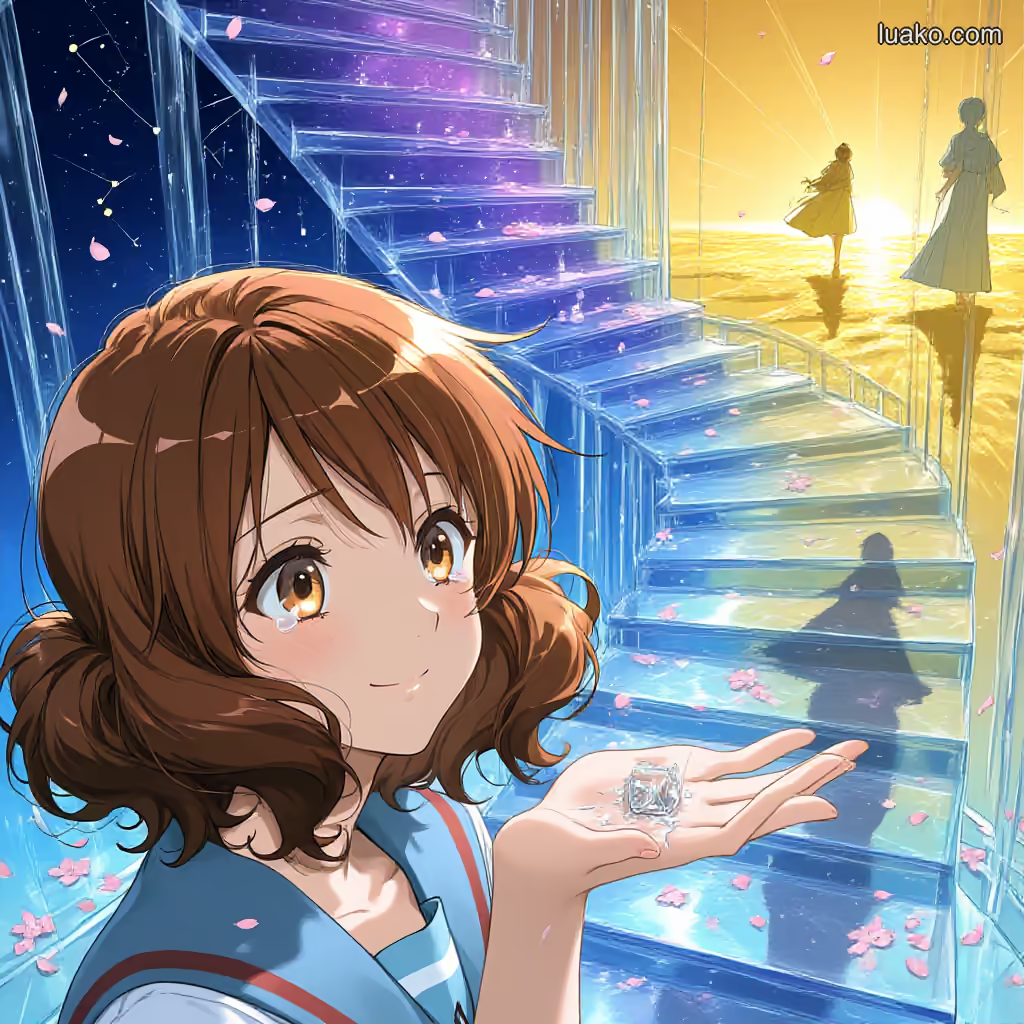
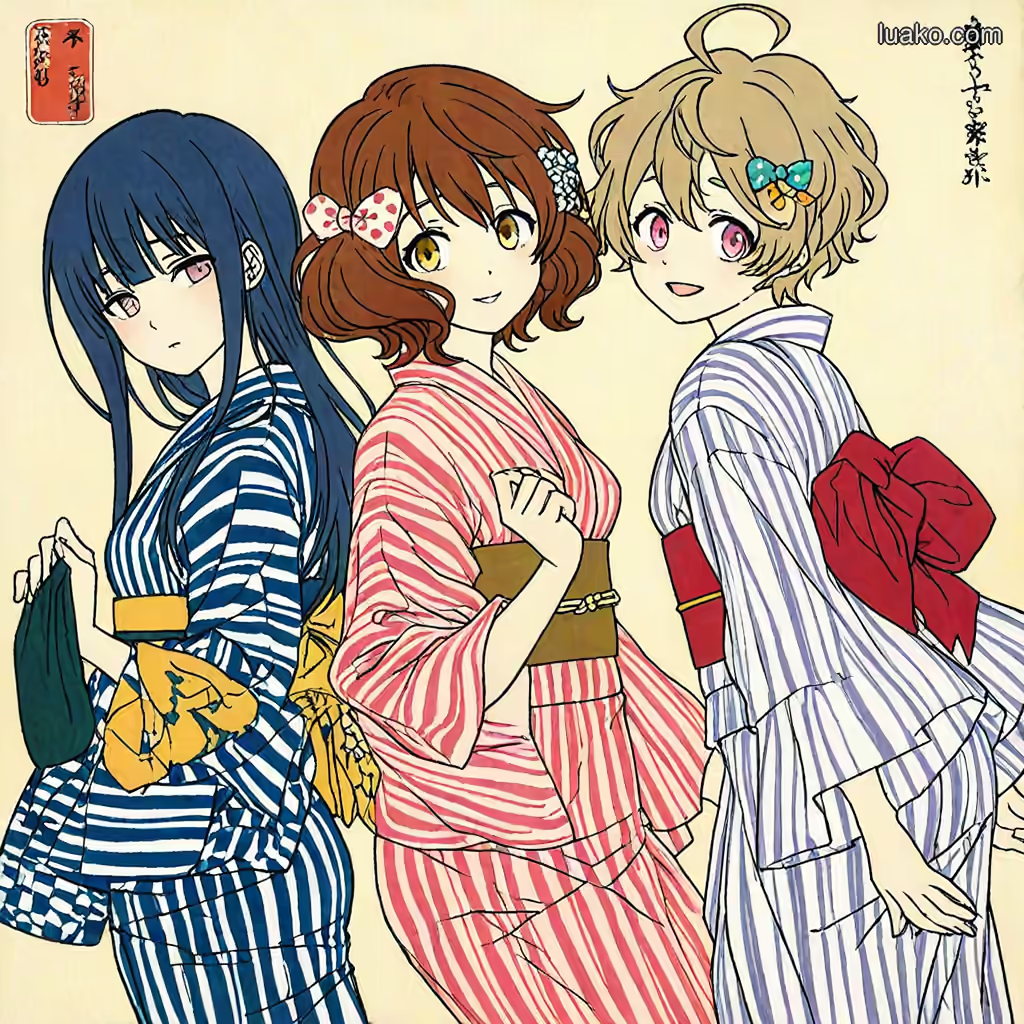
In the anime, Kumiko has fair skin, warm brown eyes, and medium-length chestnut-brown hair with lightly tousled, naturally wavy ends and loose bangs that frame her face. Her everyday Kitauji uniform is notably a brown sailor-style top with a contrasting pale collar and red ribbon; seasonal variations appear in the series. She is generally drawn with an unassuming, approachable expression rather than elaborate accessories.
Quick facts
- Instrument
- Euphonium
- School
- Kitauji High School
- Height
- 162 cm (official anime profile)
- Birthday
- August 21 (official anime profile)
- Blood type
- A (official anime profile)
- Japanese voice actor
- Tomoyo Kurosawa
- Original story
- Novels by Ayano Takeda; anime adaptation by Kyoto Animation
Abilities
Euphonium performance
Kumiko is an experienced euphonium player who practices concert-band parts and competes for a place in Kitauji’s ensemble. Her musical development is shown through focused rehearsal and auditions.
Limitations: She initially struggles with difficult assigned passages and is not presented as effortlessly flawless.
Attentive ensemble playing
Kumiko learns to hear her own part in relation to a larger concert band and to respond to the demands of shared rehearsals.
Supporting younger players
In her second year, Kumiko works with fellow member Kabe to orient new students and help guide younger players as they enter the band's demanding rehearsal and competition routines.
Relationships
Reina Kousaka
Former middle-school classmate, fellow musician, and close friend
Reina’s intensity as a trumpeter both unsettles and inspires Kumiko. Their shared history makes their developing friendship unusually important to Kumiko’s understanding of ambition.
Hazuki Katou
Classmate and fellow band member
Hazuki is one of the classmates who invites Kumiko to consider joining Kitauji’s concert band. She approaches the band as a new player on tuba.
Sapphire Kawashima (Midori)
Classmate, friend, and fellow band member
An experienced double bassist, Midori helps draw Kumiko into band life alongside Hazuki and remains part of her everyday musical circle.
Asuka Tanaka
Senior euphonium player
Asuka’s musical ability and guarded behavior challenge Kumiko to take a more active interest in what her older teammates are facing.
Noboru Taki
Concert-band instructor
Taki establishes demanding performance expectations that push Kumiko to rehearse more seriously and confront competitive auditions.
Mamiko Oumae
Older sister
Mamiko’s difficult relationship with music and her family provides Kumiko with a personal point of comparison when other players struggle with what they should pursue.
Shuichi Tsukamoto
Childhood friend and fellow band member
Shuichi plays trombone and has known Kumiko since childhood. His quieter manner contrasts with some of the band’s more forceful personalities.
Natsuki Nakagawa
Senior euphonium player
Natsuki is an older member of the low-brass section whose experiences with the competition roster provide another perspective on joining and contributing to the band.
Interesting facts
Naoko Yamada storyboarded and directed the opening television episode and described Kumiko as a girl who had often allowed herself to be carried along by others.
Yamada framed starting at Kitauji as a deliberate reset for Kumiko, connecting the first episode’s presentation with the character’s early hesitation about taking charge of her own choices.
The 2026 Final Movement films were rebuilt from the third television season with additional scenes and newly animated musical performances.
Director Taichi Ogawa aimed for a continuous theatrical account centered on Kumiko rather than a straightforward compilation of the existing episodes.
Frequently asked questions
What instrument does Kumiko Oumae play?
Kumiko plays the euphonium, a brass instrument used in Kitauji High School’s concert band. She started learning it before high school.
Which anime is Kumiko Oumae from?
She is the central character of Sound! Euphonium, also known by its Japanese title Hibike! Euphonium. The anime was produced by Kyoto Animation from novels by Ayano Takeda.
Why is Kumiko hesitant to join the band at first?
She wants a fresh start in high school, but meeting former classmate Reina brings back an uncomfortable memory from a middle-school competition.
Is Reina Kousaka a friend of Kumiko?
Yes. They know each other from middle school, and their complex friendship becomes central to Kumiko’s musical growth.
How tall is Kumiko Oumae?
Her official anime character profile lists her height as 162 cm.
Who voices Kumiko Oumae in Japanese?
Tomoyo Kurosawa voices Kumiko in the Japanese anime adaptation.
Major story spoilers below.
The music becomes personal
In her first year at Kitauji, Kumiko’s struggle with a difficult assigned passage helps turn a casual relationship with the euphonium into a personal commitment. Her desperate wish to improve contrasts with her earlier reluctance to stand out. Reina’s seriousness becomes less intimidating as Kumiko discovers that she, too, wants to care deeply about the result of a performance.
Asuka, Mamiko, and the difficulty of choosing
During her second season at Kitauji, Kumiko becomes entangled in Asuka Tanaka’s possible departure from the band. She connects Asuka’s attempt to give up a deeply wanted opportunity with her sister Mamiko’s conflict at home. Rather than accepting Asuka’s self-protective resignation, Kumiko confronts what it means to admit that playing still matters. This parallel sharpens her understanding of how family pressure and unspoken desires can shape a person’s decisions.
From second-year support to president
Kumiko's second year requires her to support younger players while navigating an increasingly competitive ensemble. By the Ensemble Contest period she has become band president, charged with leading more than sixty members. In her final year the ensemble exceeds ninety; Shuichi serves as vice president and Reina as drum major. Kumiko must now make decisions on behalf of the entire band rather than merely helping individual juniors.
Friendship, romance, and a younger player's loyalty
Kumiko's connection with childhood friend Shuichi Tsukamoto is not limited to rehearsals: the two date for a time, although the third-year anime character profile describes that relationship in the past tense. Kanade Hisaishi, a younger euphonium player, develops a particular attachment to Kumiko and remains firmly on her side as disagreements sharpen in the band's final year. These relationships complicate her position as a bandmate and leader without determining how an audition should be judged.
Mayu Kuroe and the cost of a fair audition
In Kumiko's third year, Mayu Kuroe transfers from Seira Girls' High School, a strong concert-band school, and joins Kitauji with her silver euphonium. Mayu's skill, and her repeated unease about displacing an established member, strain their relationship. Competition auditions force Kumiko to hold two incompatible wishes at once: as president she defends choosing players by ability, but as a musician she longs to perform the featured passage alongside Reina at nationals.
The final audition and national gold
In the anime continuity, the final audition for the featured euphonium passage ends with Mayu selected rather than Kumiko. The players' identities are concealed during the decisive vote; Reina chooses the performance she believes is better, even though she personally wishes to play alongside Kumiko. Kumiko accepts the outcome rather than abandoning Kitauji's merit-based standard. The disappointment is real, but the band goes on to win its long-sought national gold.
Ayano Takeda's original novels resolve the audition differently: Kumiko wins the featured euphonium part in the soli with Reina. The 2026 Final Movement films rework and expand the third television season, including Kumiko's conversations with Mayu and additional performance material. Accounts of the released second film describe Mayu retaining the decisive part; the novel and anime outcomes therefore belong to separate continuities.
What she chooses beyond graduation
Kumiko ultimately decides to become a teacher. The anime's epilogue shows her returning to Kitauji High School as a teacher and assistant adviser to the concert band. The girl who entered high school wanting a reset now helps a new generation pursue the music she nearly walked away from. Director Tatsuya Ishihara also discussed how the original novels conceal the identity of the teacher until their closing reveal.
Additional story facts
Director Tatsuya Ishihara deliberately gave adult Kumiko a moment in which the music-room door catches as she tries to open it in the anime epilogue.
He explained that he wanted her to retain a little of her familiar awkwardness even after becoming a teacher, rather than appearing transformed into an untouchably perfect adult.
Ishihara said the anime epilogue's depiction of Uji reflects real changes to the city during the series' years of production.
The final scene's physical setting conveys the passage of time through changes to the real location used as the production's visual model, not just through Kumiko's new career.
In the 2026 theatrical reworking, director Taichi Ogawa included full-length performance material and reorganized the television episodes so the first film ends after the Kansai regional competition.
The structural choice gives Kumiko's leadership at the regional contest its own dramatic culmination before the final auditions and national performance take center stage in the second film.
Spoiler questions
Does Kumiko play the featured passage with Reina at nationals in the anime?
No. In the anime, Mayu Kuroe wins the euphonium part in the climactic soli alongside Reina's trumpet. Kumiko receives that part in Ayano Takeda's original novels, which follow a different version of the audition.
Does Kitauji win national gold in Kumiko’s final year?
Yes. Kitauji achieves its long-pursued national gold in the anime’s concluding competition, even though Kumiko does not receive the solo she had wanted.
What does Kumiko do after graduation?
The anime’s epilogue shows her returning to Kitauji as a teacher and assistant adviser to the concert band.
Does the 2026 movie replace the third-season ending?
No. The 2026 Final Movement films reorganize and expand the third season with newly animated scenes and performances. The theatrical account retains the anime's outcome for the final euphonium part rather than substituting the published novels' different audition result.
Tags
Kumiko Oumae Artwork and Images
Explore artwork featuring Kumiko Oumae, the euphonium-playing protagonist of Sound! Euphonium.
Videos · 16